History, people, fables and critical essays on the 24/7 life of the French Quarter. “The great music of the city is…when you say good morning and good evening.” (Mr. Jerome Smith)
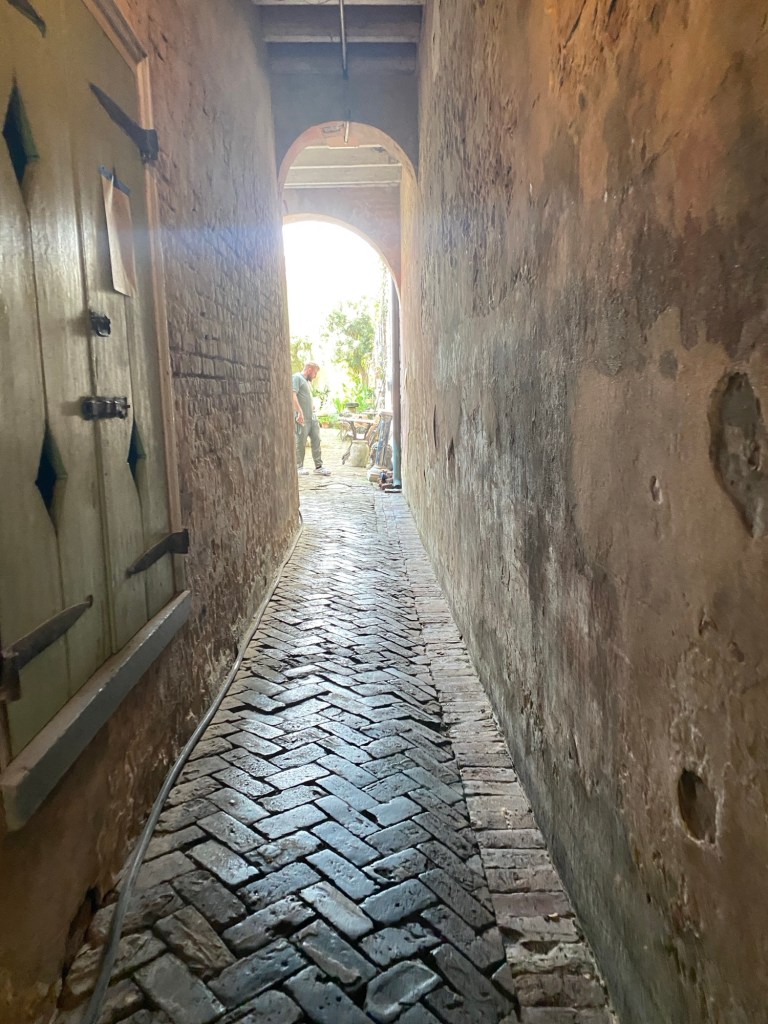
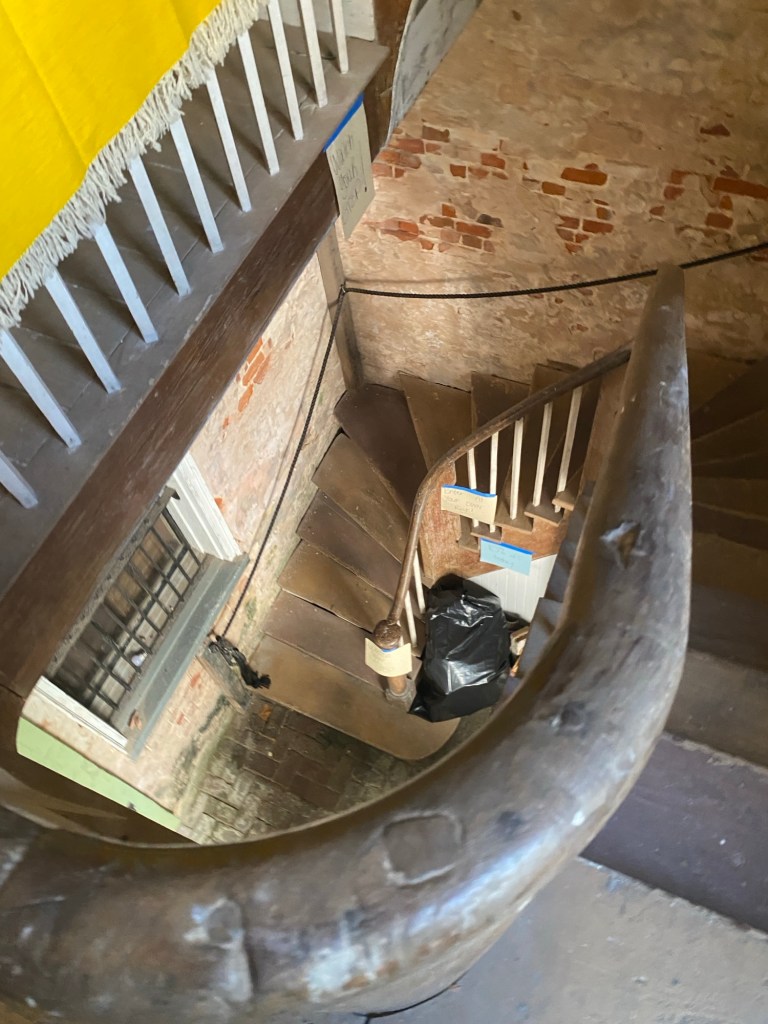
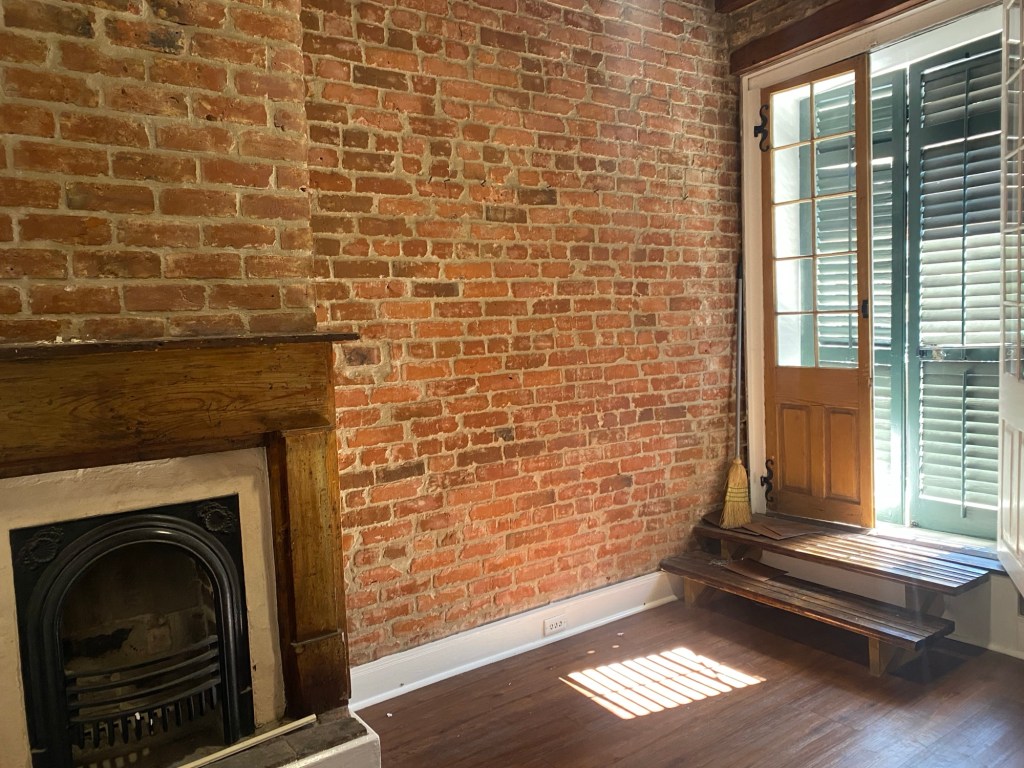
We lost a long time FQite last year and this week, Occasional Wife had his estate sale at his home in the 1100 block of Decatur.
RIP Fred Lawson. You contributed a lot and based on your students and fellow teachers’ tributes, you were deeply respected at Ben Franklin.
His name is also familiar for those who care about preservation, as he served on the Vieux Carre Commission among other activities.
I’m always honored to go in and get a sense the life that was lived and to feel how the space was loved.
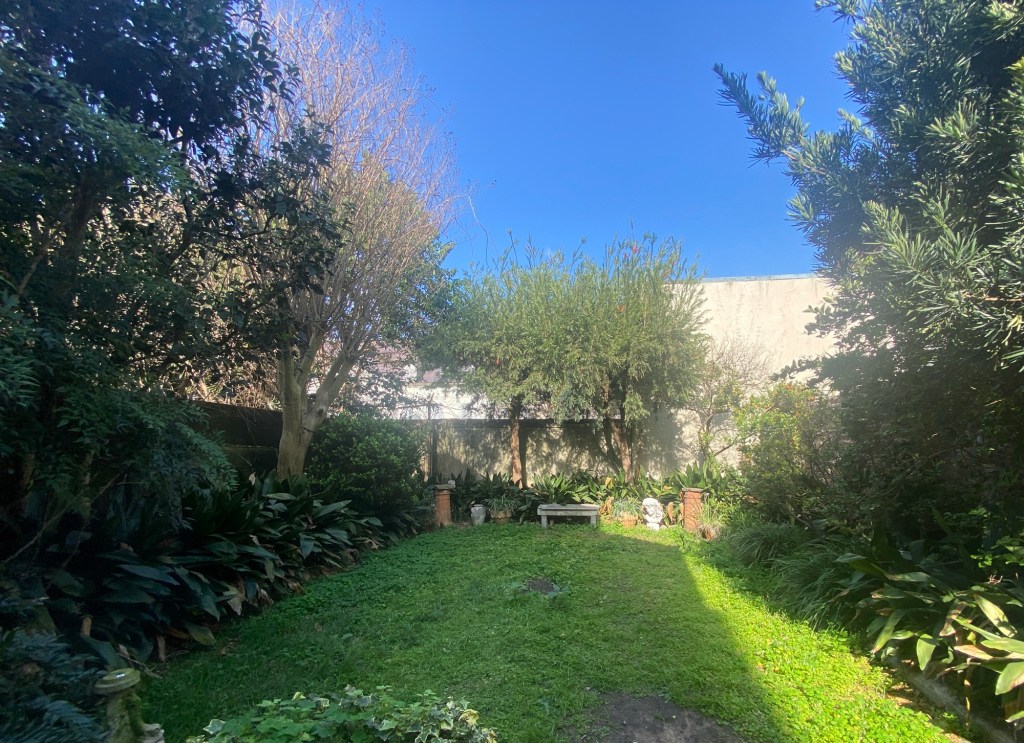
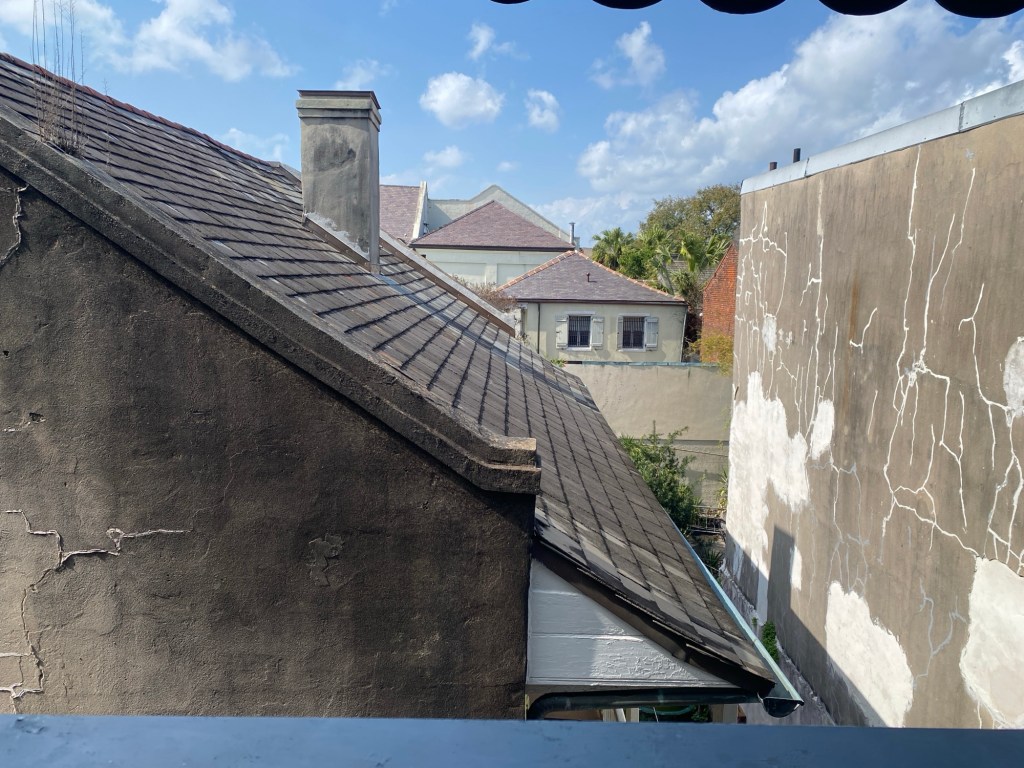
The home had a typical layout for the FQ, although another story higher (and also with a full-sized attic) than those with the same design on most other streets of the FQ. It also has a unusually relaxed green space at its edge (which backs up to the Ursuline Convent museum) and likely means the occupant gets a truly peaceful idyllic outdoor space on a particularly raucous block of Decatur.
Before my time, parades used to roll through the French Quarter. Well, really, they used to roll through lots of neighborhoods.
Now one has to get to the Uptown side of things or at least stand on the dividing line to participate in float parades, except for Endymion. However, I stay far from that Mid City mess which is held on the last Saturday before Fat Tuesday. To explain my p.o.v., just know that some groups start to camp out on the Thursday before Endymion and that it seems to celebrate white middle class New Orleans more than any other parade in the city. And even though I am in that number, I know we have no proud history of adding much to Mardi Gras, music or food around here. So, when we throw a parade, you can expect it to be loud, big and lacking some finesse. So good luck to those brave enough to make it. Me, I wish ol Endymion would find that long sleep again.
My schedule is usually seeing 1-3 parades and 1 of them is one of the 2 walking parades in the French Quarter. Barkus is almost always the choice.
What I like about it:
1. It benefits a worthy cause-pet rescue and allows any brave dog owners to participate.
2. It is the right scale. Those folks have to stay sober enough to walk miles with their dogs but drunk enough to wear feathers or shirts that match them.
3. It has a sense of humor. South Pawcific?
4. It’s over before dinner time.
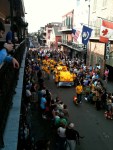
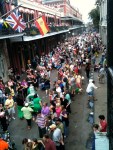
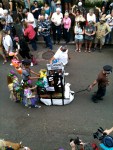
I have been watching it recently from a friend’s place on Saint Ann to watch the crowds. Some of us sit on the balcony, some of us draw up chairs on the ground, chatting with anyone near enough to be caught. What I have noticed is that much like French Quarter Festival, it seems to be bringing in locals who spend the day roaming the Quarter and reacquainting themselves with it. I see groups of people chatting for hours, sitting with a beer and their chair set up in the sun. Children are very plentiful and the Barkus participants keep an eye out for them to bestow their trinkets first.
Many parades are somewhat hierarchical: we sit waiting for the masked riders to roll by hoping to catch their eye or their ear. As glorious as they can be, they can also be passive and maybe even a little cruel. I find the walking parades much more interactive and personal.
Really, it is one of the reasons why the Quarter remains useful: in a small way, like Tahrir Square, we use it to perambulate and to connect and if we need to, to protest. Lucky for us, a change in government is possible here with peaceful transitions.
I contend that the reason we came through our most recent federal disaster with so little strife among the citizenry was that we have this release every year we call Carnival season. It forces us to meet new people, and allows us to have the time to catch up with old friends in detail. We laugh at bad puns together, cheer a good throw or catch and generally get the anxiety and angst out.
And when we can do it in the middle of the old city with our best companions, what can be better?
As someone who lived in the building until recently and as someone who has spent the last decade researching the rich history of these buildings and their effect on our public square, lets just say I am deeply interested in the recent news that the residents of the 50+ apartments on the city-managed Pontalba (St. Peter side) have informed its residents that they will all need to vacate the building while a long renovation is done.
First, let’s get to the facts and do away with the misinformation about this building:
It’s all rentals, no owners. The city was given this building back in the 30s by the preservationists who bought it and saved it from likely destruction.
Essentially each of the Pontalba buildings was designed as 16 3-story townhouses, each with their own entrances. They do share infrastructure between them but any of the 16 can be easily closed off from the others.
The rents are not astronomical but are in line with current rents around FQ. For example, the large one-room efficiencies are around 900 a month.*
The apartments are lovely, and have updated modern kitchens, bathrooms and HVAC.
There are a large number of full-time residents some of whom have been there for decades and have invested thousands of their own dollars in repairs and upgrades.
There is not a years-long waiting list. There are often empty apartments which are first offered to residents, then to folks who sign up at the office to be contacted, then a larger search is undertaken (they say they do this phase, although I have never seen any evidence of it online). If someone on the contact list doesn’t reply, they are taken off the list (although that list seems to a bit of a snarl in terms of who manages it and how well it is maintained. That is based on feedback I have received from those on the list.)
The staff is generally wonderful. For example, the men and women who do the custodial and minor repairs are caring and smart folks, many of whom have worked there for decades. (It has also been recently suggested in casual conversations that those positions might instead be independent contractors and not staff positions, which might mean new folks who know less and likely care less about the building to “come by” and deal with stuff.)
There are definitely some big issues such as the roof damage from Hurricane Ida to be dealt with, but the renovations seem to be more about “upgrading” the building. Again, very little in writing is given to residents or neighbors so this is based on my own conversations with staff and reading emails sent by various people connected with the building.
Residents seem willing to work with the renovation, even moving for short periods to other apartments. As a matter of fact, while I lived there, I asked where my latest lease renewal was and was told that since they may need to move us to another apartment, they were holding off on assigning us a lease for a specific apartment. So it was clearly an idea they were also working with at the time.
The issue with removing all residents for upgrades and roof repair is that many of them will not be able to find another space nearby. I think of neighbors who were service industry folks who worked later shifts and came home around 4 in the morning after work. Finding a space that is safe and quiet for folks like that is very nearly impossible in a neighborhood with so many illegal airbnbs operating.
Another question is if emptying it out is even needed. If you live and rent in the FQ, you have worked with landlords who need to do major repairs to these old buildings. I have never (not has anyone I know) had a landlord suggest I needed to leave for years to do those repairs.
And certainly important, is that they are losing 2 years of income.
There has been little information on this topic given in writing, including the actual plans of what is to be done.
In civic activist Jane Jacobs’ parlance, having mixed use and spaces made for people and not for massive development or infrastructure is necessary for a vibrant city. Those who live on the square happily share it with artists, readers, musicians, and others because all are needed to keep it dynamic and useful to the city. The residents are there after the shops close and the museums are shuttered, keeping an eye and an ear on late night activities, sharing information with the Square’s daytime users. It’s a delicate balance, and one that generally works.
Lastly, through my research on entrepreneurial activity in Jax Square, I have found that over the last 170 years, the residents of the buildings have almost always taken pride and care in living there. There have been times that it has housed people of civic stature, other times it had the workers or those newly arrived to the city, and very often, the creative and the enterprising have found their muse there.
That contribution cannot be overstated, especially in a neighborhood that is so physically important and so socially necessary. Let’s do better sharing what is planned and working with the residents and neighborhood to make this renovation helpful.
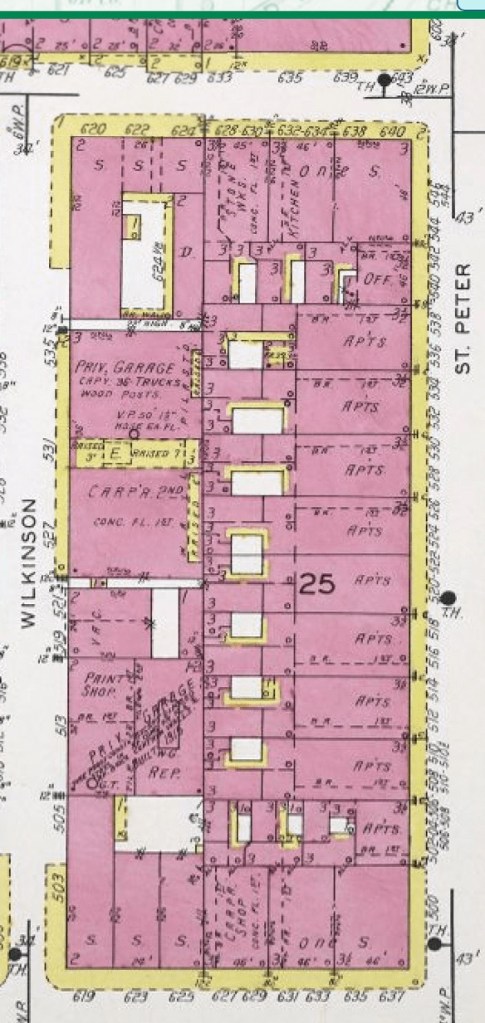
1940 map of the building. Note there were apartments even on the first floor.
* I would even suggest that the city seriously consider the idea I have raised here many times: that offering owners incentives to build in a few rent-controlled spaces for the service industry in the smaller units in these buildings and throughout the commercial areas of the Quarter and Canal Street would be a game changer for the neighborhood vitality, for employers, and for the city.
With the news of the horrific car fatalities on Bourbon Street on NYE, it’s ONCE AGAIN time for us to rework the river end of Canal. The issues of terrorism are far more than I am equipped to assist on, but I do know the Quarter as well as anyone who has grown up, worked, and roamed it. I’ve written about it many times. These are just the most appropriate of those ideas for this latest vehicle as a murder weapon.
Here I go again.
Severely limit car traffic from the river to Rampart on Canal after dusk daily.
Reduce non-resident car parking in French Quarter.
invest in a permanent, state of the art bollard system.
don’t use this act to over police the unhoused, workers, or people of color.
Incentivize streetcar and taxi use by offering better and more stands or safe spaces to call for one.
More incentivized bike rentals (Blue Bikes), more bike cabs, safer bike parking.
Update taxi rules to match the Uber style wild west of ride hires. Allow taxis to pick up hailers.
Incentivize more buses along Rampart and Burgundy moving downtown through neighborhoods.
We need to incentivize the rework of the under-used, upper floors on Canal Street to be rent controlled for service industry/musician residents to balance the massive numbers of tourists and allow people to live near by.
Ramp up enforcement of building owners cleaning in front and keeping flow clear.
Bring in Feds to uncover bribes to officials that reduce enforcement.
Overall, safeguard and prioritize pedestrians and human-powered transportation in all of the ways we can.
That is one of the main issues that faces the French Quarter, and has for decades. This latest tragedy is just the latest one to underscore this truth.
The cultural and political significance of the square has already been well researched and widely published, all of it illustrating its role over the 300+ year history of New Orleans. Many writers have highlighted its colonial role as a military parade grounds, and others have focused on its development into its current role as the chief tourist mecca for the more than 10 million visitors the city hosts annually. Few writers however, focus on the individuals that have and continue to shape this square, doing so as builders, philanthropists, artists, activists, residents, and more.
Since the archives of written pieces on that history exists, this series of articles will instead focus on how entrepreneurs have used the Square since 1850. That date was chosen because it is when the Almonaster/Pontalba family added its final (of many previous) contributions to the Square with the iconic 4-story red brick buildings that still anchor the upper (west) and lower (east) sides of the Square. The buildings built by Micaela Almonaster Pontalba, a native daughter of the city who sailed back to France after they were completed never to return, set the scale and rhythm of how the Square conducts business to this very day.
Baroness Pontalba herself will be one of the entrepreneurs that this series will celebrate, as her efforts are a perfect prologue for the modern uses of the Square. Her half-decade long development of the two Pontalba buildings will center this story, as will the later generations of the Pontalba family who could not withstand the late 19th century and early 20th century abandonment of the square by the city’s elite. Luckily for them, others stepped in once again to keep the Square a democratic and dynamic place.
Even though the buildings remain the most significant contributor to how commerce is conducted in these 2.5 acres, the Baroness’ original plan for their use has to be considered an almost total failure. Instead, in true New Orleans fashion, the Square’s users adapted them through philanthropic intervention, city, state and federal oversight, and the sheer vehemence of New Orleanians who saw their value. These interventions happened at various times over the last 170 years, often at the last possible moment before demolition would have invariably led to the loss of the Square’s daily activity.
The City of New Orleans has begun to sound out their ideas around creating more pedestrian-only malls in the French Quarter through some contact with residents and through the media. Part of their idea seems to be spring from the idea that those using the Quarter need more room in this era of 6′ safe spacing, and another aspect seems to be that since we lack the millions of tourists that our Quarter businesses depend on for revenue, we need to realign our 80+ blocks to bring our neighbors to use it and add more local-focused businesses.
If those are the actual goals, then I am for this idea, although with strong reservations. Those reservations include all City department’s ability to listen and learn from the varied number of Quarterites which includes more than those who are full-time homeowners or business owners who have easy access to the decision makers on Loyola. It also must include workers, culture bearers, unhoused people and their advocates, renters, and those part-time homeowners who do love it and care for it (so not the illegal Airbnb-ers of which there are dozens and no obvious recent enforcement to keep them from becoming unchecked again.) And of course, to take in consideration the ideas and concerns of residents in Treme, Marigny, CBD, Central City too because they are clearly impacted by decisions made for the FQ.
Because these ideas have seemed to come out of very recent, very serious COVID-era needs and so haven’t run the usual years-long cycle of public meetings, some folks have suggested that this new ped-focused design is going to become another Riverfront Expressway-type issue. Although the comparison seems a little overwrought to me, I can certainly see part of their point. For those new to this, the Riverfront Expressway was a 1940s-1960s elevated elevated six-lane expressway project, 40 feet off the street and 108 feet wide along the Mississippi River. It was added to the planned I-10 design which (contrary to a local legend) was always planned for Claiborne* and was not moved there when the FQ residents successfully fought the Expressway spur. The Expressway suggestion was made via a 1940s consultant’s report on New Orleans by the infamous Robert Moses who thought by keeping auto traffic flowing through (over?) the Quarter it would actually benefit it. Of course he and other planners didn’t understand the Quarter, but back in those days people like Moses were unelected kings and their opinions became policy without the need of any other input.
(*However, even though the story of it being moved to Claiborne from the riverfront is incorrect, the reality of the I-10 being built on Claiborne did happen for exactly those same racist policies: that the historic and beautiful tree-lined Claiborne Avenue was sacrificed because it was the Black St. Charles Avenue and therefore had no political power. So whether or not FQ residents saved their neighborhood by sacrificing another is or isn’t precisely true doesn’t really matter, as it does seem be true that they did little to nothing to stop their neighbors in Treme in getting carved up again and again, before the I-10 and after it, and is still happening.)
So to some, the idea of the City throwing an idea out that is hastily designed at City Hall or only takes in some of the needs of some seems familiar. And that the I-10 and Riverfront experience suggests that someone or many someones will bear some negative brunt of the idea through what many sociologists and others like to call “the unintended impacts” of these multi-level decisions.
The truth is any solution that assists our world-class (what probably should be a UNESCO site!) historic neighborhood and its surrounding area will only work if the input is tremendous, dynamic, and sensitive to the needs of many. Yet what anyone who has been in these discussions can see is that everyone is coming to this with a lot of assumptions; for residents, its often assuming the City is not acting in good faith; for the City, its often assuming that Quarterites are inflexible or not interested in benefits that help others. And I also suspect based on my interactions that many at City Hall don’t believe we actually have residents here or serve other needs than as the main corridor for tourism.
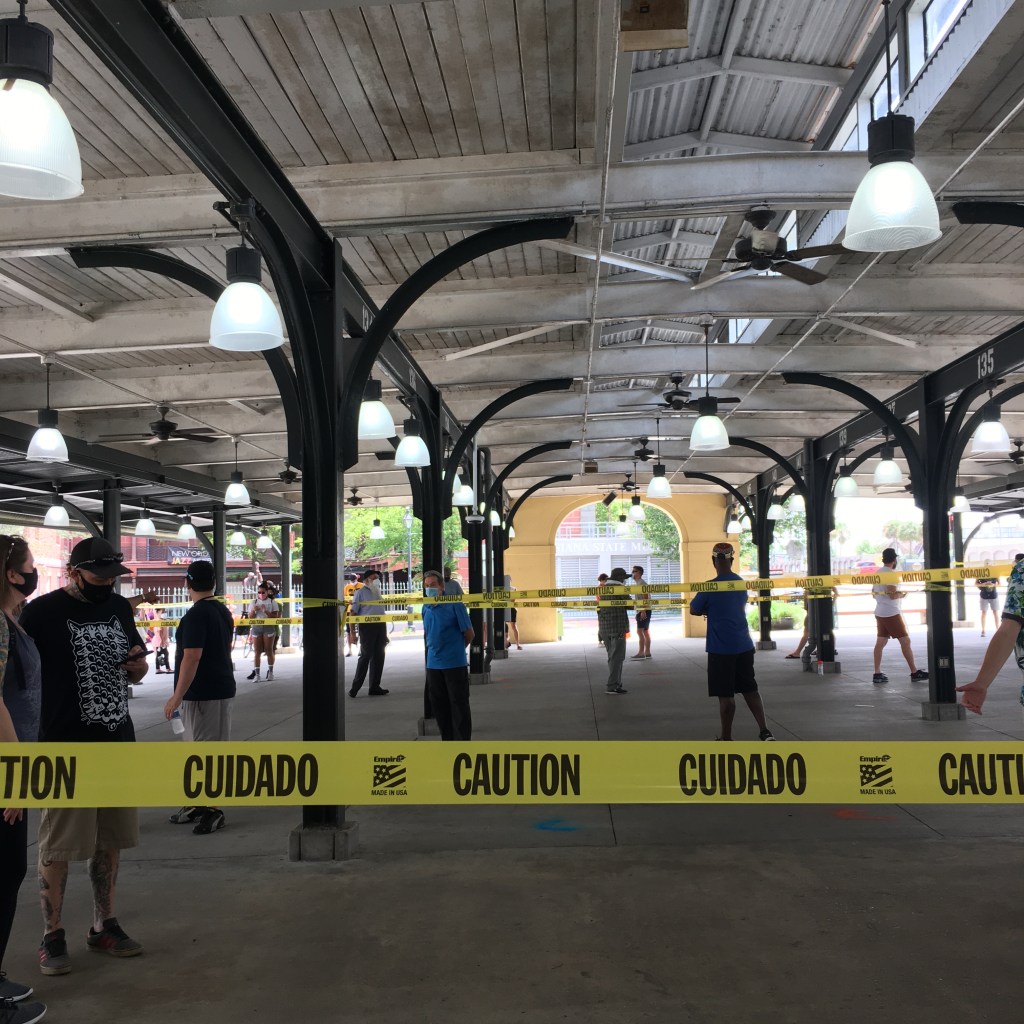
Based on all of that, even though I am more in favor of these ideas than others, I’d suggest that the City might start with simpler ideas and then ask a lot of questions. Maybe start with adding protected bike lanes in and out of the Quarter, work on safer bike parking (more and more business owners are cutting bikes locked up for a shift from their gallery posts and few employers offer safe parking), add many more public transportation options for workers and locals, come up with some dynamic parking ideas for residents and workers, deal with illegal STRs and noise infractions- and maybe start to test these ideas by using their French Market property first. A French Market property project could do a lot to calm residents fears and can also test out ideas before those unintended impacts across a larger area cripple and divide the residential and business community of the Quarter. I’ve jotted down many ideas on my blog previously for the French Market space that including adding a storefront library, community health agencies, maybe an evening Louisiana-id carrying-only splash pad, pop up food truck events, and lots more of what we saw this week: the sheds and public space used for sharing regular city departments information and health work as it was for the COVID site this last week with hundreds in line in the market space to get their free test.
Once successful, the City can then quickly move to testing out single or 2-3 block ped areas, such as some I have noted previously include Wilkinson Row, Madison Street, the 1100 blocks of Chartres (which has St, Mary’s the Old Convent, Keyes museum, a boutique hotel) and adding local-friendly partnerships to activate those such as those NOMF musicians You Got This events, other health screenings, walking circuits similar to the Big Lake at City Park, or just rows of potted trees to add shade and beauty.
In any case, let’s all take a deep breath, do some homework, create some short term pilots, check our own assumptions and privilege, and listen as much as we talk.















 French Quarter block by block
You must be logged in to post a comment.