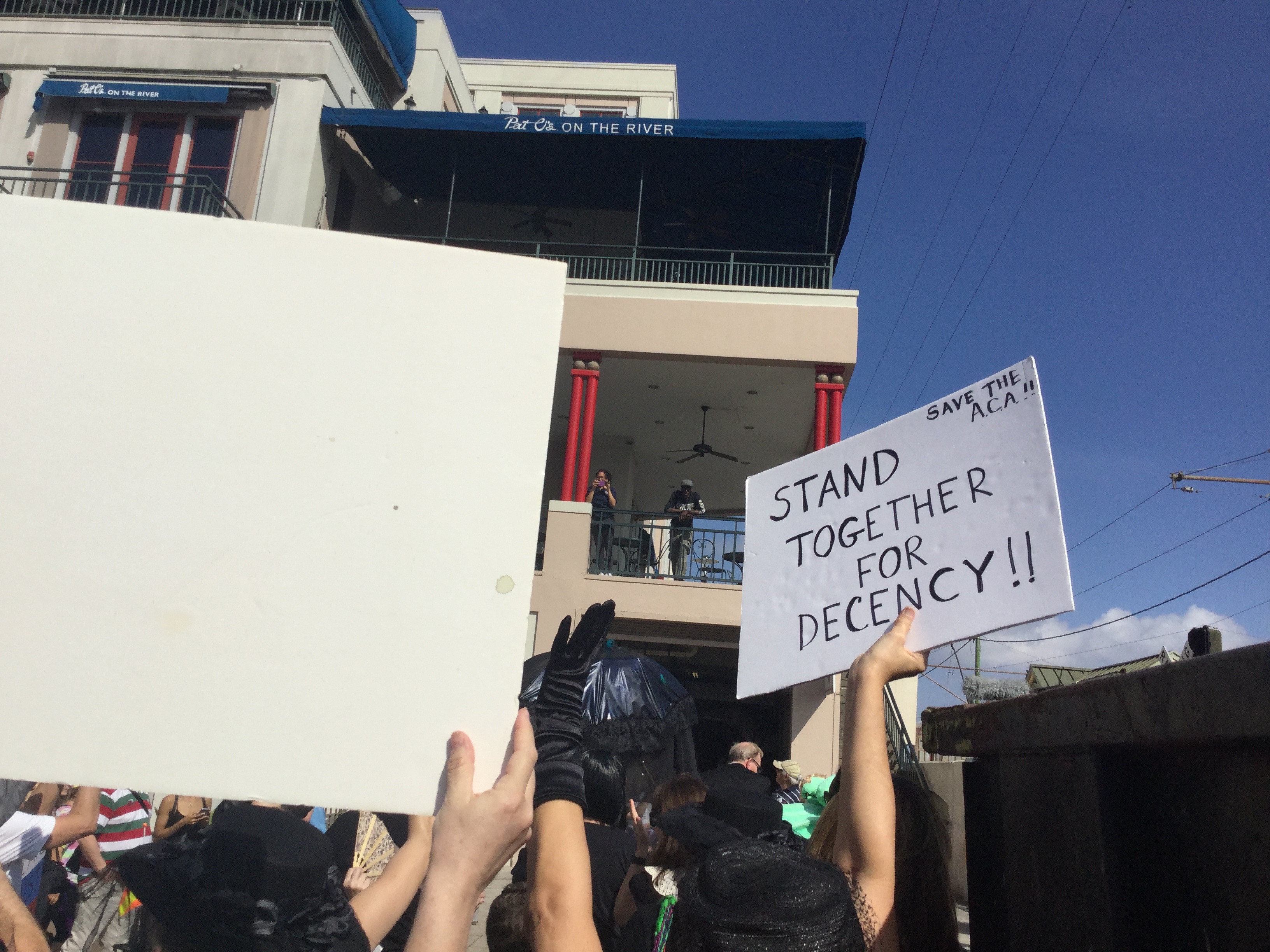
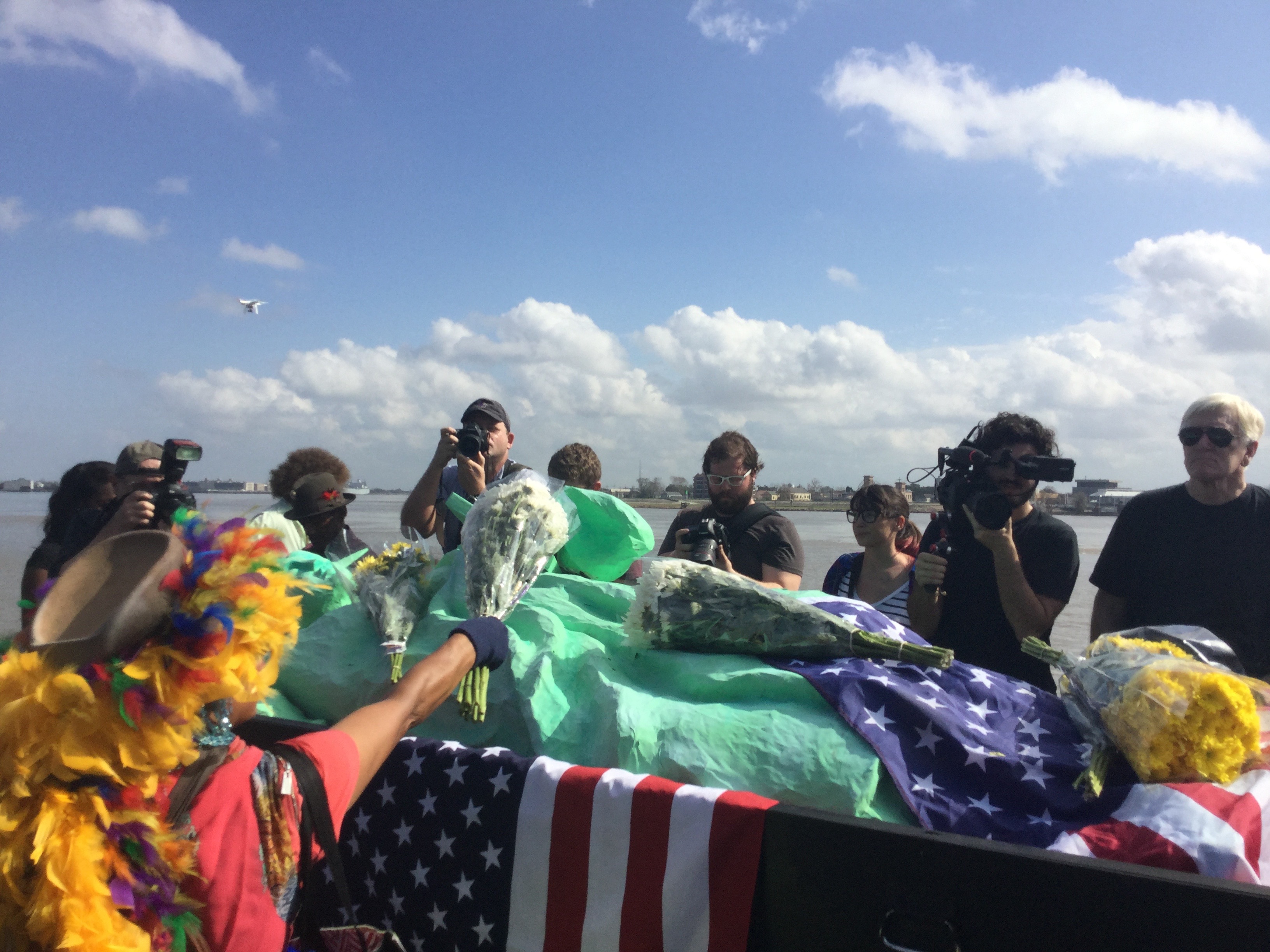
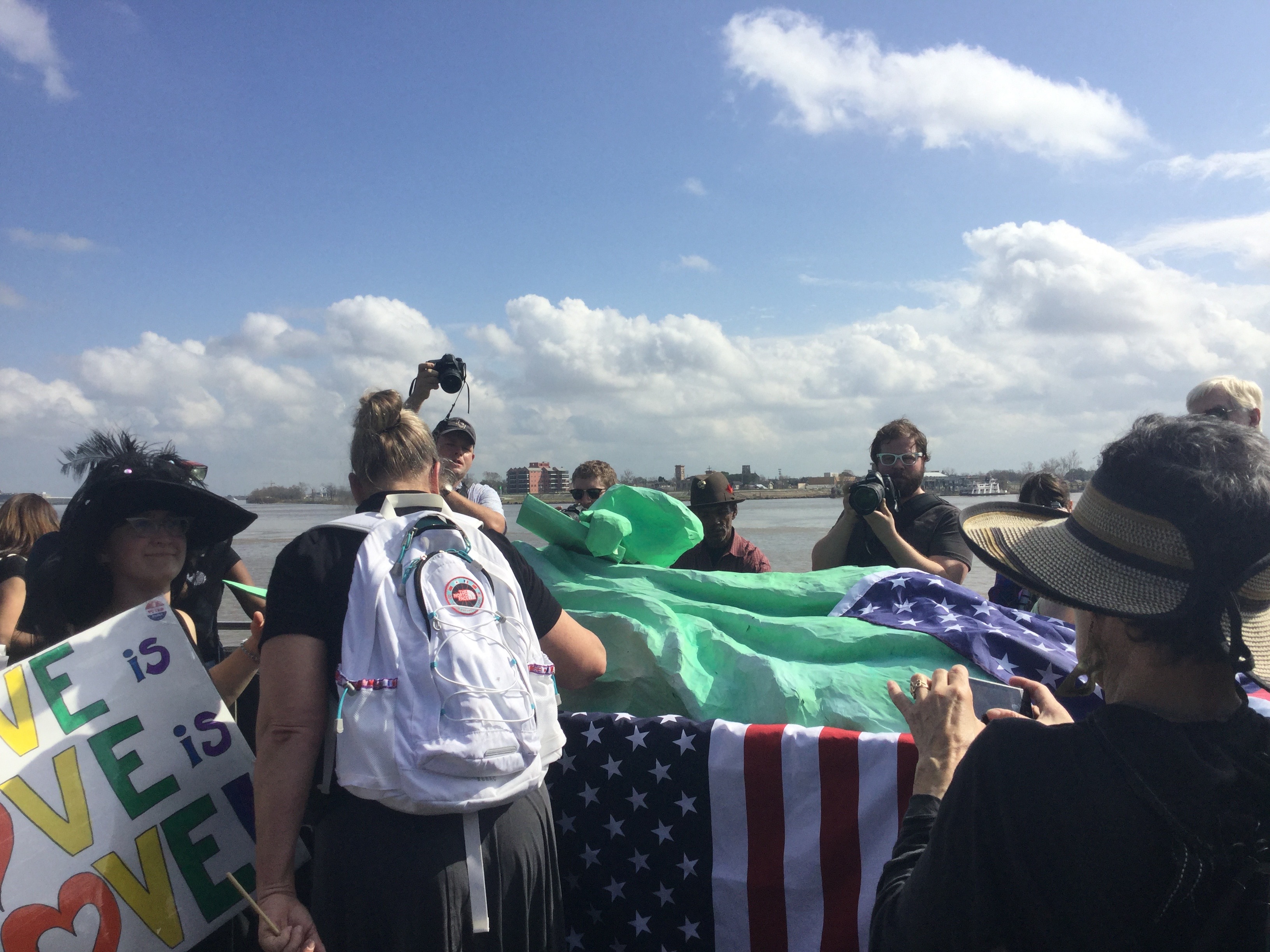
2-year eviction of Upper Pontalba residents

As someone who lived in the building until recently and as someone who has spent the last decade researching the rich history of these buildings and their effect on our public square, lets just say I am deeply interested in the recent news that the residents of the 50+ apartments on the city-managed Pontalba (St. Peter side) have informed its residents that they will all need to vacate the building while a long renovation is done.

First, let’s get to the facts and do away with the misinformation about this building:

  1. It’s all rentals, no owners. The city was given this building back in the 30s by the preservationists who bought it and saved it from likely destruction.
  2. Essentially each of the Pontalba buildings was designed as 16 3-story townhouses, each with their own entrances. They do share infrastructure between them but any of the 16 can be easily closed off from the others.
  3. The rents are not astronomical but are in line with current rents around FQ. For example, the large one-room efficiencies are around 900 a month.*
  4. The apartments are lovely, and have updated modern kitchens, bathrooms and HVAC.
  5. There are a large number of full-time residents some of whom have been there for decades and have invested thousands of their own dollars in repairs and upgrades.
  6. There is not a years-long waiting list. There are often empty apartments which are first offered to residents, then to folks who sign up at the office to be contacted, then a larger search is undertaken (they say they do this phase, although I have never seen any evidence of it online). If someone on the contact list doesn’t reply, they are taken off the list (although that list seems to a bit of a snarl in terms of who manages it and how well it is maintained. That is based on feedback I have received from those on the list.)
  7. The staff is generally wonderful. For example, the men and women who do the custodial and minor repairs are caring and smart folks, many of whom have worked there for decades. (It has also been recently suggested in casual conversations that those positions might instead be independent contractors and not staff positions, which might mean new folks who know less and likely care less about the building to “come by” and deal with stuff.)

There are definitely some big issues such as the roof damage from Hurricane Ida to be dealt with, but the renovations seem to be more about “upgrading” the building. Again, very little in writing is given to residents or neighbors so this is based on my own conversations with staff and reading emails sent by various people connected with the building.

Residents seem willing to work with the renovation, even moving for short periods to other apartments. As a matter of fact, while I lived there, I asked where my latest lease renewal was and was told that since they may need to move us to another apartment, they were holding off on assigning us a lease for a specific apartment. So it was clearly an idea they were also working with at the time.

The issue with removing all residents for upgrades and roof repair is that many of them will not be able to find another space nearby. I think of neighbors who were service industry folks who worked later shifts and came home around 4 in the morning after work. Finding a space that is safe and quiet for folks like that is very nearly impossible in a neighborhood with so many illegal airbnbs operating.

Another question is if emptying it out is even needed. If you live and rent in the FQ, you have worked with landlords who need to do major repairs to these old buildings. I have never (not has anyone I know) had a landlord suggest I needed to leave for years to do those repairs.

And certainly important, is that they are losing 2 years of income.

There has been little information on this topic given in writing, including the actual plans of what is to be done.

In civic activist Jane Jacobs’ parlance, having mixed use and spaces made for people and not for massive development or infrastructure is necessary for a vibrant city. Those who live on the square happily share it with artists, readers, musicians, and others because all are needed to keep it dynamic and useful to the city. The residents are there after the shops close and the museums are shuttered, keeping an eye and an ear on late night activities, sharing information with the Square’s daytime users. It’s a delicate balance, and one that generally works.

Lastly, through my research on entrepreneurial activity in Jax Square, I have found that over the last 170 years, the residents of the buildings have almost always taken pride and care in living there. There have been times that it has housed people of civic stature, other times it had the workers or those newly arrived to the city, and very often, the creative and the enterprising have found their muse there.

That contribution cannot be overstated, especially in a neighborhood that is so physically important and so socially necessary. Let’s do better sharing what is planned and working with the residents and neighborhood to make this renovation helpful.
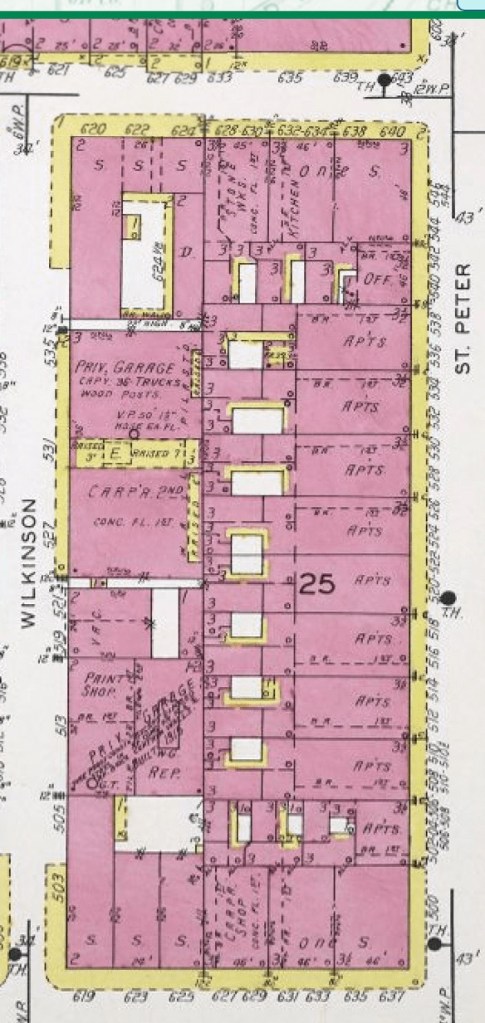
1940 map of the building. Note there were apartments even on the first floor.

* I would even suggest that the city seriously consider the idea I have raised here many times: that offering owners incentives to build in a few rent-controlled spaces for the service industry in the smaller units in these buildings and throughout the commercial areas of the Quarter and Canal Street would be a game changer for the neighborhood vitality, for employers, and for the city.

Glitter Box

Written at the start of 2020 when retail was doing its thing:

Anyone who has spent time in the Quarter knows that Royal Street has more than one face. Starting at Canal Street, the 100 to the 900 blocks are replete with glittering windows of goods, carriageways selling framed art, and even a few stately hotels with ornate entrances that offer a peek at plush interiors. The shops are famous for offering a wide set of items including antebellum Southern furniture, elaborate lighting, French kitchen items, Italian stationery, books, a wide variety of souvenir items, even a tiny grocery store.

Seeing it all at a human pace is aided by the pedestrian mall that Royal is transformed into between the 400 and 700 blocks from 11 a.m. to 4 p.m. Monday through Friday. Once the car traffic goes away, those blocks are crowded with street musicians, “poets for hire,” hustlers, unhoused folks, and painters using the ironwork of the St. Louis Cathedral’s back garden to show their items. Oh, it’s a scene.

However, once past the little Red Schoolhouse at the corner of St. Philip, the street quiets considerably. Like neighboring Bourbon Street, it then becomes mostly residential and therefore invites fewer tourists. For the curious who continue in that direction, there are many wonderful surprises to discover, including a tiny store in the 1100 block with a simple red and white sign: Glitter Box.

The first mention of a building at 1109 Royal in the Vieux Carre Digital Survey Database is in 1828, erected by the Company of Architects of the City of New Orleans. Here is Stanley Clisby’s description of the company and the block in his 1930s book,  Old New Orleans: A History of the Vieux Carré:

“STREET OF BALCONIES 1101-1141 Royal Street. Upon our return to Royal Street, our attention is instantly caught by the row of houses on the left-hand side of the thoroughfare and their balconies covered with cast-iron lace and twining vines growing from the flower boxes and pots that line the galleries. These houses were all erected at one time by the forerunner in New Orleans of what we now denominate homestead and building and loan association. This particular company, headed by Jules Mossy and operating under the name of La Compagnie des Architectes, purchased the entire site and in the winter of 1831-1832 built the houses and sold them individually at public auction.”

In the late 1960s and early 1970s, FQ resident and writer Darlene Fife identifies the shop as the “first natural foods store in New Orleans” when it was known as The Sunshine Workshop. In her memoir “Portraits From Memory: New Orleans in the Sixties,” Fife remembered that the store’s only books were by the Anthroposophic Society  which advocated “”spiritual science” theories developed by Rudolf Steiner and how the owner Michael Coby didn’t carry dairy products because he “could smell people who ate cheese.” Legendary Covington Farmers Market vendor Norma Jean Marcon remembered working at the store in the early 1970s and that she got the job because her astrological sign aligned with Colby’s. She remembers it as a great era.

The address’s cavalcade of characters also included “Mr. Joe” a licensed embalmer at Thorp-Sontheimer-Laudumiey Funeral Home who was also active in the Vieux Carre Commission. His children, Jonathan and Romany, grew up there, no doubt roaming the French Quarter as happy little pirates. From his online memorial: “Mr. Joe” became a French Quarter personality. Everyone knew him and loved him; his ‘white balcony’ at 1109 Royal St. has been seen in many films.”

Honoring the building’s colorful history, the current operator Glitter Box at 1109 Royal packs a lot in its 800ish square feet: it offers unique gifts, art, apparel, printed materials, and health and wellness items presented artfully and with approachable price points. All items are made exclusively by women and femme-identified Gulf Coast artists living and working from Texas to Florida. GB also creates items in collaboration with Women with A Vision that supports WWAV’s work with previously incarcerated women under the Glitter Box Goods brand and acts as an education and community resource center.  For example, the shop is a community outpost for Reproductive Justice Action Collective (ReJAC), which distributes free and by-donation emergency contraception through community partners and a network of community support members in the greater New Orleans area.

A collaborative nature

The GB brand was unveiled at the location in 2017 after spending a few years as the Foundation Gallery, which had a related but wider mission of supporting regional artists and was also funded by the Heymann Foundation. Co-founder Alice McGillicuddy was behind the idea to change it to Glitter Box, adding maker events, and building its artist roster, all ideas enthusiastically supported by co-founder Lila Heymann. The change came from both women’s desire to support a wider range of artists and promote intersectional feminism, becoming more of an approachable community space than a traditional art gallery.

When the shop is open, two floor-to-ceiling windows on Royal show off its colorful displays, but its entrance through the courtyard to the right confounds many, even with the a-frame sign next to it, inviting people in. When its white shutters are closed, it is almost impossible to notice. 

Curator and manager Kate McCurdy is originally from New York City and has been in New Orleans for seven years.  She says, “this gallery is why I live in New Orleans; It has a supportive nature, a collaborative nature.” McCurdy started out by hosting Craft Nights, where the events range from knitting circles to Carnival headdress workshops which, because of McGillicuddy’s reputation as a movie prop fabricator, were well-attended from the start.

McCurdy is always seeking new types of products for the shop and working with the artists to source materials as locally as possible and encouraging eco-friendly packaging and materials. Fairtrade sourcing is also suggested when the artist is using materials from outside of the U.S., and McCurdy has been thinking about how to help the gallery’s artists with building fair wage jobs when they get to that level. It’s something she has some experience with as she was one of the founders of the Lucky Art Fair which centers on the philosophy of fair pay for artists.

Currently, there are around 150 artists represented in the shop with some of the items sold through consignment.  McCurdy gets 2-3 emails a week from artists inquiring about space, and does her best to direct artists to resources like the Fab Lab at Delgado which has free access to laser cutters, CNC routers (used for cutting plastic, model foam or other soft materials), a vinyl cutter, 3D printers, and more.

“The idea is to give them (artists) whatever support we can.”

Glitter Box also created the “Babes In Business” map and online directory, to encourage support of women-owned businesses across the city. The online directory features over 500 women-owned businesses and is searchable and divided by business type. The Glitter Box also holds a wide selection of workshops and community events like their new book club and donates a percentage of total sales every month to worthy non-profits and community groups. Since opening in 2017, they have donated over $40,000 to organizations like Sexual Trauma Awareness & Response (STAR), Planned Parenthood Gulf South, BreakOUT!, and NOLA Women & Children’s Shelter.

Everyone connected to the shop packs a lot of community into their day:

Lila Heymann: Owner & Co-Founder. Heymann has been recently working to become a licensed social worker while currently living in Charlottesville VA, although often back home in Louisiana working on the family foundation. The Foundation was founded to honor the family’s deep roots in Lafayette as business leaders: The Heymann’s Department Store was opened in downtown Lafayette by Maurice Heymann in 1916, and was a full-scale retail store, remaining in business downtown until the mid- 1980s. Uncle Maurice Heymann developed the present Oil Center in 1960 into a major retail, professional, and medical office facility that remains the nerve center of business in Lafayette.

Alice McGillicuddy: Co-Founder & Curator.  McGillicuddy is focusing on her doula career, now in Scotland. McGillicuddy worked as a prop fabricator in television and movie projects and on installations including the well-loved Music Box Village originally in City Park,  now in its permanent home at the end of North Rampart at the Industrial Canal.

Kate McCurdy: Shop Manager & Curator, Her latest side venture is the Lucky Art Fair, an event showcasing unrepresented artists working in New Orleans, where the goal is to fairly pay artists and art workers. McCurdy is also involved with Ladies in the Arts New Orleans (a networking group for all kinds of creative womxn), and the Krewe of Full Bush.

Karin Curley: Content and Marketing Coordinator. Curley also works for local non-profit festivals such as French Quarter Fest and Mid-City Bayou Boogaloo and also manages marketing for GinaWare Costumes and Clothing, a monthly and pop-up shop in Mid City which features recycled and vintage clothing, costumes, and costume pieces and parts for men and women. 

Neisha Johnson: Glitter Box Goods Designer and Production Assistant. Neisha was originally brought on to the team through Glitter Box’s partnership with Women With A Vision. She created a poem and design called Beauty of My Struggles which she silkscreens onto t-shirts and tote bags, along with other designs from the Glitter Box Goods in-house line. Her design represents the personal strength she discovered and leaned on to pull herself through dark times in her life, and acts as a promise to herself to never settle for less.

Jillian Desirée Oliveras: Shop Assistant. Born and raised in Puerto Rico, Jillian made New Orleans home post-Hurricane Maria in 2017. Jillian, a photographer, joined the shop as another way to connect to the local community outside of her bartender profession.

With its multitude of items and educational purpose focused on female entrepreneurs and community health, Glitter Box is a great argument for a long walk through the Quarter the next time that you are in need of a few gifts or just some inspiration.

I wrote this in 2020 for an online site where I had published similar stories but these were never finished by the editor; all of them will instead be published here.

Black Lives Matter in the Quarter

well. what. a day- so far. I can’t even tell you everything that has transpired as it would require too many words here, but suffice it to say, the French Quarter has temporarily joined the current reality – but only because it was forced to do so. But that is its main purpose- to gather and to connect; if it doesn’t do THAT, then why keep it at all? So I am glad it does do that well still. And can get better at it.

I have seen and heard many wringing their hands all week over the news that the Take Em Down Nola/ Black Lives Matter leaders have decided that tonight that Jackson Square will host the citizenry of their city and I guarantee that some have been ridiculously locked up in their homes and stores all day frantically reading FB for clues as to what is happening a few blocks from their front door. To their credit, others are calm and interested in what is happening at the rivers edge (I have spotted many, many FQ residents and business owners) and are out here listening. And the other 6000+ people or more here from across the city and across the region are less concerned about their windows and more about their lives and their neighbors’ lives. Today’s over-zealous locking of the park within Jackson Square to protect their favorite ol’ Andy statue is compounded by the news that, as of 5 pm, we see the police setting up very limiting barricades everywhere in the Square, telling everyone they cannot have bottles of water out for folks, or any other items on the street. And yes, we hear that the police have stated that they have moved piles of bricks that were stashed (so odd THEY spotted these “bricks” and there are no pictures of these dangerous stashes and are telling business owners that there are “people arriving from all over the country with buses lining Canal Street” which I’d like to see some evidence of before I commit to THAT conspiracy theory. Listen- the outside agitators label? I’ve been labeled that in my life and so I know how it gets thrown about  I don’t disagree AT ALL that it IS true at some level, but lets also not believe everything the authorities tells us that seems to play right into their hope that people will turn on each other out there and also give up. And the one thing our NOPD should know how to spot and handle -after years of Carnivals parade routes – is a big group of folks spoiling for a fight. They have closed many of the surrounding streets off to vehicular traffic and are on every corner. So they need to do the job, and do it without escalating fear needlessly with stories of piles of bricks and buses lining Canal Street or shooting tear gas into the peaceful crowd.)
But if you hope a march will be a lockstep show of polite disagreement, to just safely and carefully dance at the police state’s ball in order to feel better in 20 minutes and then go home meekly to rejoin the capitalist bread line, then you are actually gonna be disappointed. Yeah shit gets heated (for example, a thrown item just now, but the speaker chills everyone down- “we don’t need no m’fn police; stay calm. ….I’m going to ask you sir, please remove yourself from this black-centered place.. and white allies? walk with him til he makes his destination”) So folks are able to keep it calm it when they have the space and the agreements they need.

Protest is about exhibiting and working through active trauma inflicted on the body politic by authorities but it also allows for refined and situational organizing that is a beauty to behold when done well. And when done well, it offers new leadership, new power centers, and pushes policies into previously off-limits ground that makes the world we all live in a better place. Organizers like Take ‘Em Down NOLA and #BlackLivesMatter will lead us to that better place.

IMG-4349
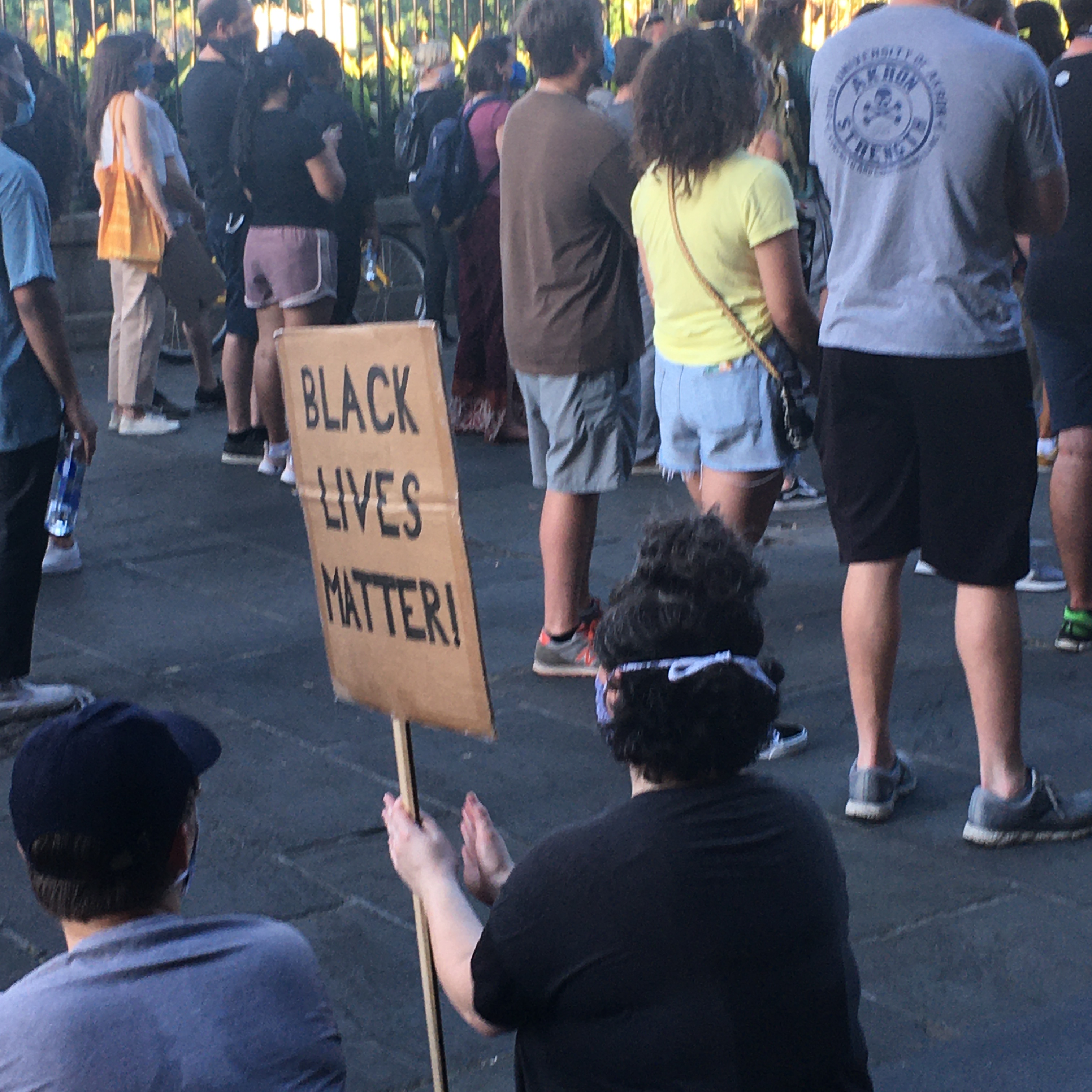
crowd gathers around the perimeter of the Square as organizers stand on the river side of Decatur since the authorities padlocked the interior park.
IMG-4324
Nola Allies and Support offering free help to anyone.
IMG-4351
The artist left these in the Square for folks to take
IMG-4352
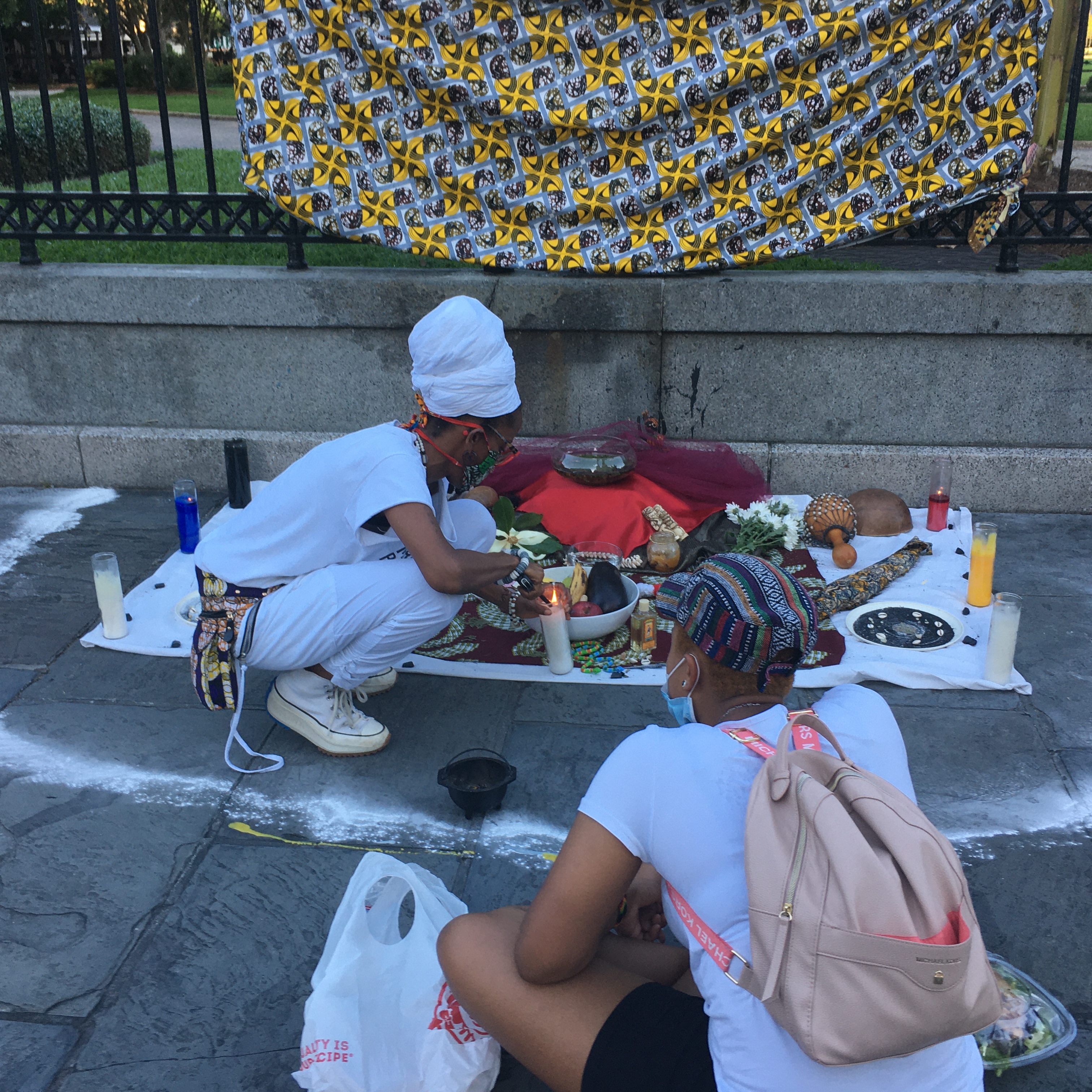
Rituals are valued in New Orleans
IMG-4357
Left on Royal Street after the protest
IMG-4350

https://www.nola.com/article_9098c236-a83f-11ea-af2b-13b8b65c663f.html

Old and New, Uptown and Down, Big and Small: Two Carnival loops

Update on Sunday: after posting this on Saturday morning, we heard last night that another fatality has happened on one of the mega float parades, this time during Endymion. This is a terrible situation for the victim’s family and also for the driver and the riders. It is clear that we need to do something more to protect everyone.
Update #3 and #4: Over the weekend, at least 2 riders fell from Uptown floats and 2 people fell from balconies overlooking St. Charles parade.) #dumpsterfireofaCarnivalseason


Now, back to the original post:


Two-Loop-Theory copy

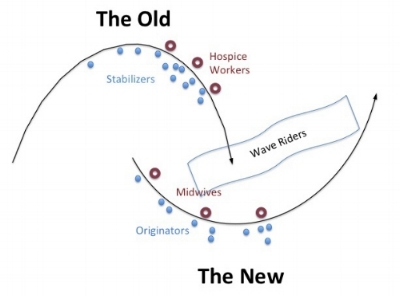
Image of the Berkana Two Loops theory


First, Happy Carnival to all.  We are now in #deepcarnival which is the time between Muses Thursday to Fat Tuesday, where everything we do has something to do with preparing for guests, working on costumes, visiting with friends, or making plans for Tuesday.

I am most definitely a downtown Carnival person although I have spent many happy days over the last 40 years of my Carnival era on St. Charles and Magazine, catching float parades. I was also known to be regularly on MidCity parade routes with fond memories of Krewes of Mid-City, Carrollton among others  – although not in the more recent Chad-filled years (shudder).

So even though I will always be a downtown girl,  I do appreciate some of the parade energy that now transpires above and on Canal Street, and would love to see small parades come back to all neighborhoods – altho with limits to the number of riders and the height and length of floats. I even considered joining Muses in its first year and I continue to be impressed by their verve and design sense, including their prized, handmade throws made from recycled shoes, their inclusion of exciting dance troupes, and especially their parade in 2006 which was beautifully appropriate to the grief that we were all feeling. And like Muses and Zulu, some of the other krewes do try to do their part in supporting public needs. However, real community effort from others is often murky or their pro bono work pretty brand-new, especially considering their long history.

Notwithstanding what the float parades contribute in return for the use of our public space, one should still read this post as in favor of the downtown Carnival that emerged post-1972*, and in opposition to the mega float parades held Uptown of recent years.

(*That date, by the way, was chosen as it was the last year of the old-line float parades traveling through the French Quarter which is what led to the new.)

I’m linking to a wonderful piece by Charles Cannon written for The Lens about this being the golden age of carnival, which I wholeheartedly agree with. We both also agree that it is mostly a downtown golden age, especially in terms of addressing diversity, in its DIY attitude, in reducing the explosion of cheap, Chinese-made trinkets thrown that clog our waterways, and in powerfully satirizing the powerful and ridiculous which, by the way,  is often the same group.

From his piece:

Krewe du Vieux is quite conscious of itself not just as an insurrection, but also as a resurrection, an effort to recover from the anti-carnivalesque aspects of the 19th century Uptown Carnival model. Their mission statement expresses this ambition explicitly: “We believe in exposing the world to the true nature of Mardi Gras — and in exposing ourselves to the world.” Since Katrina, Krewe du Vieux has been joined by several other downtown parading clubs — ‘ti Rex, Chewbacchus, Red Beans — each of which follows the Krewe du Vieux model far more faithfully than the Uptown one, especially by keeping dues affordable.

But the ultimate expression of the carnivalesque instinct in our time is what happens downtown on Fat Tuesday itself. Here the line between spectator and performer is almost totally erased as thousands — whether costumed, masked or merely bystanders — converge in the streets in a utopian vision of mass civic participation. And on this day — if only for a day — we also witness New Orleans’ idealized sense of itself come down to earth to shape the city’s social reality.


(And as much as Charles is right in that KDV has a significant place in the origin story of post-72 Carnival, I’d say that the gay French Quarter Carnival community, the Society of Saint Ann, the revival of the Baby Dolls, the Skull and Bones Gangs, and the continued development of Mardi Gras Indian tribes are truly the founders of this golden age. And I know he’d readily agree with me.)

Let me now address the image I have at the top of this post and link it to Cannon’s theory. The two-loop framework (which I use with farmers markets and food system leaders quite often) is focused on how “change happens in human systems out of a spontaneous series of local actions, and how these actions facilitate the development of integrated networks of relationships in the pursuit of mutual interests and goals.”

Each loop has a growth side (i.e., germination, innovation, maturation, and rejuvenation) and a death side (i.e.stagnation, disintegration, and decomposition).  It is also important to remember that the “new” loop is not always seen as a positive development, especially by those who feel the need to “give hospice” to the old. In fact, the new is not even “seen” for a long while by many of those focused entirely on propping up the old.

Two-Loop-Theory copy

In terms of Carnival, the two-loop theory is clearly in play and can be seen roughly in line with the uptown/downtown traditions. Uptown Carnival, which centers almost entirely around float parades, and flags hanging from mansions denoting “royalty” grows larger, more unattainable, and ever more cumbersome. This year, they had to cancel an entire night of parades because of high winds. It is true that a walking parade might have also canceled due to discomfort or even danger from flying debris, but the fact that the authorities noted that the high profile of the tractor-pulled floats is what made them too dangerous to roll was telling. Additionally this year, a pedestrian has been killed on the Uptown route by a float.

Over the last few decades, in the name of safety and capacity, the police have asked almost all float parades to move to the St. Charles route, leaving only one mega-parade still in MidCity: the aforementioned Endymion which arguably should also move to that route as its size seems to be more than the police can handle downtown, based on recent tragedies before, during, and after its parade, and especially with the St. Charles route also in action on the same day. (On that note, it is my sense that for now, the Uptown route should be expanded and alternate streets used for alternate nights so that the crowds can move and stretch out more.)

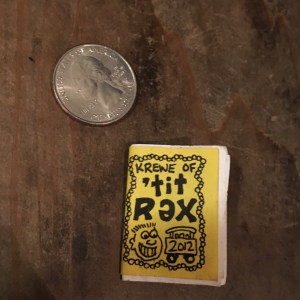
Even as the massive parades grow larger and louder, my favorite downtown parade honors a New Orleans tradition of school-aged children making shoebox floats this time of year.  By going small, the ‘titRex krewe is a wonderful example of the new and the innovative while it also ensures its own sustainable future by having rules about its size and design.

IMG_1638

Caesar Meadows’s annual comix for tR; part of the beauty of this is each has to be handed directly to a person.

IMG_1307

2020 tiny treasures from ‘titRex, honoring two New Orleans musicians lost in 2019.

Moving past the danger from the size of the floats, the mega parades’ throws are most often made of cheap plastic or toxic plush and thrown from high above at groups of people, leading to a frenzy of grabbing and angry responses from those stepped on or pushed aside for these handfuls. Whole bags of toxicity are often thrown, or the plastic bags they are packed in tossed to the ground in the thousands without regard to the damage to the waterways and fragile infrastructure of our city. In contrast, downtown walking parades pride themselves on handmade throws (see above). Below is a picture of the 2020 version of the annual Fitzgerald Letterpress MG Day postcard that is shared with all passersby during his Fat Tuesday meandering.

IMG_1605


Finally, in terms of paradegoers, the takeover of public space for days or weeks by families and clans who believe they have the right to spray paint grass and to set up entire, cordoned-off cities is clearly in lockstep with the megafloat parade system. The brilliant writer Maurice Ruffin pointed out the two versions along the Uptown route this year in a series of tweets:

Those entitled encampments, and the bleachers available only for fees or through contact with “connected” people,  illustrate the one central issue with the old and why more and more people are moving to the new. The divide between those who feel exclusivity or overindulgence is the goal of Carnival (or of any public resource really) and those who think revelry (or insert “social contract” here instead) is at its best when it is critical of unchecked authority and human-scaled is at an all-time high, maybe the highest since the national crisis years of the 1850-1890s. Speaking of that era, many of those newer to the area are clearly as shocked to see the old version of Carnival still as prominent just as they were in finding the number and visibility of the pro-Confederacy statues and names that remained (and remain) in public spaces around the area.

Even younger generations of those families native to the area have made it clear that they have no interest in appearing at their family’s secured space Uptown or in participating in the roles allotted to them at birth. One example was Rebecca Snedeker’s documentary By Invitation Only which showed her own Uptown royalty clan’s tone-deaf response to the racism inherent in their traditions. Interestingly, Snedeker’s mother, who took her turn as a Carnival “queen”of a old-line krewe, has also just published a book and had an interview, sharing her admiration for the new and moving the curtain aside a little more on the long-simmering issues with those traditions. Those women are also part of the new loop.

So the evolution of Carnival, as seen through the tension of old and new, continues and will no doubt exist for generations side-by-side.  Let’s just hope that the new that is centered downtown continues to influence the old Uptown version, and leads to another golden age that spans the entire region.


13119.jpg


L’eau Est La Vie and Greta: How Dare You

From Greta to the UN today:

This is all wrong. I shouldn’t be standing here. I should be back in school on the other side of the ocean. Yet you all come to me for hope? How dare you! You have stolen my dreams and my childhood with your empty words. And yet I’m one of the lucky ones. People are suffering. People are dying. Entire ecosystems are collapsing. We are in the beginning of a mass extinction. And all you can talk about is money and fairytales of eternal economic growth.

How dare you! For more than 30 years the science has been crystal clear. How dare you continue to look away, and come here saying that you are doing enough, when the politics and solutions needed are still nowhere in sight. With today’s emissions levels, our remaining CO2 budget will be gone in less than 8.5 years

You say you “hear” us and that you understand the urgency. But no matter how sad and angry I am, I don’t want to believe that. Because if you fully understood the situation and still kept on failing to act, then you would be evil. And I refuse to believe that. The popular idea of cutting our emissions in half in 10 years only gives us a 50% chance of staying below 1.5C degrees, and the risk of setting off irreversible chain reactions beyond human control. Maybe 50% is acceptable to you. But those numbers don’t include tipping points, most feedback loops, additional warming hidden by toxic air pollution or the aspects of justice and equity. They also rely on my and my children’s generation sucking hundreds of billions of tonnes of your CO2 out of the air with technologies that barely exist. So a 50% risk is simply not acceptable to us – we who have to live with the consequences. To have a 67% chance of staying below a 1.5C global temperature rise – the best odds given by the Intergovernmental Panel on Climate Change – the world had 420 gigatonnes of carbon dioxide left to emit back on 1 January 2018. Today that figure is already down to less than 350 gigatonnes.

How dare you pretend that this can be solved with business-as-usual and some technical solutions. With today’s emissions levels, that remaining CO2 budget will be entirely gone in less than eight and a half years. There will not be any solutions or plans presented in line with these figures today. Because these numbers are too uncomfortable. And you are still not mature enough to tell it like it is. 

You are failing us. But the young people are starting to understand your betrayal. The eyes of all future generations are upon you. And if you choose to fail us I say we will never forgive you. We will not let you get away with this. Right here, right now is where we draw the line. The world is waking up. And change is coming, whether you like it or not.”


From our local leaders:

Here in the bayous of Louisiana, our water and way of life is under threat, and we need your support.

Energy Transfer Partners (ETP), the very same company behind the notorious Dakota Access Pipeline, is trying to build a 162 mile crude oil pipeline across Louisiana called the Bayou Bridge Pipeline (BBP).

The BBP will pollute our water, crossing an astounding 700 bodies of water including Bayou LaFourche, a critical reservoir that supplies the United Houma Nation and 300,000 Louisiana residents with clean, safe drinking water.

BBP will destroy our economy. Existing oil pipelines have already created enormous problems for our crawfishing industry. The BBP will only make these problems worse, creating dams in the Atchafalaya Basin dozens of miles long that irreparably damage the ecosystem and make fishing for crawfish impossible. The crawfishing industry supports thousands of good jobs in Louisiana. The BBP will only create 12 permanent jobs.

The BBP violates indigenous sovereignty. Along its path of destruction, the BBP would impact sacred mounds and threaten drinking water of the United Houma Nation, a tribe that has been seeking federal recognition for decades. The United Houma Nation has not been consulted and has not given consent for the construction of this pipeline.

The BBP will destroy our coast. Wetlands are sponges for floodwaters. The BBP will destroy 150 acres of wetlands in its path and will “temporarily” impact 450 more acres. Wetlands are vital to a resilient Southern Louisiana, and already because of climate change and development, Louisiana is losing an average of one acre of coastal wetlands per hour. The State of Luisiana is frantically trying to figure out how to save our coast, but building the BBP will make the situation worse.

The BBP will increase flooding. The loss of wetlands also means increased flooding. When flooding is worse, our communities suffer. Our homes our damaged, our crops are destroyed, our infrastructure is eroded, our families get sick, and our economy is harmed.

The BBP is a climate disaster. It will create the carbon equivalent of 30 new coal plants. The BBP is not compatible with our global mandate to limit climate change to 1.5℃.

Our growing network of impacted landowners, tribal members, environmental justice communities, and fisherfolk have submitted comments, spoken out at hearings, and demanded proper environmental reviews and that our concerns will be taken seriously. None of this has happened. ETP has swindled landowners, bought our politicians, and refused to address any of the community’s needs. Enough is enough. If our leaders won’t stand up to stop this pipeline and protect our water, then we the people of Louisiana will.

We are building the L’eau Est La Vie camp to protect our water and our way of life from the Bayou Bridge pipeline.

Donate now


Also check out the work of:

Autumn Peltier, Mari Copeny Xiuhtezcatl Roske-Martinez, Xiye BastidaMelati and Isabel Wijsen