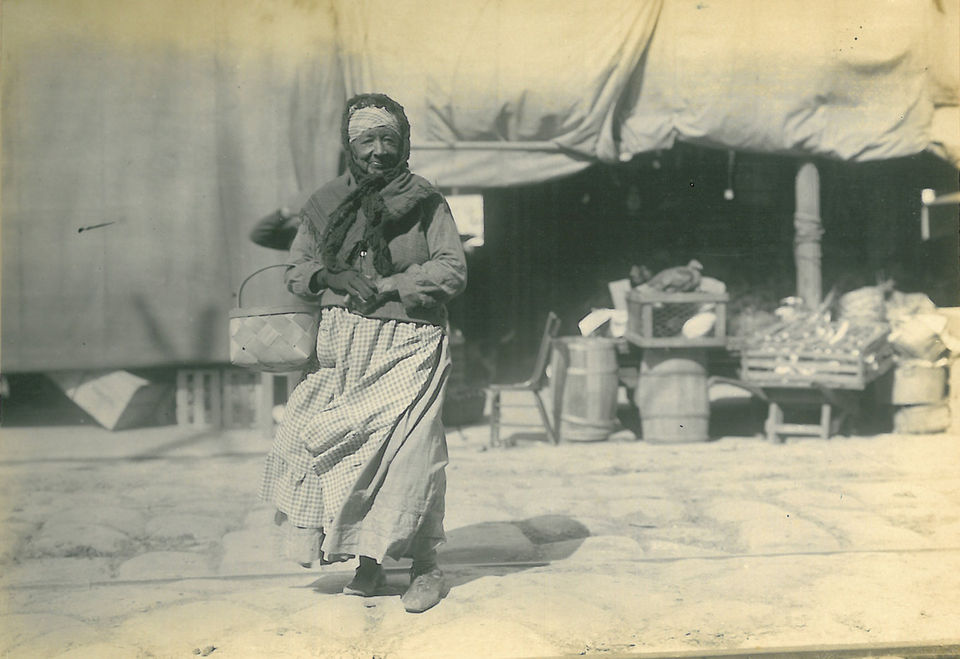
Imagining the Creole City: The Rise of Literary Culture in Nineteenth-Century New Orleans: Review

22351329

One relevant reason for this book is the recently reignited protests centering on race inequities and immigration across America, a conversation that is always sadly necessary in the American South. Local historian Rien Fertel addresses it by writing about the elite Creole literary circle that, starting in the 1820s/1830s, largely created and sustained the story of the region’s “exceptionalism.” That era of virtuous manifest destiny – not just in the South of course- is largely to blame for the lack of understanding among those who continue to grow up amid their own ethnic myths in the U.S.

For New Orleans, most people know the story of Creole culture only through Creoles of color who continue to inhabit the city, partly because they are largely responsible for much of what we continue to value culturally in New Orleans such as live music, public and family culture, and informal Carnival activities. But it is also convincingly identified here as resulting from the profiled writers unapologetic and sometimes incorrect assertion of their whiteness and its embedded privileges during Reconstruction through the turn of the 20th century. Yet the historical details contained here give those actions context and perspective; Fertel’s description of the politics of post-Louisiana Purchase New Orleans and the concern from the White House on any potential allegiance to the Old World as partially responsible for the Creoles’ sensitivity about the eclipse of their history is especially informative.

By offering individual profiles of prominent writers of Creole history starting with eminent historian Charles Gayarré, “Transcendentalist” New Orleans Choctaw missionary Adrien Rouquette and through those writers who took up the “cause” in the 20th century, including Grace King, Robert Tallant and Lyle Saxon, Fertel offers a human-scaled trek through that complicated history and time. Having the book end with the profile of George Washington Cable and his more inclusive history of the city,  he shows the reordering of history that began with Cable as well as the tension among writers, which (partly) led to Cable’s self-imposed exile from the city. Fertel does his best to fairly catalogue both good and bad (or the long and the short) of that tension; for example, he shares how Grace King’s later-in-life acknowledgement of Cable’s value to the city showed the potential for change among those earlier devoted only to the “gallant” Creole story.

The details gathered by many of these writers will continue to offer us a rich tapestry of Louisiana life and cannot be entirely eclipsed by their love of heroic epics or even their insistence on racial “purity” and entitlement that belied the truth that existed in the tumultuous and complicated times of Jim Crow’s America. Yet, the dismissal of most of these writers works in the last 50 years as provincial cheerleading with either a stated or unstated allegiance to the “Lost Cause” should be a lesson in these Tea Party days and is vitally important for any writer in these times to consider.


View all my reviews

My take on this take on Jane Jacobs and New Orleans

Post in The Lens by urban critic Roberta Brandes Gratz:

What would Jane Jacobs make of our post-Katrina transition from ‘death’ to ‘life’?


My response:

I always appreciate Roberta’s take on things, even though I think that she (and The Lens) sometimes rely on a narrative that is preservation precious, meaning it focuses on historic corridors and “worthy” buildings over a real housing criticism. Her exultation over the neighborhood corridor boom is a bit odd when in New Orleans, neighborhood mom and pops simply never went away but instead brought back after the levee breaks whiter and trendier than before.
Maybe the real issue is the feeling I often have that too many people still have a vision in their head of a return to the halcyon days of Main Street America, circa 1950, and expect city hall to deliver us a version of that, even though our lives and shopping have changed completely. That thinking limits the potential of old corridors and gives tacit approval to keep them empty until someone can redevelop them as before rather than re-imagining storefronts as low-income rental units or as rooms for unhoused population or shared workspaces or (gasp) even green space where buildings were before.

However, Roberta was spot on in her early assessment of the new hospital zone – about it being a developers boondoggle and about offering those jokers retail leases at ground floor and not about a better hospital than Charity.  That one of its aims wasto kill the street retail of Canal Street of one type by moving it to Tulane and likely make the old street filled with very exclusive shops and hotels- that is already coming to pass.
She is right about the code busting happening at City Hall: the new CZO is a joke. A form-based approach to zoning would be much more appropriate to our city than what we got.
The argument about streetcars is sort of lame, as the Rampart line going to Poland was stymied by the railroad and not by local policy or willingness, and the lack of public transportation is a deep and long problem that is not changed by that type of investment that involves streetcars which are clearly for the visitor.

Of course I am annoyed by her ignoring the French Quarter, my neighborhood, which is still a neighborhood and pound for pound the most active, diverse and mixed use area in the city in any 24-hour period; yes we have millions of visitors in our midst, but also have a somewhat steady population since K (and the changes correlate to the Orleans Parish census), more residents than the Marigny, or Bayou St. John or some other areas. We got our problems and some of them like development (or an overemphasis on festival culture!) are getting worse like every other area, but don’t dismiss us just ‘cuz that is the “supernative” thing to do when talking about New Orleans!

Since she was a many-times return visitor who then bought a home (although I think she may have since sold it) I am surprised at her toss off of the short-term rental issue. It seems to me it requires a thoughtful approach by thinkers like her, as she must know that it has allowed many homeowners to keep their house here and to do repairs and new residents to decide where to buy, and so when used well by principal homeowners, this system can be a boon.

But let’s give her writing the credit it is due: “Jacobs did not try to dictate how things ought to be; she wasn’t prescriptive..Local wisdom, she found, is where the best ideas for change take root. They don’t come from political leaders, planning professionals, developers or credentialed experts.” This is so right and because it is what I try to do in my work, I am glad to see it written so beautifully and simply.


(another response I posted the same day to a VCPORA story in the Advocate on lower population in the Quarter since 2000):

First, according to the Data Center, the numerical changes in our FQ neighborhood correlate to the dip in the entire parish. Second, those changes have a lot to do with the love affair planners and neighborhood associations have with encouraging massive single home renovations over incentivizing real mixed use. And the resident and business associations allowing heavy trucks in by just paying a small fee, actively discouraging bike or scooter parking, allowing film and festival culture to take over our area constantly are part of the problem residents have to overcome. Here are some things associations can do right now to swing the pendulum the other way: work to incentivize rent controlled apartments by offering tax breaks to those homeowners who have little used property (including upper floors of commercial buildings, especially on Chartres, Decatur and Canal), walk to find and fine those who hang key boxes on their gate that indicate illegal STR units, create a citizen reporting app to allow FT residents to file complaints immediately and directly about code violations and stop focusing on tshirt shop raids and instead focus on adding amenities that residents care about.

Tear that wall down

Here’s a link to a story about when highways are removed from inner cities:
http://gizmodo.com/6-freeway-demolitions-that-changed-their-cities-forever-1548314937

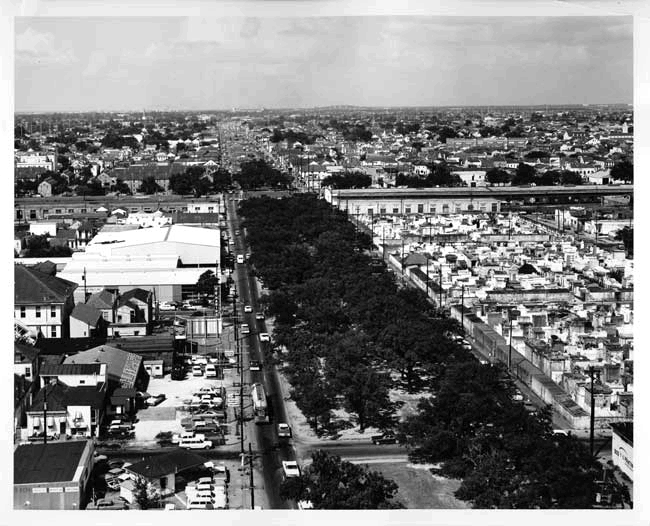
This is an issue at the forefront in New Orleans because of the ramps to the Claiborne Expressway built in the 1960s, need to be repaired soon. “An option that’s been tossed around for awhile is to remove the overpass, restore a former tree-lined boulevard there and let traffic run along it and surrounding streets.”

It may be important to remember both the spur that was never built:

220px-New_Orleans_Riverfront_Expressway_Octopus


And the expressway that was:

images.duckduckgo

And what Claiborne used to look like:
images.duckduckgo
As long as we’re on this story again, I am always surprised by how many freethinkers still trot out the erroneous story of how the win to not build the Riverfront spur in the Quarter in the 1960s led to the Claiborne Expressway. Simply not true.

In any case, it’s time to focus on the positive benefits of taking down the Claiborne Expressway and make sure that more negative developments are not put in its place.

TBFQ (throwback French Quarter)

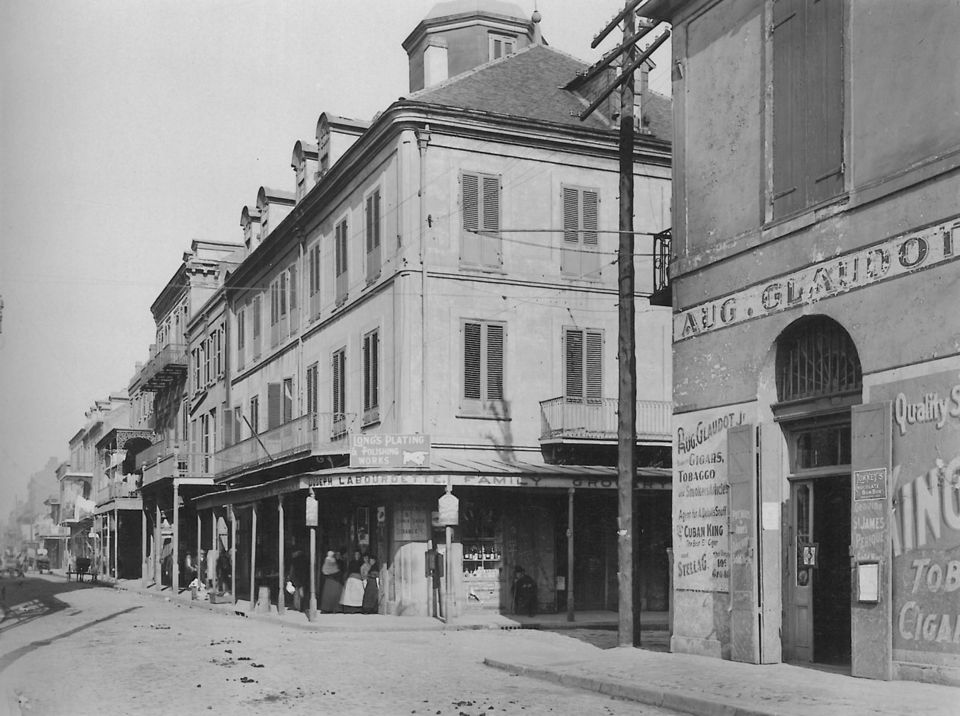
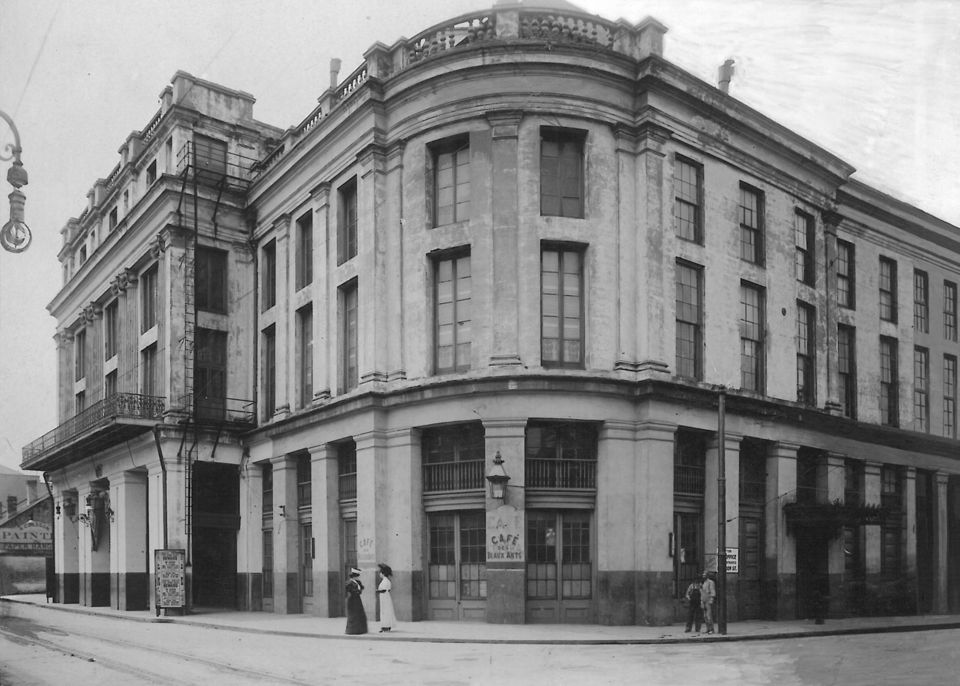
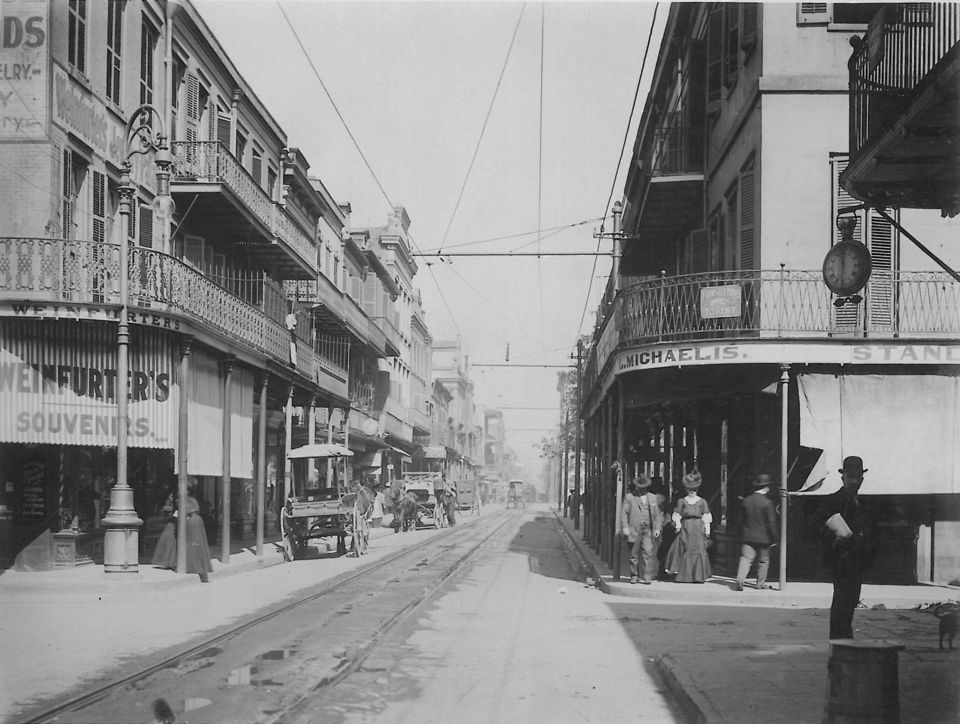
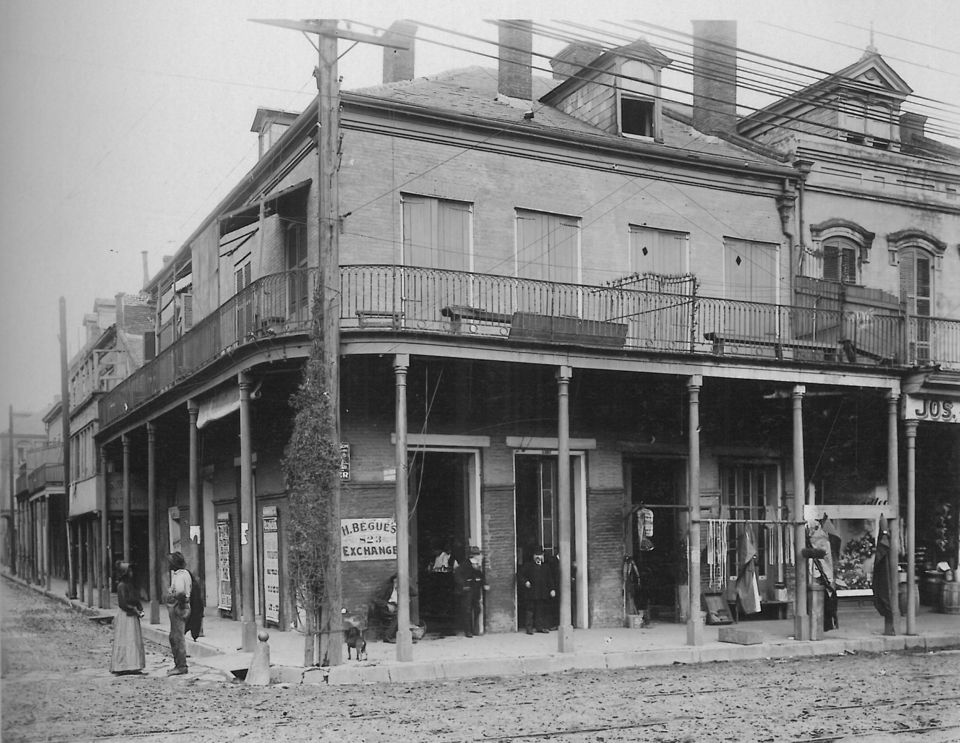
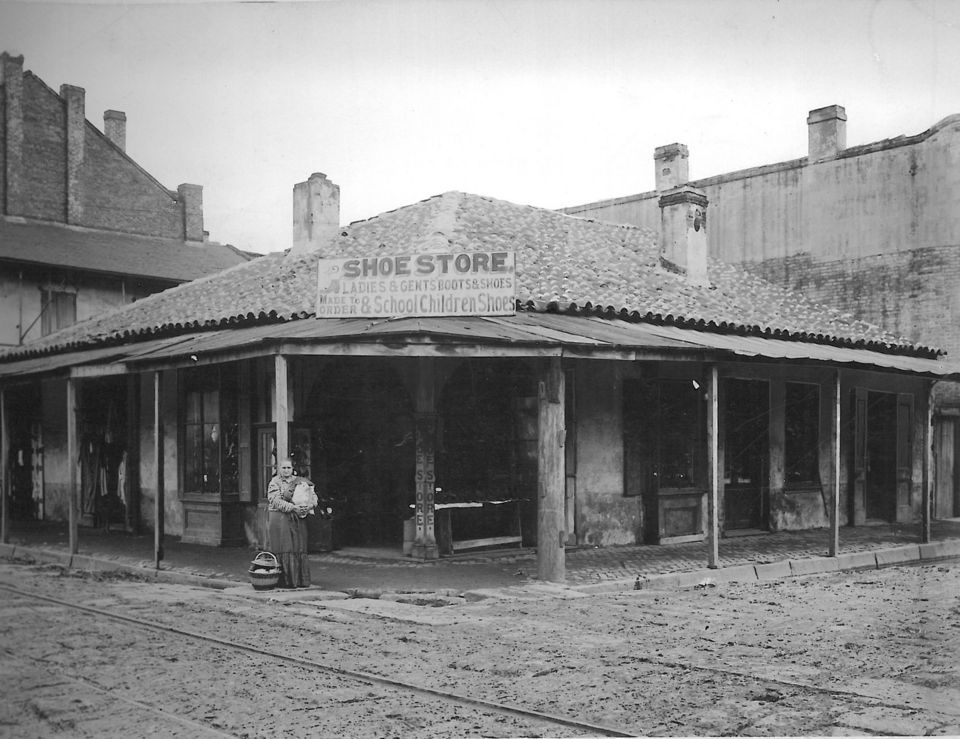
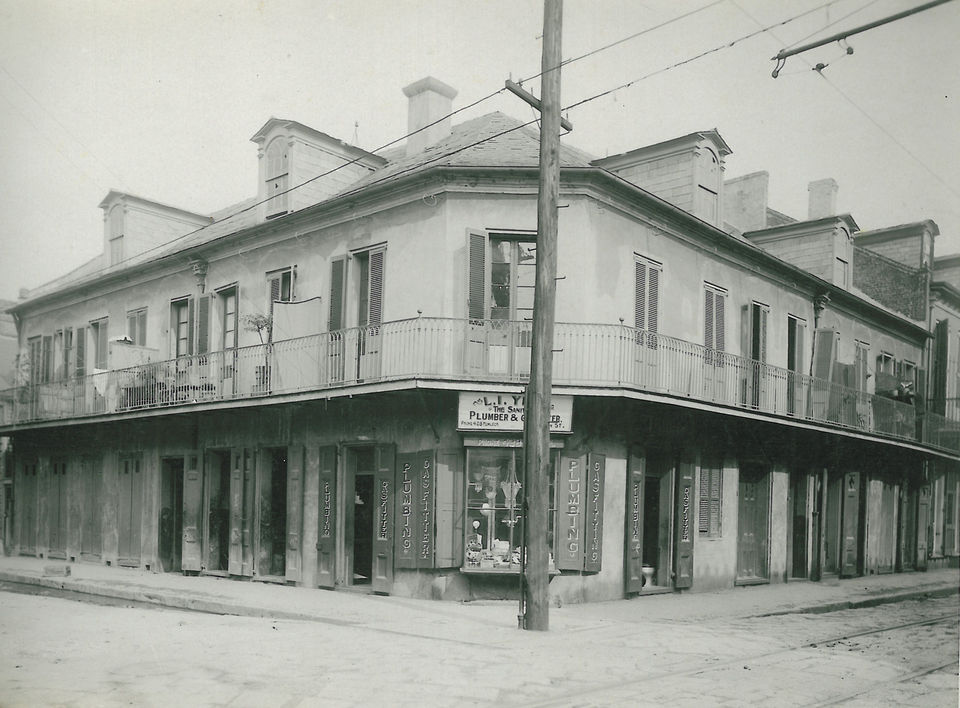
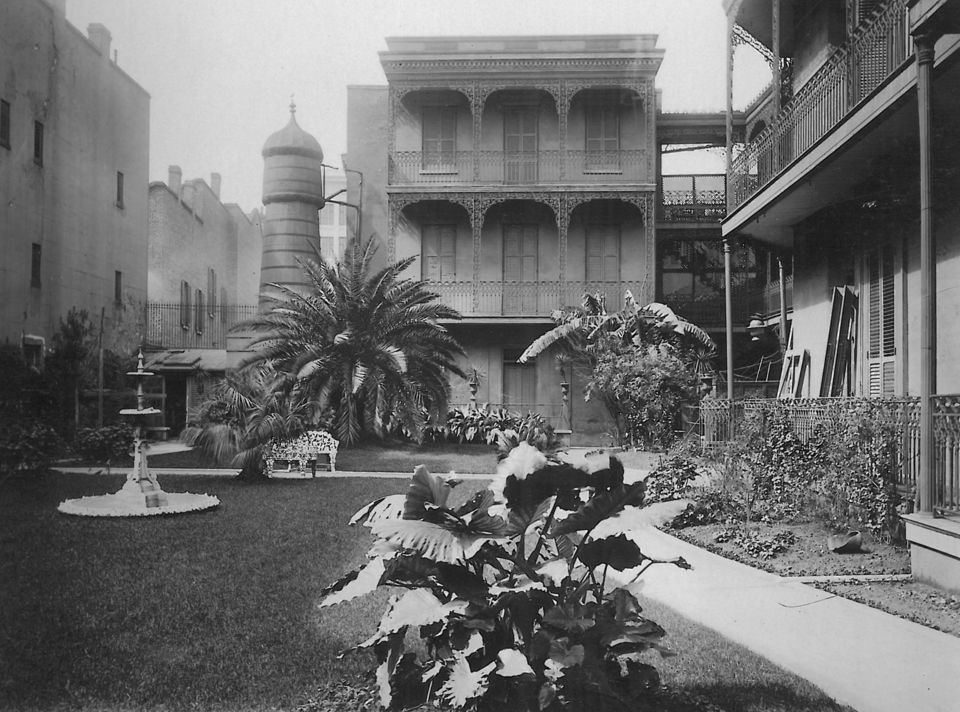
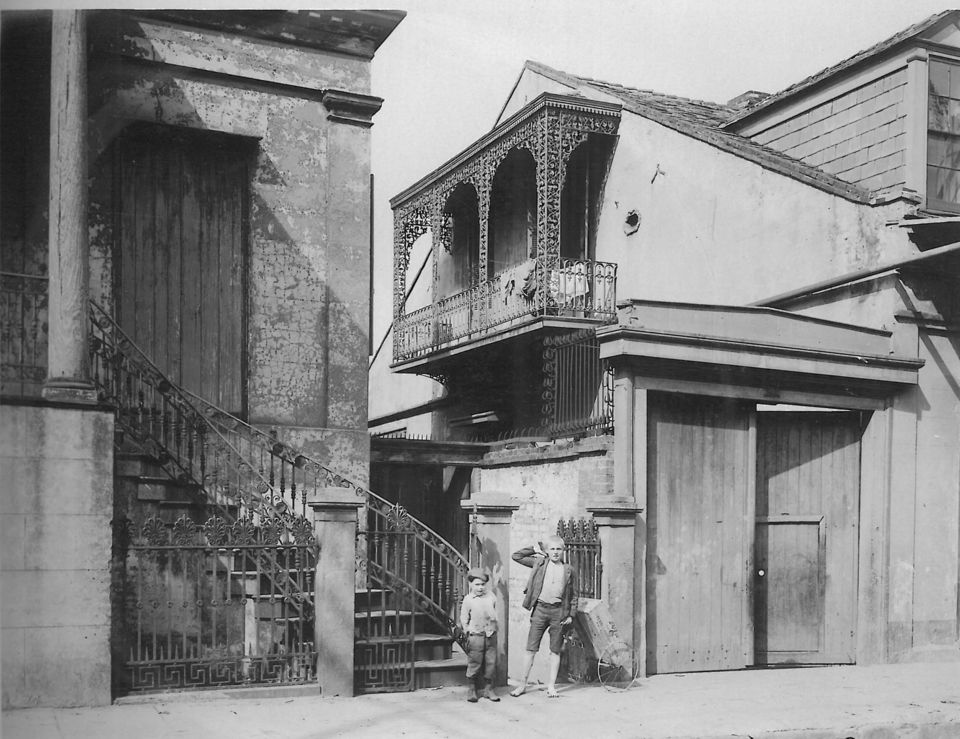
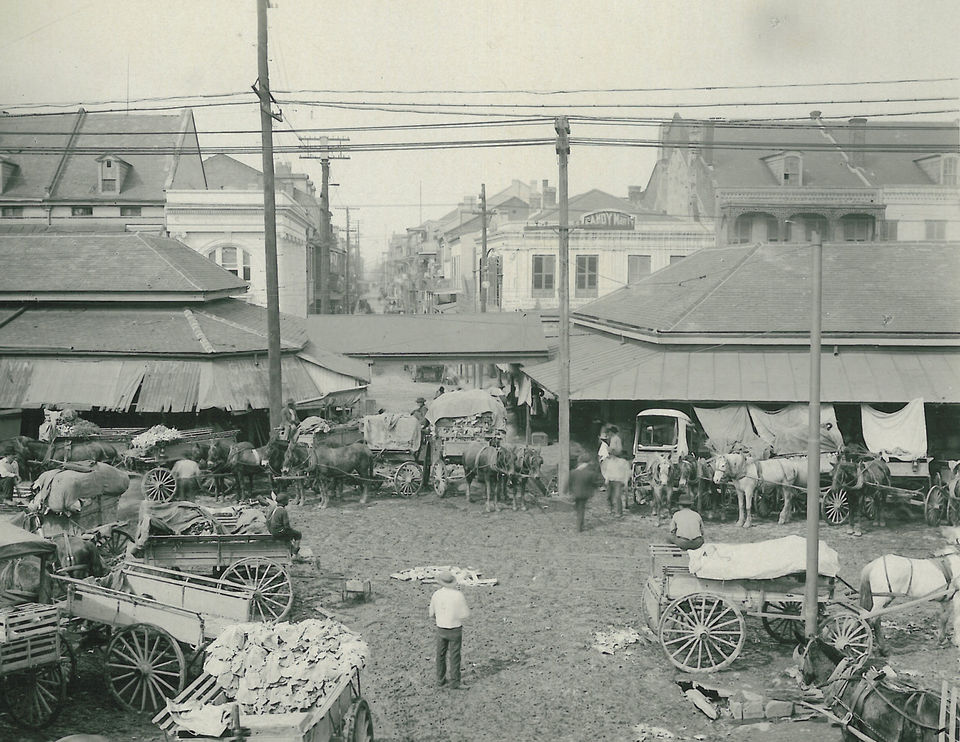
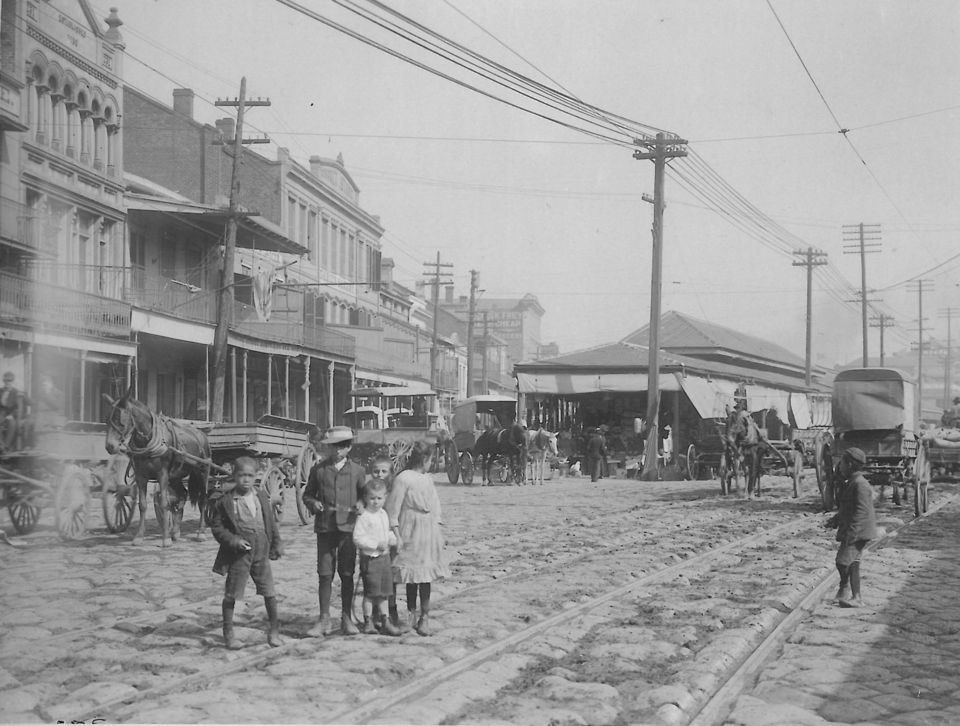
“The photos’ provenance is unclear. They are neither dated nor credited, and the handwritten captions provide only the barest of details. But at least some have been printed before, in the 1917 edition of “The Times-Picayune Guide to New Orleans,” a book aimed at tourists that was published annually for many years.”afqcornerjpg-7f1e0bec5389e80f

afqshopper3jpg-3bf9f8b42f7676d3

afqoperajpg-82f25b1fba0e83f7

afqroyaljpg-b6860034315540e7

afqbeguesjpg-1a146739d7b25ffc

afqbeauregardjpg-24074fa38f3e4881

afqquarterjpg-05f26364d25e2bdb

afqquarter2jpg-83ec17a61ee086cc

afqcourtyardjpg-b36b3a584c073bff

afqbeauregardjpg-24074fa38f3e4881-1

afqmarket2jpg-5c9f2445140856cb-1

afqmarketjpg-df9ac750254a115f

afqkidsbymarketjpg-d6c201d02a15b478

afqshopperjpg-f737822feb404c96-1

Battle of the Battlefield

Important history from writer Eve Abrams on preservation and home, race and privilege as we celebrate the 200 year anniversary of the Battle of New Orleans:

About 30 families lived in Fazendeville, and all, like the Cagers, went back generations—perhaps to its beginning around 1870, when Jean Pierre Fazende, a free man of color, New Orleans grocer, and opera lover began subdividing the slim tract of land he’d inherited from his father—also named Jean Pierre Fazende—and selling off parcels to recently freed slaves.
————————————————————————-
In the mid 1800s, local citizens organized to erect a monument in honor of their ancestors’ sacrifice and Andrew Jackson’s victory. Dwindling funds and the Civil War stalled construction, but by the 1890s, the Louisiana Society of the United States Daughters of 1776 and 1812 passionately took up the cause.

The National Park Service had powerful allies. Among them was the Chalmette Chapter of the U.S. Daughters of 1812, headed by Mrs. Edwin X. de Verges, as well as her dear friend Martha Robinson, New Orleans’ grand dame of preservation, who headed the Louisiana Landmarks Society. –

…Wielding influence and tenacity, she (Robinson) convinced both the railroad and the previously intractable Kaiser Aluminum to donate valuable acreage. Protecting a chapter of history was clearly at the forefront of Robinson’s agenda, yet dispossessing a community was the next, necessary step. “Rather than get tangled up with Martha Robinson,” write Abbye A. Gorin and Wilbur E. Meneray, “politicians considered an alternate course.” Several of these politicians—Congressman F. Edward Hebert, Senators Russell B. Long and Allen J. Ellender—took up Robinson’s cause. They introduced legislation in Congress to purchase land for the park in time for the Battle’s 150th anniversary. The resolution passed, and President Kennedy signed it into law just months before he was assassinated.

“The government did eminent domain on us in 1964,” explains Valerie Lindsey Schxnayder, whose father was the last to leave Fazendeville. He moved his entire home —by trailer—to Reynes Street in the Lower Ninth Ward, where it was flooded the following year in Hurricane Betsy, and swept down the block in Katrina. In the mid-1960s, the market price for a new home in St. Bernard was around $16,000; residents of Fazendeville received around $6,000 per home. With Lindsey and the other citizens of Fazendeville gone, The Village was wiped away.

See more at: http://www.louisianaculturalvistas.org/defeat-fazendeville/#sthash.XAS9Bgam.dpuf
– See more at: http://www.louisianaculturalvistas.org/defeat-fazendeville/#sthash.XAS9Bgam.dpuf

Community Architect: The Future of Public Markets and the Case of the Lexington Market in Baltimore

A very good description and some simple rules for revitalizing public shed markets written by a Baltimore architect. He focuses his attention on the Lexington Market (which I have visited when in the area for farmers market business) that he seems to work near enough to observe regularly. I remember on my visits being impressed by the vitality of this market even though the quality and quantity of healthy goods seemed low. I actually still think about this market regularly, because it was a particular kind of anachronism that reminded me of visiting the old West Side Market in Cleveland in the 1960s/1970s; in other words, it still seems exactly like those dark and chaotic largely forgotten shed markets that were sprinkled throughout many American cities back in the mid 20th century. He points out that Lexington already has regular shoppers and acts as a food hub in what is largely a food desert, which is a significant point. It’s interesting that he seems to think that finding ways to attract tourists is one key to making this market really work, which may or may not be true in my estimation. I’ll leave that discussion for another time and post.

In any case, as pointed out by the author, the attention paid recently to many of these markets has often led to one of two outcomes: either successfully engineered spaces full of event activities and local color/products, filled regularly with proud residents on the weekends and eager tourists during the week, OR badly re-designed ones with ridiculous lighting and signage telling us of their authenticity with wide empty aisles and too much of one thing. Unfortunately, the French Market (especially after its hot mess of recent equally overdone and underdone renovations) is more of the second with chunks of the Lexington Market’s structural and place-based issues to solve, but I do believe that it is due for its renaissance. However, it has always seemed to me that the job of French Market director may require someone with the letter “S” on his or her undershirt. Last time I checked, I believe that the job included: maintaining a significant number of historical buildings for the city,  being landlord to the uptown side of the Pontalba building/apartments, overseeing the anarchistic artist and reader colony space in Jackson Square, recruiting and serving the permanent storefront tenants from Jackson Square to Ursuline, and creating and managing events constantly. Ad oh yeah- somehow revitalize the 2 open shed markets at the Barracks end so that locals will come too. Honestly, having watched the last few eras of FM leadership closely, it seems that these open sheds take up 75% of the time and goodwill in that job, while supplying little of the income. What must be understood by the FM board and city officials is that these sheds are now difficult to access for most downtown residents, especially with no quality public transportation. And now with the management of the linear Crescent Park also on their to-do list, I’d say that the sheds and the park are one big problem all on their own, but also the most likely path to winning the hearts and minds of locals and savvy tourists too.

In addition, the massive size and varied uses of the French Market district presents a very different set of spatial problems and possible solutions than what was possible for the small D.C. Eastern or even its slightly more appropriate D.C. sister, the newly fabulous Union Market or any number of others that I or others have visited in the last two decades. The bad history of the last 40 years at the French Market has also meant that people actually have a negative perception, not just a neutral perception of this space and working on those sheds a little at a time is too little to change that to positive. The very serious lack of nearby farm production also needs to be acknowledged and means that simply signaling that local goods are welcome to be sold will not be enough to have enough on hand. And lastly, what to do with the dozens and dozens of vendors who exist there presently? Incentivize a product change or focus on encouraging them to move on to storefronts to make way for new ideas?

One can compare the French Market to the St. Roch Market to see how different their outcomes and the work to make it so. And yet, even with the small footprint and limited uses needed for St. Roch, look how many millions the city had to spend and how much time it has taken to just get to someone leasing it, much less actually successfully filling it with dynamic retail operator, and still, no grocery or low-income component.

from the original post:

Consultants, of course, also aim at the currently totally un-yuppified food selections, in which each baker (there are seven) has the same yellow cakes smothered in colorful oily frostings, and where there is more fried food than exotic fruit. But here, too, lingers the danger of eliminating the authentic Baltimore grit, with specialties like pigs’ feet, freshly cut veal liver (“baby beef”) that can only be had here or in some of the Asian supermarkets out in the County. Most famously and maybe most Baltimore, of course, is Faidley’s, with its seafood, oysters and crabs and, most importantly, the Baltimore crab-cakes, which are shipped on demand nationwide.

Discussions about the Lexington Market quickly touch nerves, depending on with whom one speaks, because the market serves various needs and maybe evokes even more aspirations. There are those who love its gruff authenticity and old fashioned food choices, there are those who use the market for their daily shopping because adjacent neighborhoods to the west have scarcely any stores, and then there is a growing number of people who think that the market surely doesn’t live up to its potential and needs a major re-set. Community Architect: The Future of Public Markets and the Case of the Lexington Market in Baltimore.

Louisiana Purchase at the Cabildo on December 20, 1803

TIMES PICAYUNE
February 28, 1935

Louisiana Purchase, Completed in Cabildo, Stands as Greatest Realty Deal in History

Every other real estate deal in history fades into insignificance when compared with the Louisiana Purchase.
For $15,000,000, France turned over to the United States all of what is now known as Arkansas, Iowa, Kansas, Missouri, Nebraska and Oklahoma; three-quarters of Louisiana, Colorado, Montana and Wyoming; half of Minnesota and North Dakota; a quarter of New Mexico and small parts of Mississippi, Idaho and Texas. And Napoleon Bonaparte made up his mind to make that sale while he was mad as a hornet in his bathtub!

The date was December 20, 1803. Louisiana had been French from the discoverers to 1769, then Spanish until November 30, 1803, French again for 20 days, and now was to become American.

Up there in the Sala Capitular of the Cabildo, the second-story room on the corner of St. Peter and Chartres streets today, the great valley empire of the Louisiana Purchase was to be transferred with pompous formality to the United States of America.

In the Sala Capitular the dignified gentlemen were exchanging credentials. Pierre Clement Laussat, colonial prefect of Louisiana, who for 20 days had ruled the huge province for Napoleon Bonaparte, first consul of France; William C.C. Claiborne, first American governor of Louisiana; General James Wilkinson of the United States army.

Laussat was preparing to turn over to Claiborne and Wilkinson the vast territory Napoleon Bonaparte had sold for $15,000,000 in the name of the republic of France to President Thomas Jefferson in the name of the United States of America.

The 10,000 population of New Orleans, streaming toward the Place d’Armes, packed inside of it, couldn’t have dreamed of all that. Nor the 50,000 population of the great empire up the valley. All they knew was that the flags and the ground rules were changing again. Most of them hated the change. They had been successively subjects of Spain, citizens of the republic of France, citizens of the United States of America, all within 22 days.

The spectators watched the troops march into the square and take up their positions, in even ranks. There was the New Orleans militia under Colonel Belle-chasse. There were United States army regulars in the tight knee-breeches and tailcoats, their criss-cross white belts, their heavy smooth-bore muskets. Here in a group stood the “Kaintocks” – Kentucky flatboatmen, many in Indian buckskin and coonskin caps. Some carried the long Kentucky rifles on the arms, were belted with hunting knife and Indian tomahawk.

Inside the Cabildo the dignified gentlemen had accepted the others’ credentials. Clerks had droned through the lenghty wording of international documents. The gentlemen rose and solemnly shook hands. Governor Claiborne produced his first proclamation of this vast new land he ruled. It was in three languages – English, French and Spanish. Claiborne, Wilkinson and Laussat advanced to the second-story windows of the Cabildo. The proclamation was to be read in all three languages. The United States of America notified the world thereby that Louisiana was now American. Some cheers rose.

Stars and Stripes Hoisted
Then an armed color guard marched to the flagpole in the middle of the Place d’Armes. Solemnly they hauled down the flag of France. Solemnly they hoisted to the top of the pole the Stars and Stripes. And the United States army regulars at the sharp command of an officer raised their muskets and fired a salute to the flag that, with added stars, floats over Louisiana yet. Then the Claiborne proclamation was read.

Americans began pouring into New Orleans from that day. The 1810 census, seven years later, shows 17,242 population for the city, 76,556 population for Louisiana. New Orleans was launched on her career as the greatest city of the South.

Incredible today sounds the welter of motives and circumstances that led to that transfer of Louisiana. They didn’t even know many of the details, then , those folks who feasted and danced and drank deep at the banquets and the brilliant ball given in New Orleans that night of December 20, 1803. Documents then buried in private and secret archives have come to light since that day. Now the almost unbelievable picture is clear.

First of all, Napoleon Bonaparte literally made up his mind to sell Louisiana in a fit of rage while he was in his hot bath. It was a strangely shaped copper tub with its own charcoal stove attached. Napoleon’s circulation was poor. He awoke cold. He would sit an hour in that simmering, soapy, perfumed water. Such a tub stands in the Cabildo today.

Two Americans in Paris
In Paris, then , were two Americans, Robert R. Livingston, brilliant New York lawyer (who never saw the Louisiana he helped buy for his nation). and James Monroe, later president of the United States. They came with President Thomas Jefferson’s proposal to buy Louisiana. Napoleon delegated to deal with them Barbe Marbois, “peer of France.” Actually, Robert R. Livingston and Barbe Marbois did about 90 per cent of the negotitating. Monroe arrived late; was sick in bed most of the time.

Napoleon Needed Money
Napoleon was planning to invade the British Isles and conquer his worst foes in their homeland. He needed money for army and fleet. But he hadn’t made up his mind yet to sell Louisiana.

A letter to his brother, Joseph Bonaparte, tells how he did make up his mind in his bath. Joseph and Jerome, two of his brothers, called on him that morning. Jerome was brilliant in a new uniform of light blue and silver. Napoleon’s valet admitted them. Napoleon, neck-deep in hot water, his brothers standing near the tub, suggested it might be a good thing to sell Louisiana. The brothers fought the idea hotly. Their language angered Napoleon. Suddenly, as the three screamed at each other, quarrelling, excited Corsicans all in the midst of a family battle, Napoleon leaped to his feet. A wave of soapy water deluged Jerome Bonaparte, ruined his costly new uniform. Their high, shrill voices alarmed the servant. He came running from the ante-room, thought he saw the brothers about to fight each other, and fainted with fear and excitement. Napoleon, naked, leaped from the tub. The three brothers bent over the unconscious servant, reviving him.

But Napoleon’s last defiance of his brothers: “Who rules France? You or I? If I want to sell Louisiana, I will!” became his fixed determination.

United States AFTER Louisiana Purchase.
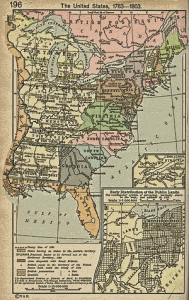
US after 1803 purchase

US after 1803 purchase

Americans Delighted
Livingston and Monroe learned to their delight that Napoleon would sell. After long haggling, the price was fixed at $15,000,000, a tremendous sum in those days. The treaty was signed at last by Livingston, Monroe, and Barbe Marbois. A letter from Livingston and Monroe to Rufus King, then American minister to England (first of the long line of what became ambassadors to St. James), was the first notification to anyone that the treaty was signed. The treaty was signed and sealed in triplicate.

Thomas Jefferson admitted he “strained his power until it cracked” making that $15,000,000 purchase. He had to borrow the money. And the lender was the London banking house of the Barings – the great English financial firm of the day!

It sounds incredible that an English banking firm lent the money to the United States, England’s recent victorious enemy, to pay Napoleon Bonaparte for Louisiana when England wanted Louisiana, anyway, and it was Europe’s open secret that Napoleon planned to invade England and was seeking desperately to finance the proposed expedition. But they did.

Money for Army and Fleet
Napoleon spent the money on army and fleet, the fleet that never sailed from Boulogne to land that army on English soil. The adverse winds, the stormy channel crossing, saved England that invasion.

And, as the War of 1812 and the Packenham expedition that failed a the Battle of New Orleans in 1815 revealed, England had planned to take Louisiana by force, anyway. But that was all in the remote future, undreamed by those crowds in New Orleans that fateful day of December 20, 1803. Some of them cheered, some complained. A lot of them went to sleep to wake with headaches caused by anything from champagne and madeira, port and sherry, to Monongahela whiskey and West Indian rum. And with the ceremonies all over, Governor Claiborne started out the next day to solve problems practically unsolvable, to govern in American fashion, as American citizens made overnight, a population of some 60,000 that language of most of whom he didn’t even understand!