Entrepreneurial Jackson Square

The cultural and political significance of the square has already been well researched and widely published, all of it illustrating its role over the 300+ year history of New Orleans. Many writers have highlighted its colonial role as a military parade grounds, and others have focused on its development into its current role as the chief tourist mecca for the more than 10 million visitors the city hosts annually. Few writers however, focus on the individuals that have and continue to shape this square, doing so as builders, philanthropists, artists, activists, residents, and more.

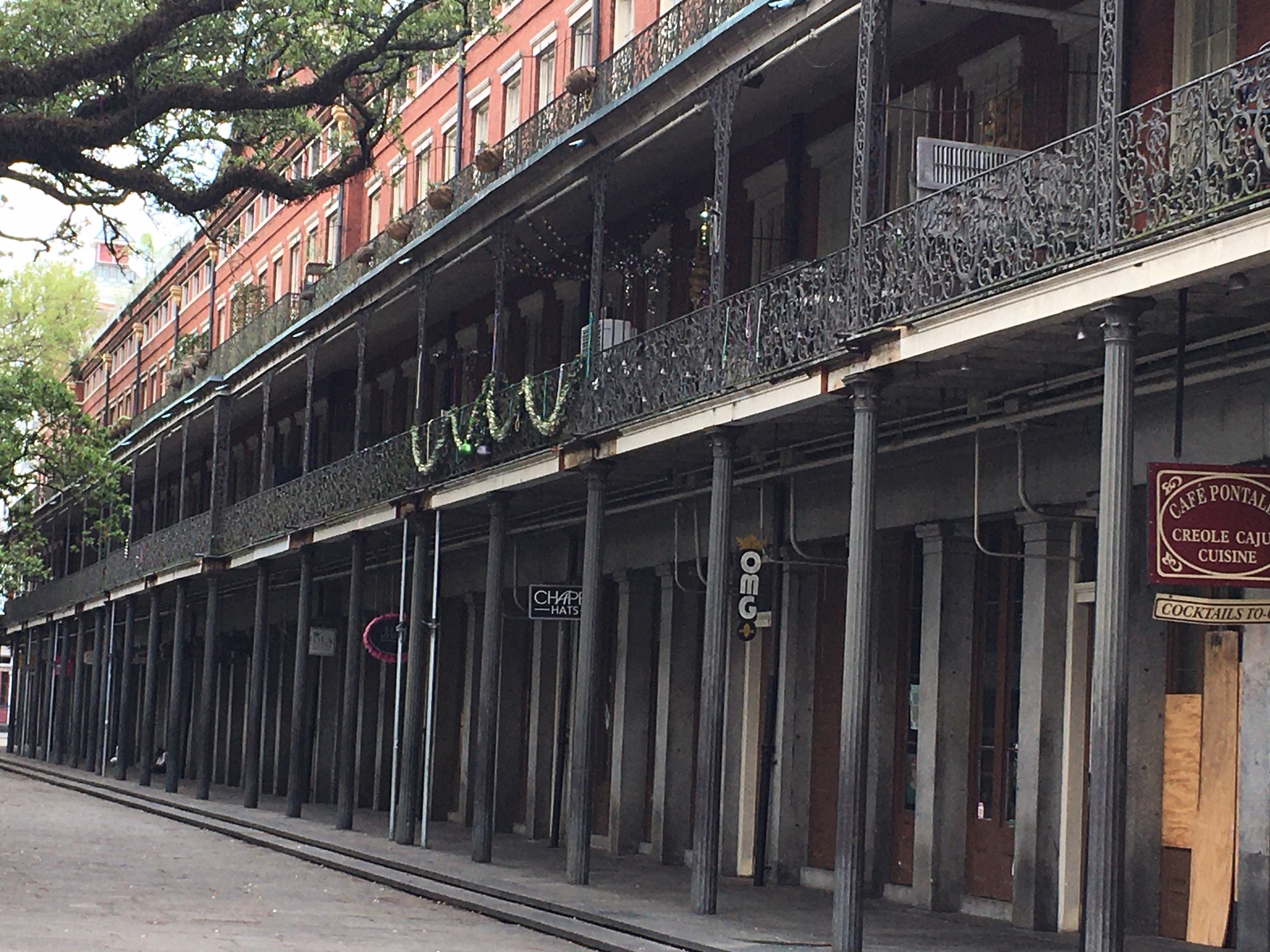
Since the archives of written pieces on that history exists, this series of articles will instead focus on how entrepreneurs have used the Square since 1850. That date was chosen because it is when the Almonaster/Pontalba family added its final (of many previous) contributions to the Square with the iconic 4-story red brick buildings that still anchor the upper (west) and lower (east) sides of the Square. The buildings built by Micaela Almonaster Pontalba, a native daughter of the city who sailed back to France after they were completed never to return, set the scale and rhythm of how the Square conducts business to this very day.

Baroness Pontalba herself will be one of the entrepreneurs that this series will celebrate, as her efforts are a perfect prologue for the modern uses of the Square. Her half-decade long development of the two Pontalba buildings will center this story, as will the later generations of the Pontalba family who could not withstand the late 19th century and early 20th century abandonment of the square by the city’s elite. Luckily for them, others stepped in once again to keep the Square a democratic and dynamic place.

Even though the buildings remain the most significant contributor to how commerce is conducted in these 2.5 acres, the Baroness’ original plan for their use has to be considered an almost total failure. Instead, in true New Orleans fashion, the Square’s users adapted them through philanthropic intervention, city, state and federal oversight, and the sheer vehemence of New Orleanians who saw their value. These interventions happened at various times over the last 170 years, often at the last possible moment before demolition would have invariably led to the loss of the Square’s daily activity.

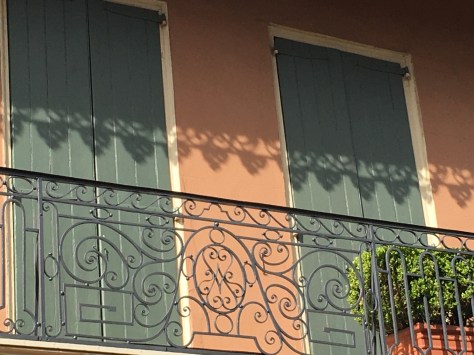
French Quarter Ironwork: monograms and initials

I have been gathering photos of different ironwork motifs in all four quadrants of the Quarter and will be researching them further when I am able to get to the wonderful HNOC’s Williams Research Center.

Here are all of the (18) monogram and initial motifs I have found – so far.

I have found them on Burgundy (2), Dauphine (1), Bourbon (1), Royal (5), St. Louis (1), Chartres (3), at the Pontalbas,  2 different motifs on the Skyscraper at St Peter and Royal, on a modest brick house on Dumaine (where the AP scrollwork from the Pontalbas is on the gate transom of a house in mid block for some mysterious reason) and two on Esplanade. Most are found on second or third-story balconies, but a few are on front doors, and a few others are on a gate.

Thanks to The Collins C. Diboll Vieux Carré Digital Survey at HNOC I was able to research each location to see if I could find a likely reason that particular monogram or initial was added. I am also searching for other history books to find other information as needed so I will continue to refine and add to this list in the next few weeks to capture each monogram and its history.
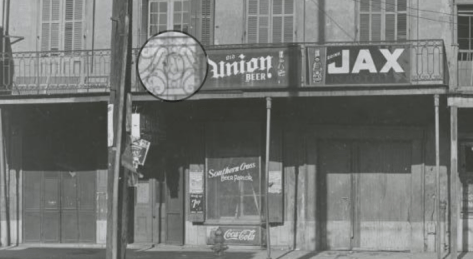
Have been long confused by description of the Bosque House: “The central panel of the rail has a most graceful arrangement of scrolls in the character of the best 18th-century work and in an oval at the center appears the monogram of Bartholome Bosque, curiously backward when seen from the street.” It doesn’t seem backward any longer.
Yet, in the 1930s pictures of the scrollwork it does indeed look backward in the picture:

Love the description too:

The wrought iron railing of this balcony is perhaps the finest feature of the façade and is comparable to only three or four other examples in New Orleans — the Cabildo, the Pontalba House, and the Correjolles House at 715 Governor Nicholls. All these railings are of about the same date and are all probably the work of the same craftsman, who, in the case of the Cabildo and the Pontalba House is known to have been Marcellino Hernandez, a local blacksmith of great skill.

I went to look at 715 Governor Nicholls and its ironwork certainly resembles the Bosque House:

715 Governor Nicholls

Next up: the anthemion or palmette motif.

Shutdown catch up

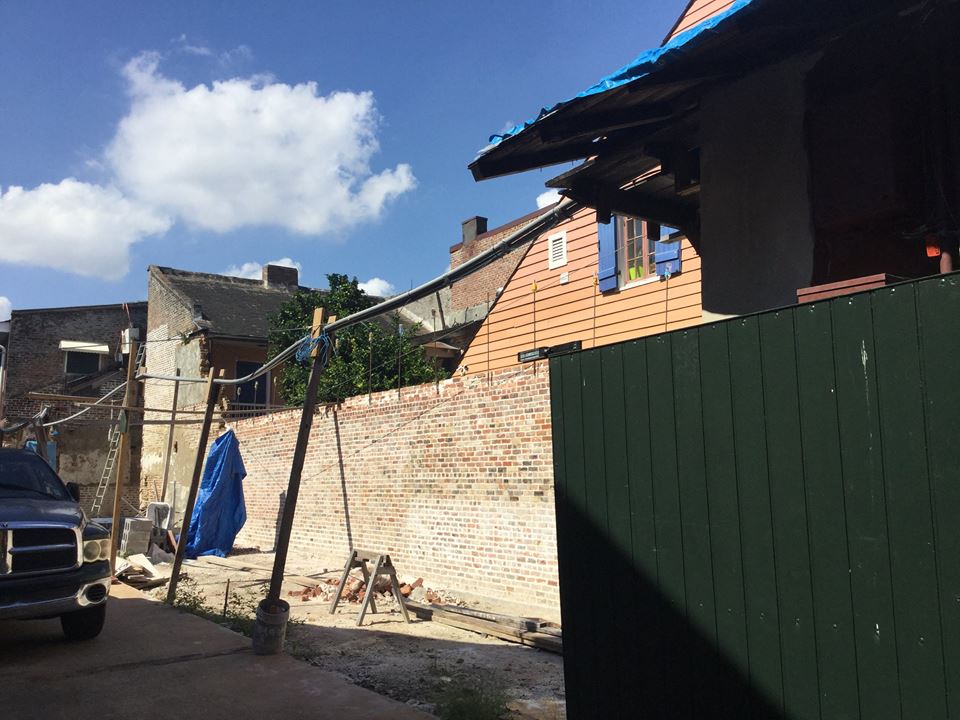
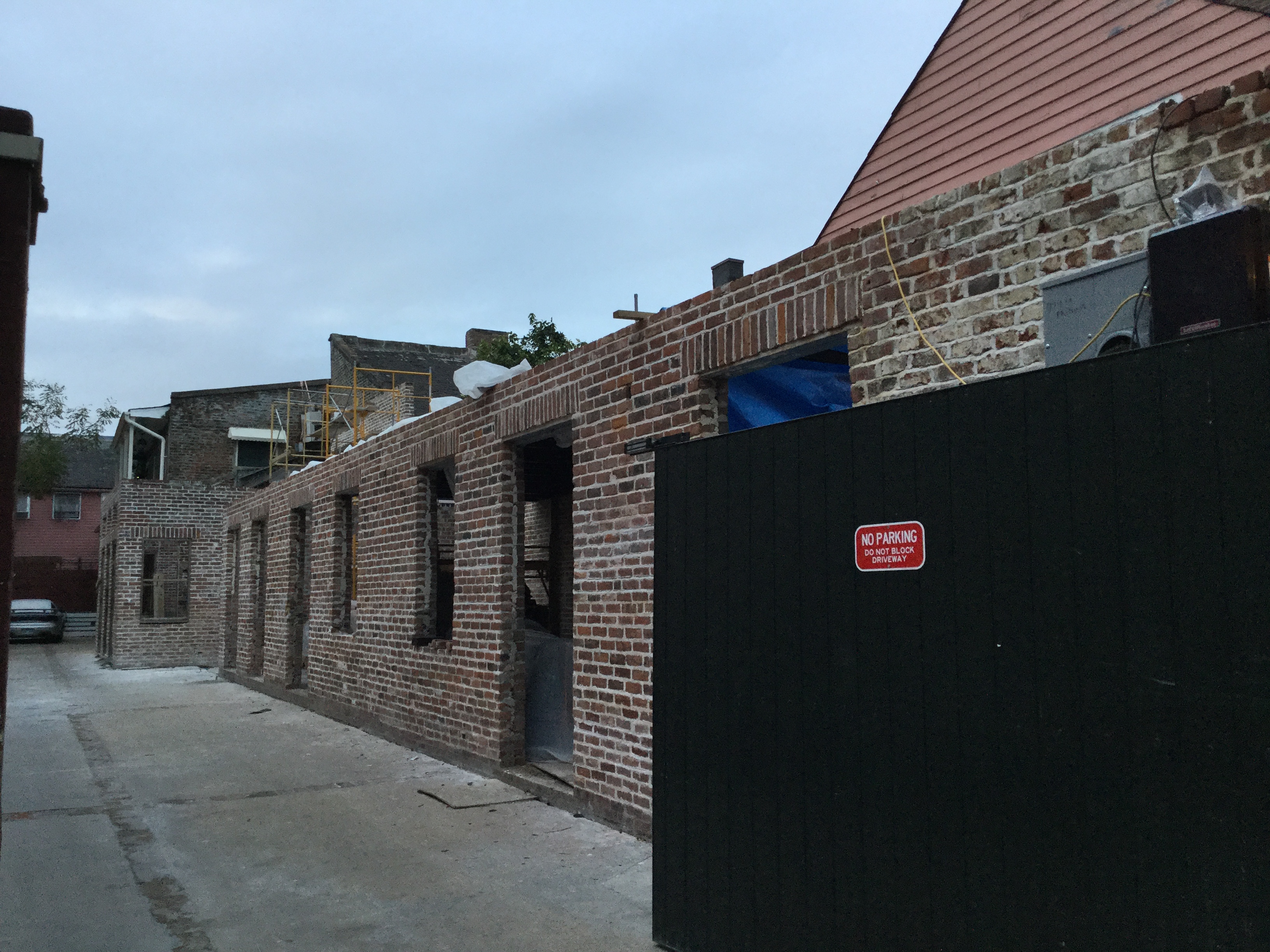
There is always renovation in the Quarter, but Mary’s Ace Hardware on Rampart says that right now it’s the bar owners, restauranteurs, and homeowners who outnumber the usual contractors coming in to their well-stocked, 2-story establishment.

The few contractors who are coming in to the Quarter tell me that their stress level is lower than usual, thanks to fewer people and sparse traffic.

For example, the guys replacing the old rusted gallery posts for new ones at the hotel on Saint Ann pulled right up on Saturday morning, puzzled out their strategy without having to stop every few minutes to let pedestrians or cars pass which meant the majority of the tricky and heavy work was done toot sweet. And even though clearly exhausted, the guys were more relaxed than usual at the end of their long day.

Some of these projects began long before the shut down, some will be happening even when the festivals return, but all of these workers and owners are using the time and space this shutdown has provided.

#nolacorona

IMG_2322

IMG_2353 (1)IMG_2358 (1)IMG_2361

IMG_2362

worker trucks out number out of state plates

IMG_2365

IMG_2366

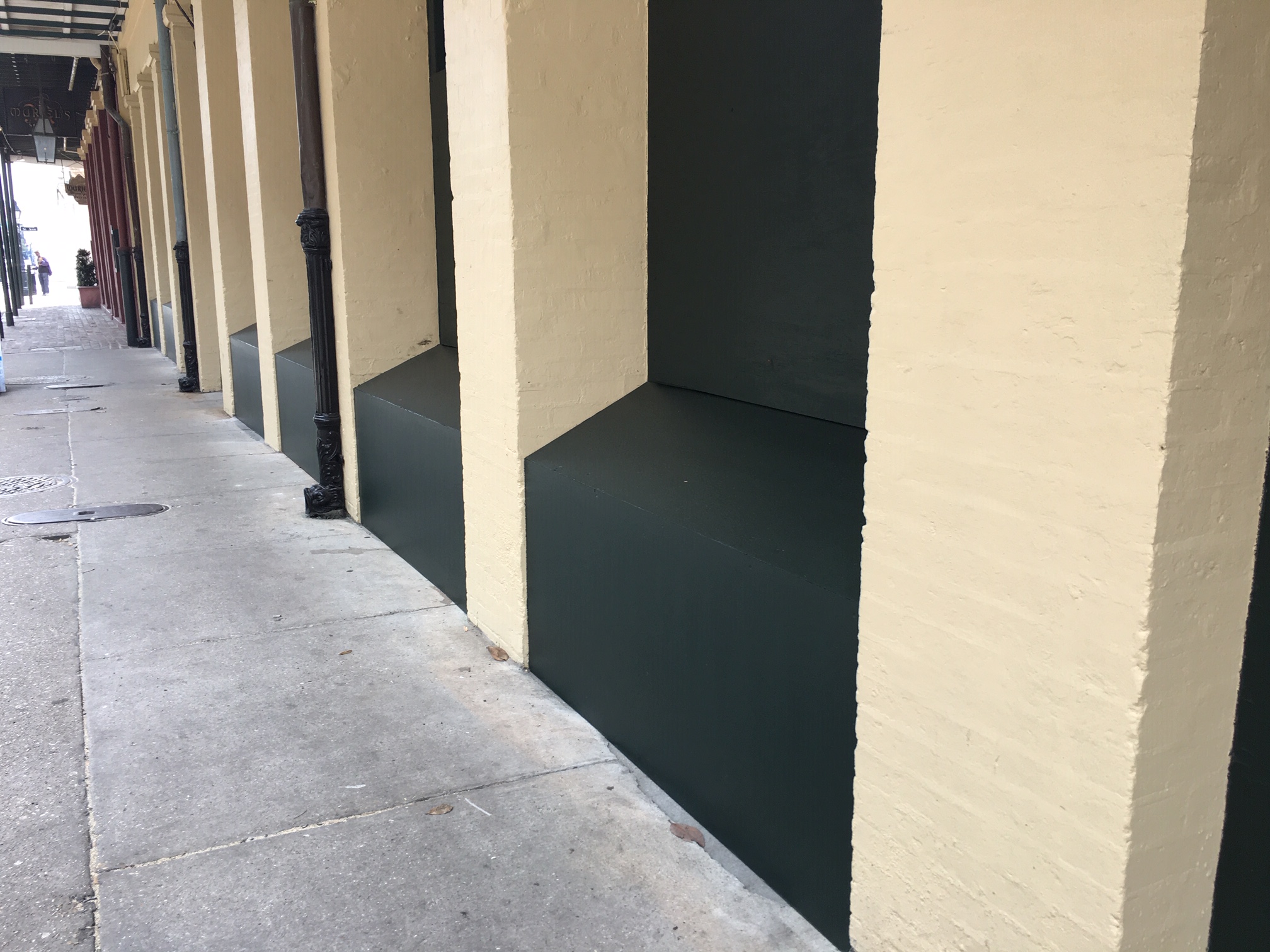
This project may not be permanent; i don’t see any language on their visible permits that allowed these boxes to be built where there had been a window or door recess. (the hotel has had a lot of trouble with street folks sleeping here for the last few years so I assume that was why it was done.)

IMG_2368

Upper Pontalba begins some repairs on their fascia

IMG_2370

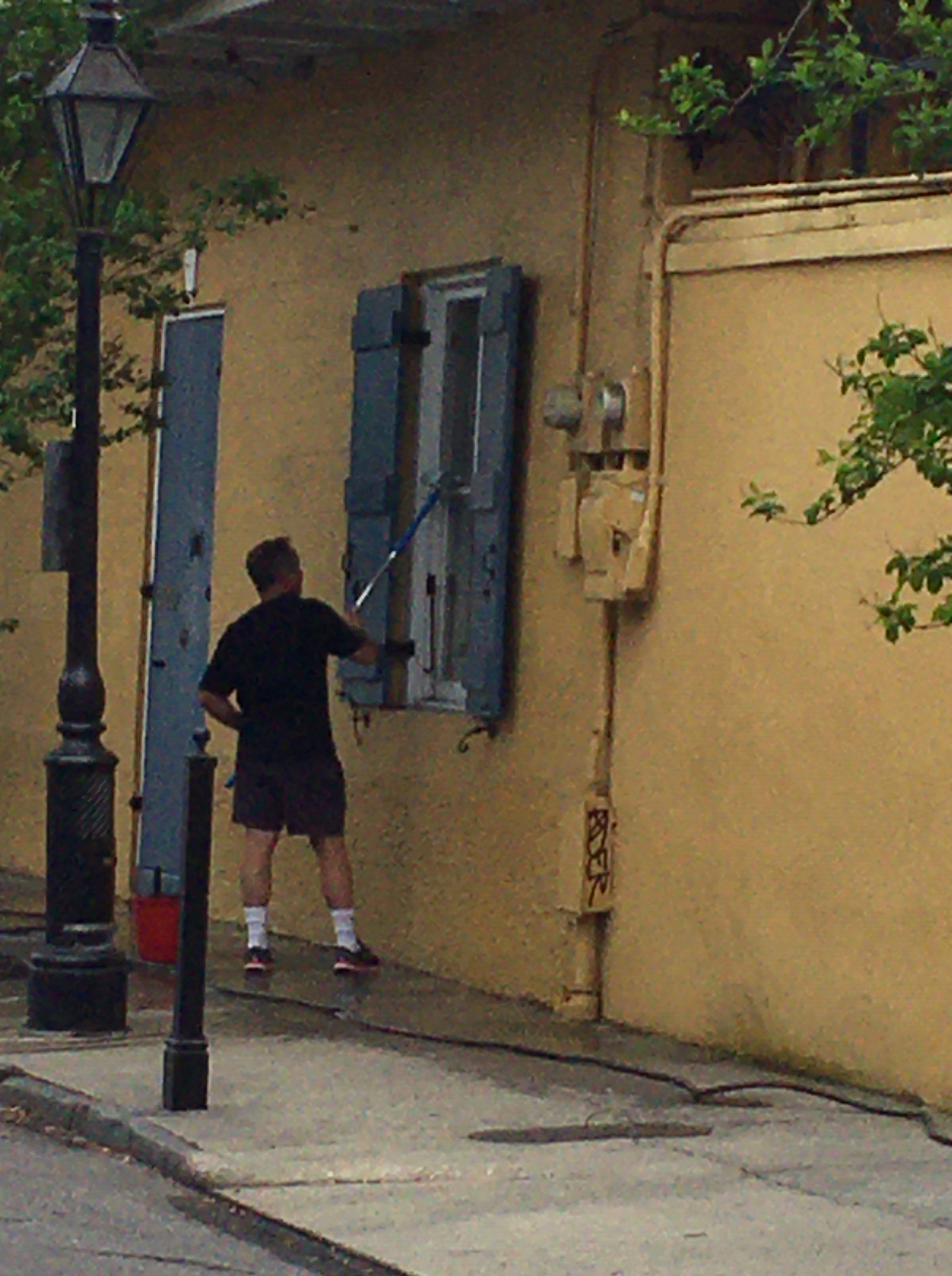
This guy has been working on this front steadily since the shutdown.

IMG_2380

IMG_2386

Dauphine post work across from Matassa’s Market.

IMG_2372

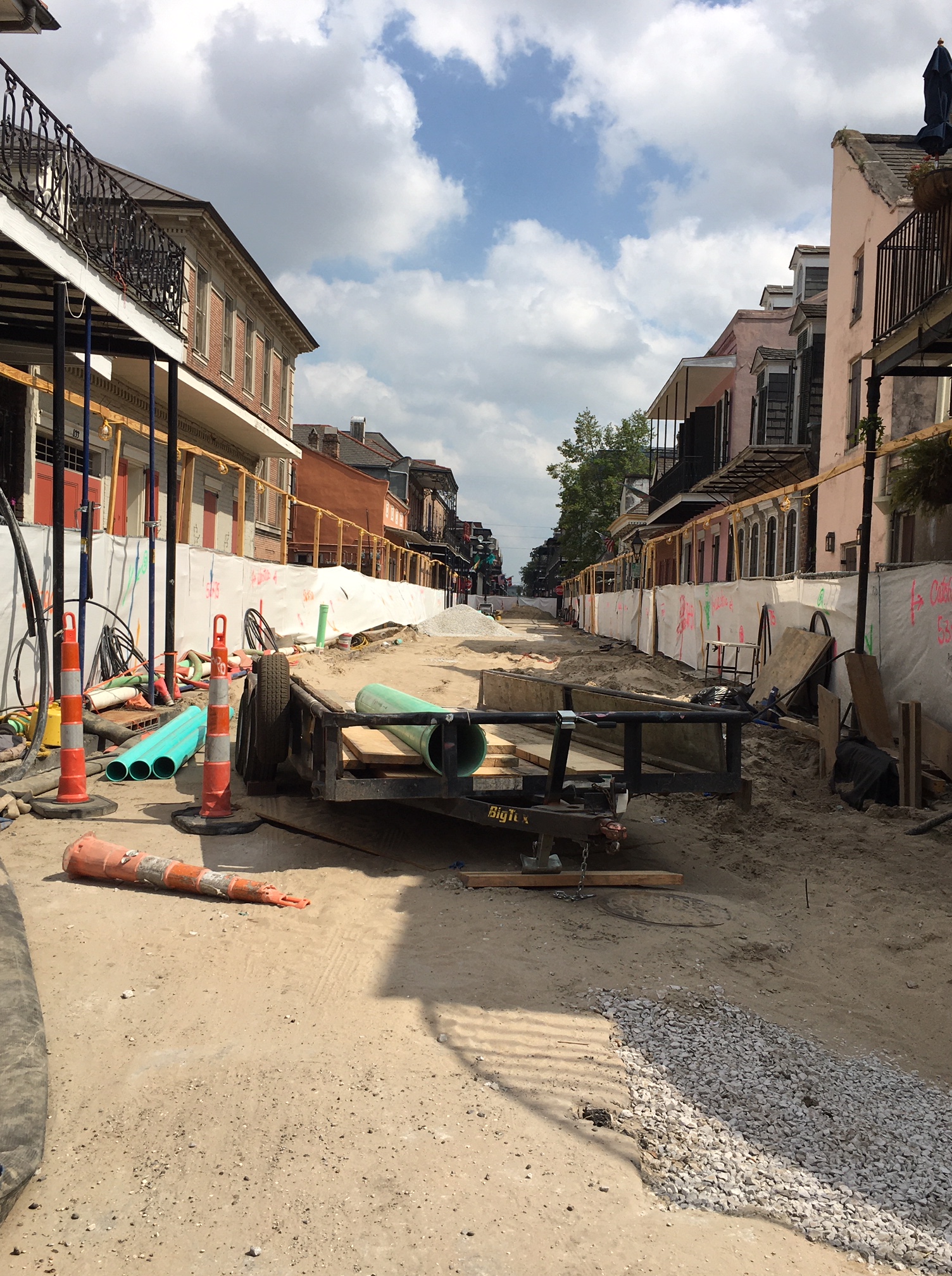
The ongoing saga of the Saint Ann ditch

IMG_2301

soapy saint ann


Bourbon Postal building gets some work done while the schoolyard is available.

Elizabeth Werlein, “Mayor to the French Quarter”


A portrait of Elizebeth Werlein by artist Maddie Stratton of Where Y’Art, as commissioned by NOLA.com | The Times-Picayune for its “300 for 300” celebration of New Orleans’ tricentennial. (NOLA.com)


“What I do for the Vieux Carre is prompted solely by my interest in saving this living museum by any means in my power.” — Elizebeth T. Werlein, in a 1943 letter to the editor of The Times-Picayune

  • She was born in 1883 in Bay City, Michigan, the daughter of Henry Thomas and Marie Louise Felton Smith Thomas.
  • Her father was a dynamite manufacturer.
  • She was an accomplished soprano, having studied voice in Paris under famed Polish tenor Jean de Reszke.
  • She loved adventure and was said to have been one of the first women to ride in a hot-air balloon, as well as one of the first women to ride in an airplane. She also took several big-game hunting trips in Africa. In 1917, she became chairwoman of a committee to establish airplane landing fields in Louisiana.
  • From 1924 to 1930, she worked as the head of public relations for the Saenger company, the multi-state movie theater chain headquartered in New Orleans.
  • She would go on to become head of the Louisiana Women’s Suffrage Party and the first president of the Louisiana League of Women Voters.
  • Around 1916, she wrote and published a booklet titled “Wrought Iron Railings of the Le Vieux Carre in New Orleans.” She would later help found the Quartier Club, a group of women united in a desire to preserve the French Quarter.
  • She pushed for the Legislature to grant regulatory power to the group that would become the Vieux Carre Commission and was a founder of the neighborhood watchdog group Vieux Carre Property Owners Association.

Other items about Werlein:

Mayor Robert A. Maestri called her the “mayor to the French Quarter.” 

In 1938, when she became dissatisfied with what she considered to be the VCC’s indifference, Werlein became the founding president of a neighborhood watchdog group called the Vieux Carré Property Owners Association, now known as VCPORA. In that role she convinced Mayor Robert Maestri to strengthen VCC regulations and increase police enforcement of quality-of-life issues. According to fellow preservationist Martha Gilmore Robinson, Werlein “virtually policed the Quarter—urging property owners to restore their buildings, persuading others to remove trash and litter and inspiring many creative and influential people with her drive and spirit.”

For all her successes she did encounter failure, “Werlein — and consequently the city — lost several skirmishes against businessmen whose encroachment caused gerrymandering of the French Quarter to exclude their project from the Vieux Carre Commission controls.”  There were numerous demolitions in this vicinity before litigation took place declaring these exclusions unconstitutional.

Werlein’s front door today:


Elizabeth’s daughter was also impressive:

Carter, Betty Werlein

Ca­bildo and Presbytère renovation

With the best of intentions, workers applied elastomeric coatings to the Ca­bildo around 1998 and the Presbytère in 2004. Around the same time, the Old Ursuline Convent in New Orleans and the Old State Capitol in Baton Rouge received similar applications. But what was first seen as a state-of-the-art technique soon turned out to be a preservationist’s nightmare. As it turns out, exterior masonry and stucco require a certain amount of moisture to main­tain their structural integrity; without it, the exterior cracks and crumble.

“Elastomeric coats are designed to exclude water from buildings, and in theory they don’t cause problems as long as all water is excluded from en­tering a building. But that is impossible to do,” said Cangelosi. “Water can come from rising damp, hairline cracks, movement, interior sources includ­ing condensations, failure of adhesion of the stucco and other sources. And once in the moisture is in, it cannot escape, as the coating is designed to prevent the transmission of moisture.”

Trapped behind the paint, this moisture has no place to go except through the building’s interior plaster walls. But before this was realized, damage had been done. The Old Louisiana State Capitol building was one of the earliest buildings in Louisiana to report damage after it was discovered that the elastomeric coatings had been the culprit behind decay caused by trapped moisture within the building walls.

“Historic buildings and their fabric must be able to breathe,” Cangelosi said. “History has shown that any product which prevents that will have an adverse effect.”

Elastomeric coatings did not go from panacea to poison overnight, of course. But by 2005, the Vieux Carré Commission (VCC) rejected the Ur­suline Convent’s request to repaint an elastomeric fence. Staff analysts con­cluded that such paints “are disastrously inappropriate for historic masonry walls and structures in all high humidity/high temperature climates and especially in sub-tropical and tropical climes like New Orleans.”

These words proved prophetic, and work to remove the elastomeric coat­ings on the Cabildo and the Presbytère began in 2014. By that point, the dam­age done to those buildings by the coatings was severe. “”I received a video early one morning from someone passing the Cabildo as parts of it literally were exploding off the building as the trapped moisture was trying to escape,” Cangelosi said. “Not only did it cause extensive damage to the building, but someone could have been seriously hurt.” Koch and Wilson Architects was selected to oversee the work of associated waterproofing at the Cabildo, and Jahncke & Burns Architects was chosen as the architect of record for the work of advanced waterproofing at the Presbytère. Associated Waterproofing is the contractor of work on the Cabildo, and Advance Waterproofing LLC served as general contractor for the Presbytère‘s first phase of work.

At first, the plan was to remove the coating from only the front façade of each building. As the work proceeded, however, it quickly became clear that not only would the other sides of the buildings need to be stripped, but that stucco and masonry underneath the elastomeric coatings had suffered extensive structural damage and would need repair.


Triage in Jackson Square