2-year eviction of Upper Pontalba residents

As someone who lived in the building until recently and as someone who has spent the last decade researching the rich history of these buildings and their effect on our public square, lets just say I am deeply interested in the recent news that the residents of the 50+ apartments on the city-managed Pontalba (St. Peter side) have informed its residents that they will all need to vacate the building while a long renovation is done.

First, let’s get to the facts and do away with the misinformation about this building:

  1. It’s all rentals, no owners. The city was given this building back in the 30s by the preservationists who bought it and saved it from likely destruction.
  2. Essentially each of the Pontalba buildings was designed as 16 3-story townhouses, each with their own entrances. They do share infrastructure between them but any of the 16 can be easily closed off from the others.
  3. The rents are not astronomical but are in line with current rents around FQ. For example, the large one-room efficiencies are around 900 a month.*
  4. The apartments are lovely, and have updated modern kitchens, bathrooms and HVAC.
  5. There are a large number of full-time residents some of whom have been there for decades and have invested thousands of their own dollars in repairs and upgrades.
  6. There is not a years-long waiting list. There are often empty apartments which are first offered to residents, then to folks who sign up at the office to be contacted, then a larger search is undertaken (they say they do this phase, although I have never seen any evidence of it online). If someone on the contact list doesn’t reply, they are taken off the list (although that list seems to a bit of a snarl in terms of who manages it and how well it is maintained. That is based on feedback I have received from those on the list.)
  7. The staff is generally wonderful. For example, the men and women who do the custodial and minor repairs are caring and smart folks, many of whom have worked there for decades. (It has also been recently suggested in casual conversations that those positions might instead be independent contractors and not staff positions, which might mean new folks who know less and likely care less about the building to “come by” and deal with stuff.)

There are definitely some big issues such as the roof damage from Hurricane Ida to be dealt with, but the renovations seem to be more about “upgrading” the building. Again, very little in writing is given to residents or neighbors so this is based on my own conversations with staff and reading emails sent by various people connected with the building.

Residents seem willing to work with the renovation, even moving for short periods to other apartments. As a matter of fact, while I lived there, I asked where my latest lease renewal was and was told that since they may need to move us to another apartment, they were holding off on assigning us a lease for a specific apartment. So it was clearly an idea they were also working with at the time.

The issue with removing all residents for upgrades and roof repair is that many of them will not be able to find another space nearby. I think of neighbors who were service industry folks who worked later shifts and came home around 4 in the morning after work. Finding a space that is safe and quiet for folks like that is very nearly impossible in a neighborhood with so many illegal airbnbs operating.

Another question is if emptying it out is even needed. If you live and rent in the FQ, you have worked with landlords who need to do major repairs to these old buildings. I have never (not has anyone I know) had a landlord suggest I needed to leave for years to do those repairs.

And certainly important, is that they are losing 2 years of income.

There has been little information on this topic given in writing, including the actual plans of what is to be done.

In civic activist Jane Jacobs’ parlance, having mixed use and spaces made for people and not for massive development or infrastructure is necessary for a vibrant city. Those who live on the square happily share it with artists, readers, musicians, and others because all are needed to keep it dynamic and useful to the city. The residents are there after the shops close and the museums are shuttered, keeping an eye and an ear on late night activities, sharing information with the Square’s daytime users. It’s a delicate balance, and one that generally works.

Lastly, through my research on entrepreneurial activity in Jax Square, I have found that over the last 170 years, the residents of the buildings have almost always taken pride and care in living there. There have been times that it has housed people of civic stature, other times it had the workers or those newly arrived to the city, and very often, the creative and the enterprising have found their muse there.

That contribution cannot be overstated, especially in a neighborhood that is so physically important and so socially necessary. Let’s do better sharing what is planned and working with the residents and neighborhood to make this renovation helpful.
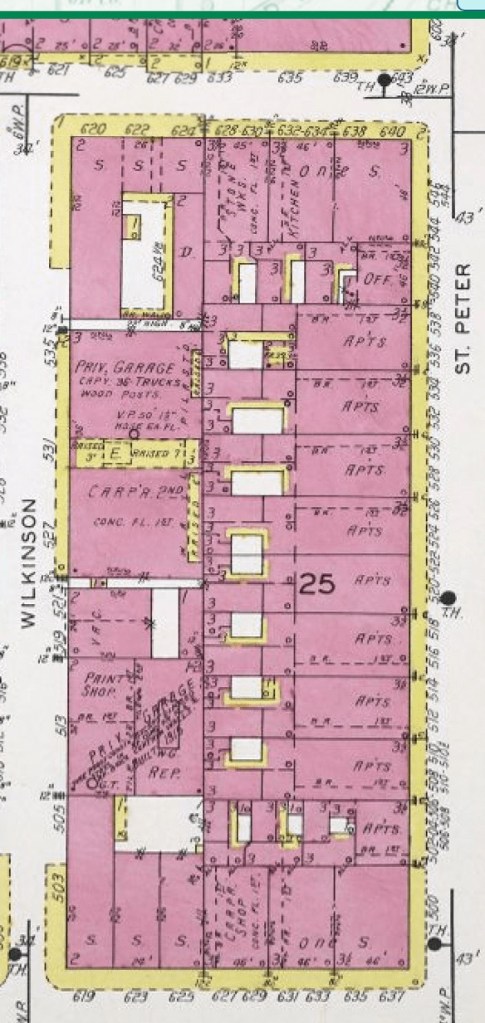
1940 map of the building. Note there were apartments even on the first floor.

* I would even suggest that the city seriously consider the idea I have raised here many times: that offering owners incentives to build in a few rent-controlled spaces for the service industry in the smaller units in these buildings and throughout the commercial areas of the Quarter and Canal Street would be a game changer for the neighborhood vitality, for employers, and for the city.

Super Toll

Listen we get it. The French Quarter seems LIKE Disneyland to a lot of people. Certainly since the 1950s, it has grown more for tourists than for locals.

The difference is that it is still a real neighborhood of entrepreneurs, families, senior citizens…And it also has a whole other group of “residents” who are out on the sidewalks 24 hours a day, 7 days a week, hustling, hanging, and taking a breather outside during a long work shift. All of them belong , and truly, curious, so do fun-loving visitors are as well. Visitors are, although 10 million of them every year to our 300,000 residents is taxing especially the destructive bros and the overly pushy whoo-hoo girls staying in illegal short term rentals who are always too many and too much.

But still, here we are, gladly once again kicking off a massive tourist season: the LIX Super Bowl followed by Carnival, then French Quarter Festival, then Jazz Fest, then Essence, all before peak summer. We’ll count the coins and sleep in August.

The city has hosted a number of Super Bowls over the past 50 years, 2025’s Lix will be the 11th time for us, which puts us in a tie with Miami for the most hosts.

So we expect it: the city in a snarl over the last 2 months to get contractors to feverishly try to throw some asphalt on long-broken concrete, rounding up all of our unhoused and sticking them in warehouses, public space rented out to the highest bidder, security tactics that don’t make anyone feel safer only that their rights are trampled upon, 10 story high projected advertisements on buildings….

Sigh. We deal. We fight some of it, we accept other parts. it is part of our reality.

But this pic below is one that is just odd. They decided to cover the Cathedral, Cabildo, and Presbytere with this projection every night.

Not only does this projection hide the most beautiful historical buildings from being seen properly, it also highlights odd flaws, and makes one expect to see a Disney princess emerge, waving her dime store wand at bystanders standing around with plastic Tropical Isle grenade sugar drinks, confused and disoriented.

The blanked out windows make it seem even more fake, and the colors are horrific. I wonder if this is supposed to be Mardi Gras colors?

Even more oddly, we actually have a great illumination event called Luna Fete over the holidays that does some gorgeous projections about history, culture, and holiday cheer.

But this is not THAT. Visitors, you don’t even get that.

You might be a first time visitor, end up in the Square, and think you are looking at three hastily erected buildings with plywood behind their garish displays. You would then walk away thinking, what the heck was that about? (I heard someone actually say that as I left after taking this picture).

And you’d be right to think that.

And you would miss out on how gorgeous the Square is at night, as the birthplace of this 300 + year city, and not be able to view its public space that remains vibrant and used by locals and visitors alike, and which still has residents in the Pontalbas on either side and along the nearby streets.

The toll is one we have seen before: that the fakery becomes reality to those experiencing the city for the first time who then leave, thinking what was that?

So visitors, do your best to see behind the facades, and experience a city, not a projection, to talk to kind locals and have some real fun. We don’t want you to pay that toll.

Glitter Box

Written at the start of 2020 when retail was doing its thing:

Anyone who has spent time in the Quarter knows that Royal Street has more than one face. Starting at Canal Street, the 100 to the 900 blocks are replete with glittering windows of goods, carriageways selling framed art, and even a few stately hotels with ornate entrances that offer a peek at plush interiors. The shops are famous for offering a wide set of items including antebellum Southern furniture, elaborate lighting, French kitchen items, Italian stationery, books, a wide variety of souvenir items, even a tiny grocery store.

Seeing it all at a human pace is aided by the pedestrian mall that Royal is transformed into between the 400 and 700 blocks from 11 a.m. to 4 p.m. Monday through Friday. Once the car traffic goes away, those blocks are crowded with street musicians, “poets for hire,” hustlers, unhoused folks, and painters using the ironwork of the St. Louis Cathedral’s back garden to show their items. Oh, it’s a scene.

However, once past the little Red Schoolhouse at the corner of St. Philip, the street quiets considerably. Like neighboring Bourbon Street, it then becomes mostly residential and therefore invites fewer tourists. For the curious who continue in that direction, there are many wonderful surprises to discover, including a tiny store in the 1100 block with a simple red and white sign: Glitter Box.

The first mention of a building at 1109 Royal in the Vieux Carre Digital Survey Database is in 1828, erected by the Company of Architects of the City of New Orleans. Here is Stanley Clisby’s description of the company and the block in his 1930s book,  Old New Orleans: A History of the Vieux Carré:

“STREET OF BALCONIES 1101-1141 Royal Street. Upon our return to Royal Street, our attention is instantly caught by the row of houses on the left-hand side of the thoroughfare and their balconies covered with cast-iron lace and twining vines growing from the flower boxes and pots that line the galleries. These houses were all erected at one time by the forerunner in New Orleans of what we now denominate homestead and building and loan association. This particular company, headed by Jules Mossy and operating under the name of La Compagnie des Architectes, purchased the entire site and in the winter of 1831-1832 built the houses and sold them individually at public auction.”

In the late 1960s and early 1970s, FQ resident and writer Darlene Fife identifies the shop as the “first natural foods store in New Orleans” when it was known as The Sunshine Workshop. In her memoir “Portraits From Memory: New Orleans in the Sixties,” Fife remembered that the store’s only books were by the Anthroposophic Society  which advocated “”spiritual science” theories developed by Rudolf Steiner and how the owner Michael Coby didn’t carry dairy products because he “could smell people who ate cheese.” Legendary Covington Farmers Market vendor Norma Jean Marcon remembered working at the store in the early 1970s and that she got the job because her astrological sign aligned with Colby’s. She remembers it as a great era.

The address’s cavalcade of characters also included “Mr. Joe” a licensed embalmer at Thorp-Sontheimer-Laudumiey Funeral Home who was also active in the Vieux Carre Commission. His children, Jonathan and Romany, grew up there, no doubt roaming the French Quarter as happy little pirates. From his online memorial: “Mr. Joe” became a French Quarter personality. Everyone knew him and loved him; his ‘white balcony’ at 1109 Royal St. has been seen in many films.”

Honoring the building’s colorful history, the current operator Glitter Box at 1109 Royal packs a lot in its 800ish square feet: it offers unique gifts, art, apparel, printed materials, and health and wellness items presented artfully and with approachable price points. All items are made exclusively by women and femme-identified Gulf Coast artists living and working from Texas to Florida. GB also creates items in collaboration with Women with A Vision that supports WWAV’s work with previously incarcerated women under the Glitter Box Goods brand and acts as an education and community resource center.  For example, the shop is a community outpost for Reproductive Justice Action Collective (ReJAC), which distributes free and by-donation emergency contraception through community partners and a network of community support members in the greater New Orleans area.

A collaborative nature

The GB brand was unveiled at the location in 2017 after spending a few years as the Foundation Gallery, which had a related but wider mission of supporting regional artists and was also funded by the Heymann Foundation. Co-founder Alice McGillicuddy was behind the idea to change it to Glitter Box, adding maker events, and building its artist roster, all ideas enthusiastically supported by co-founder Lila Heymann. The change came from both women’s desire to support a wider range of artists and promote intersectional feminism, becoming more of an approachable community space than a traditional art gallery.

When the shop is open, two floor-to-ceiling windows on Royal show off its colorful displays, but its entrance through the courtyard to the right confounds many, even with the a-frame sign next to it, inviting people in. When its white shutters are closed, it is almost impossible to notice. 

Curator and manager Kate McCurdy is originally from New York City and has been in New Orleans for seven years.  She says, “this gallery is why I live in New Orleans; It has a supportive nature, a collaborative nature.” McCurdy started out by hosting Craft Nights, where the events range from knitting circles to Carnival headdress workshops which, because of McGillicuddy’s reputation as a movie prop fabricator, were well-attended from the start.

McCurdy is always seeking new types of products for the shop and working with the artists to source materials as locally as possible and encouraging eco-friendly packaging and materials. Fairtrade sourcing is also suggested when the artist is using materials from outside of the U.S., and McCurdy has been thinking about how to help the gallery’s artists with building fair wage jobs when they get to that level. It’s something she has some experience with as she was one of the founders of the Lucky Art Fair which centers on the philosophy of fair pay for artists.

Currently, there are around 150 artists represented in the shop with some of the items sold through consignment.  McCurdy gets 2-3 emails a week from artists inquiring about space, and does her best to direct artists to resources like the Fab Lab at Delgado which has free access to laser cutters, CNC routers (used for cutting plastic, model foam or other soft materials), a vinyl cutter, 3D printers, and more.

“The idea is to give them (artists) whatever support we can.”

Glitter Box also created the “Babes In Business” map and online directory, to encourage support of women-owned businesses across the city. The online directory features over 500 women-owned businesses and is searchable and divided by business type. The Glitter Box also holds a wide selection of workshops and community events like their new book club and donates a percentage of total sales every month to worthy non-profits and community groups. Since opening in 2017, they have donated over $40,000 to organizations like Sexual Trauma Awareness & Response (STAR), Planned Parenthood Gulf South, BreakOUT!, and NOLA Women & Children’s Shelter.

Everyone connected to the shop packs a lot of community into their day:

Lila Heymann: Owner & Co-Founder. Heymann has been recently working to become a licensed social worker while currently living in Charlottesville VA, although often back home in Louisiana working on the family foundation. The Foundation was founded to honor the family’s deep roots in Lafayette as business leaders: The Heymann’s Department Store was opened in downtown Lafayette by Maurice Heymann in 1916, and was a full-scale retail store, remaining in business downtown until the mid- 1980s. Uncle Maurice Heymann developed the present Oil Center in 1960 into a major retail, professional, and medical office facility that remains the nerve center of business in Lafayette.

Alice McGillicuddy: Co-Founder & Curator.  McGillicuddy is focusing on her doula career, now in Scotland. McGillicuddy worked as a prop fabricator in television and movie projects and on installations including the well-loved Music Box Village originally in City Park,  now in its permanent home at the end of North Rampart at the Industrial Canal.

Kate McCurdy: Shop Manager & Curator, Her latest side venture is the Lucky Art Fair, an event showcasing unrepresented artists working in New Orleans, where the goal is to fairly pay artists and art workers. McCurdy is also involved with Ladies in the Arts New Orleans (a networking group for all kinds of creative womxn), and the Krewe of Full Bush.

Karin Curley: Content and Marketing Coordinator. Curley also works for local non-profit festivals such as French Quarter Fest and Mid-City Bayou Boogaloo and also manages marketing for GinaWare Costumes and Clothing, a monthly and pop-up shop in Mid City which features recycled and vintage clothing, costumes, and costume pieces and parts for men and women. 

Neisha Johnson: Glitter Box Goods Designer and Production Assistant. Neisha was originally brought on to the team through Glitter Box’s partnership with Women With A Vision. She created a poem and design called Beauty of My Struggles which she silkscreens onto t-shirts and tote bags, along with other designs from the Glitter Box Goods in-house line. Her design represents the personal strength she discovered and leaned on to pull herself through dark times in her life, and acts as a promise to herself to never settle for less.

Jillian Desirée Oliveras: Shop Assistant. Born and raised in Puerto Rico, Jillian made New Orleans home post-Hurricane Maria in 2017. Jillian, a photographer, joined the shop as another way to connect to the local community outside of her bartender profession.

With its multitude of items and educational purpose focused on female entrepreneurs and community health, Glitter Box is a great argument for a long walk through the Quarter the next time that you are in need of a few gifts or just some inspiration.

I wrote this in 2020 for an online site where I had published similar stories but these were never finished by the editor; all of them will instead be published here.

Black Lives Matter in the Quarter

well. what. a day- so far. I can’t even tell you everything that has transpired as it would require too many words here, but suffice it to say, the French Quarter has temporarily joined the current reality – but only because it was forced to do so. But that is its main purpose- to gather and to connect; if it doesn’t do THAT, then why keep it at all? So I am glad it does do that well still. And can get better at it.

I have seen and heard many wringing their hands all week over the news that the Take Em Down Nola/ Black Lives Matter leaders have decided that tonight that Jackson Square will host the citizenry of their city and I guarantee that some have been ridiculously locked up in their homes and stores all day frantically reading FB for clues as to what is happening a few blocks from their front door. To their credit, others are calm and interested in what is happening at the rivers edge (I have spotted many, many FQ residents and business owners) and are out here listening. And the other 6000+ people or more here from across the city and across the region are less concerned about their windows and more about their lives and their neighbors’ lives. Today’s over-zealous locking of the park within Jackson Square to protect their favorite ol’ Andy statue is compounded by the news that, as of 5 pm, we see the police setting up very limiting barricades everywhere in the Square, telling everyone they cannot have bottles of water out for folks, or any other items on the street. And yes, we hear that the police have stated that they have moved piles of bricks that were stashed (so odd THEY spotted these “bricks” and there are no pictures of these dangerous stashes and are telling business owners that there are “people arriving from all over the country with buses lining Canal Street” which I’d like to see some evidence of before I commit to THAT conspiracy theory. Listen- the outside agitators label? I’ve been labeled that in my life and so I know how it gets thrown about  I don’t disagree AT ALL that it IS true at some level, but lets also not believe everything the authorities tells us that seems to play right into their hope that people will turn on each other out there and also give up. And the one thing our NOPD should know how to spot and handle -after years of Carnivals parade routes – is a big group of folks spoiling for a fight. They have closed many of the surrounding streets off to vehicular traffic and are on every corner. So they need to do the job, and do it without escalating fear needlessly with stories of piles of bricks and buses lining Canal Street or shooting tear gas into the peaceful crowd.)
But if you hope a march will be a lockstep show of polite disagreement, to just safely and carefully dance at the police state’s ball in order to feel better in 20 minutes and then go home meekly to rejoin the capitalist bread line, then you are actually gonna be disappointed. Yeah shit gets heated (for example, a thrown item just now, but the speaker chills everyone down- “we don’t need no m’fn police; stay calm. ….I’m going to ask you sir, please remove yourself from this black-centered place.. and white allies? walk with him til he makes his destination”) So folks are able to keep it calm it when they have the space and the agreements they need.

Protest is about exhibiting and working through active trauma inflicted on the body politic by authorities but it also allows for refined and situational organizing that is a beauty to behold when done well. And when done well, it offers new leadership, new power centers, and pushes policies into previously off-limits ground that makes the world we all live in a better place. Organizers like Take ‘Em Down NOLA and #BlackLivesMatter will lead us to that better place.

IMG-4349
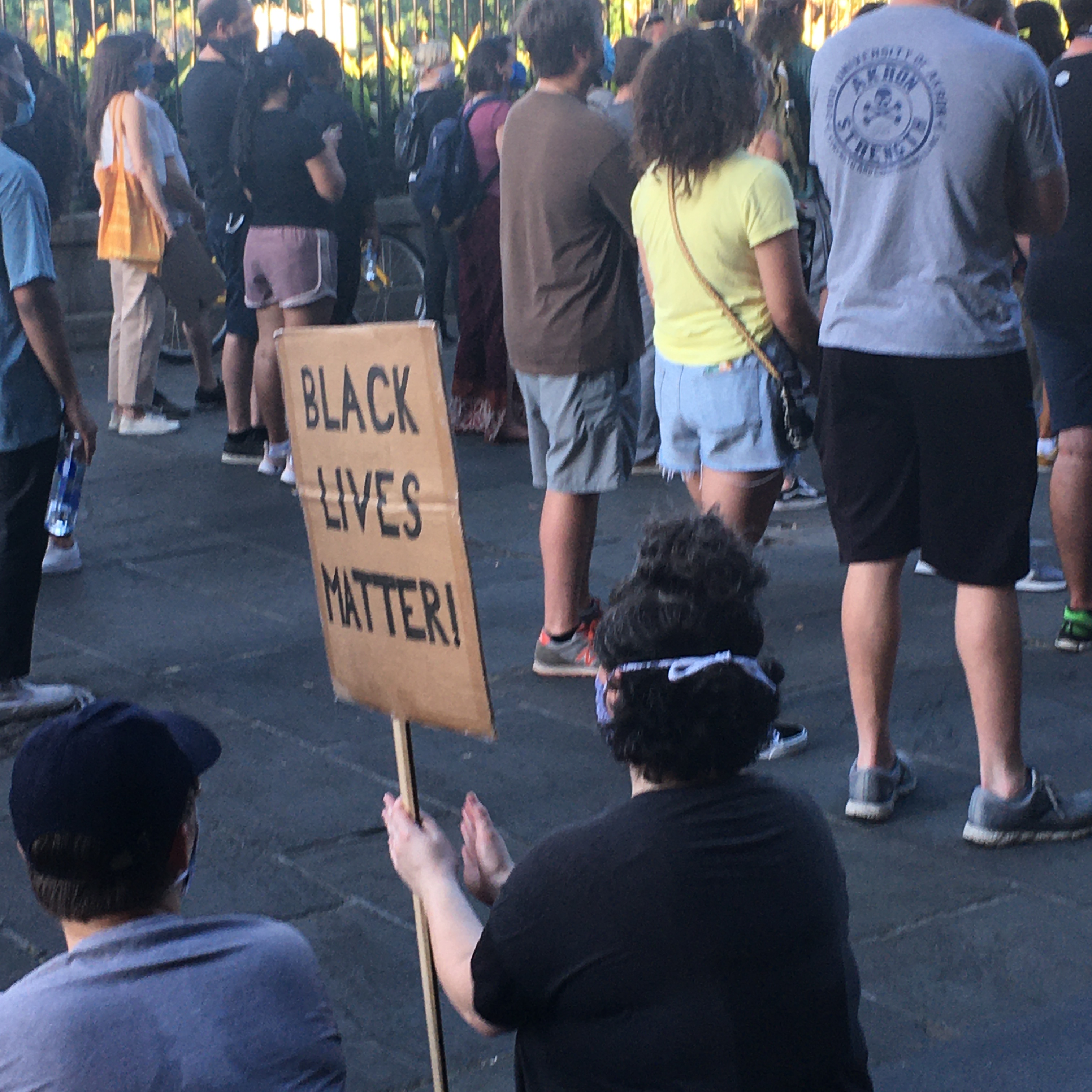
crowd gathers around the perimeter of the Square as organizers stand on the river side of Decatur since the authorities padlocked the interior park.
IMG-4324
Nola Allies and Support offering free help to anyone.
IMG-4351
The artist left these in the Square for folks to take
IMG-4352
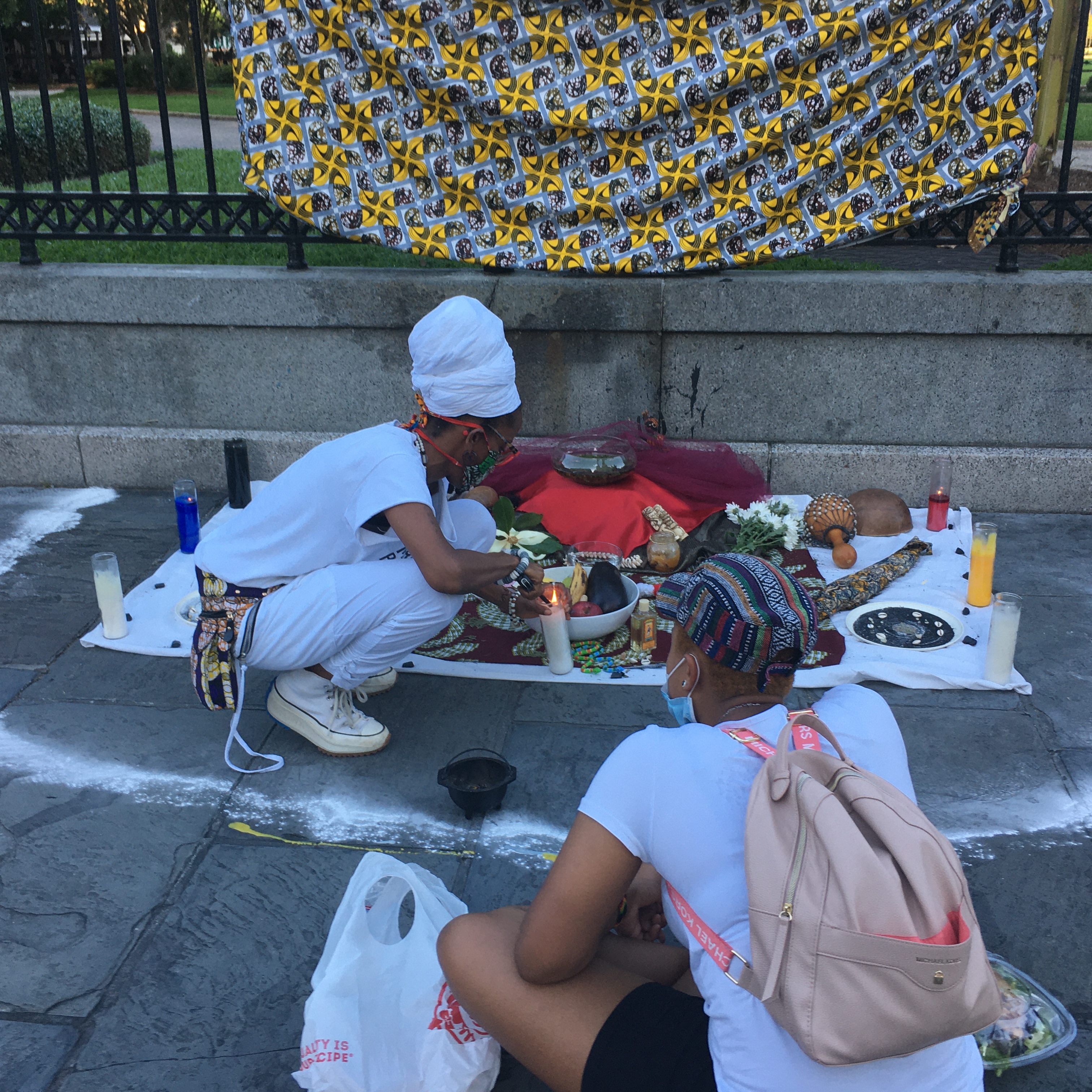
Rituals are valued in New Orleans
IMG-4357
Left on Royal Street after the protest
IMG-4350

https://www.nola.com/article_9098c236-a83f-11ea-af2b-13b8b65c663f.html

The Inertia of a Tourist Economy: Does it help or hurt during a crisis?

in•er•ti•a

  • n.
    Resistance or disinclination to motion, action, or change

On March 11, the city decreed a state of emergency over COVID-19. Too many scofflaws ignored that and so on March 16, Mayor Cantrell closed the bars and restaurants at midnight to shut down the expected all-day and night partying that St. Paddy’s day brings to cities across the US. Not everyone paid attention but a lot stopped immediately and then over the next week as the hotels emptied, so did most of everything else. On March 20, the city issued a firm, scolding stay-at-home mandate and on March 23, the state followed suit.

My social media post on March 26:

Its been 10 days since New Orleans shut down dine-in restaurants and bars and 6 days since the city stay-at-home order.  Since then, watching the wheels of commercial life slowly grind to almost a complete halt here in the French Quarter has been absorbing and sobering. At first, most places tried to stay open even though the bulk of their business had always been visitors, both those visiting from other places as well as the daily visitors who work in shops, in offices and seem to have so many lunch meetings. Some places did their best to drum up local take-out business via social media and word of mouth, but one by one, almost all in my quadrant have closed. Boards across windows and doors started going up at shops and galleries first, and then hotels and bars and cafes followed. It’s startling the first time you see the dark lobbies and gated locked parking lots 24 hours a day of a hotel normally lit up and staffed. You think about those workers that you saw 5 or 6 times a day for months or years and wonder if they will be back. (The bell captain at the little hotel down the street told me he had 120 days of PTO to use, but was still angry that he had to go home.) Yet even when the businesses began to shutter, some street traffic continued, albeit lighter than normal for a few more days. Then one day this week, I walked to Jackson Square and there was not a single person there.

At 2 in the afternoon. In sunny, 85 degree weather.

You’ll still see people walk a few times a day with their happy dogs, (saw a guy with his leashed ferret a few days ago), evening get togethers on carefully-spaced chairs on the street, a few tourists, and always some street people. The Mayor is slowly moving the homeless into hotels; the guy who lives in the window recess of the Presbytere Museum told me today that he had just missed the cut off to get in the Hilton Garden Inn by 6 people. I’d say the best way to describe his reaction was slightly stung. I told him they’ll find a place for him soon; he seemed to brighten at that. I think he looks forward to that mostly because he misses talking to people, he misses the hustle.  I mean, even the silver guy’s paint is almost entirely worn off. The musicians who are staying in the apartment across the street come out to the balcony in the afternoon and play music quietly but seem to have little of the animation and long jams that they offered in the first days. You make eye contact with strangers, but there is a bit of a hesitation in being too chummy; you don’t want to encourage them to slow down and stay around here. Some neighbors have chalked “Go Home; Be Safe” on the sidewalks; but those who get it are already home, and those who don’t get it, won’t. It’s odd to see the energy seep out of these entertaining streets, but at least we have a strong reason to believe much of it will return. In the meantime, we can save ourselves, our friends, and our neighbors by killing as much of it as possible. #nolacorona

Since that post, I have thought a lot about these silent streets since this post as the days tick by and wondered more and more about how and even if it will recover. Then, something my clearly exhausted but happy pal who owns a cafe in the Marigny said to me (as he bagged up order after order for folks patiently and happily waiting outside his place) struck me:

my business mantra right now is adapt or die.” 

Or as Arundhati Roy brilliantly said:

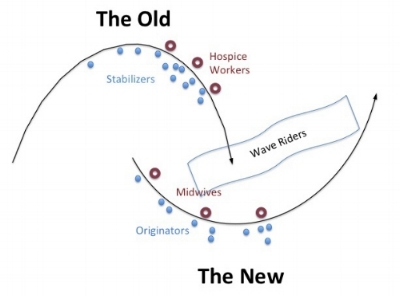
this pandemic is a portal.

Whatever it is, coronavirus has made the mighty kneel and brought the world to a halt like nothing else could. Our minds are still racing back and forth, longing for a return to “normality”, trying to stitch our future to our past and refusing to acknowledge the rupture. But the rupture exists. And in the midst of this terrible despair, it offers us a chance to rethink the doomsday machine we have built for ourselves. Nothing could be worse than a return to normality. Historically, pandemics have forced humans to break with the past and imagine their world anew. This one is no different. It is a portal, a gateway between one world and the next.” 

That portal can be hard to see in this anachronism of a neighborhood, charmingly designed for 17th and 18th-century living, and then made into a stage for visitors from other places to get a quick taste (and purchase) of that earlier time before heading back to their modern world.

Yet, even though it is primarily a stage, many things about this Quarter still work: the scale of it, the design of small apartments set above small storefronts, small well-run hotels, its nearness to the city center safeguarded behind massive well-engineered earthen levees instead of poorly-designed concrete walls such as those found in 9th ward or in Lakeview, utilities underground,  the highest ground, neighbors dealing with each other in shared alleys, on sidewalks and via on-street parking and so on. And because it is usually spared damage because of the care taken to maintain its facades for the tourists, it can quickly become a gathering place once again when hurricanes or floods devastate much of the city. Last but not least, this tourist center requires thousands of daily workers who become as dear as next-door neighbors, many of whom residents see more than their family, often relying on more than they do on far-off relatives.

Still, now as I venture out to the other parts of the city during this shut-down to get items, I see what I do not see here: restaurants and stores that have quickly adapted. From distilleries selling hand sanitizer or cocktail kits for homemade happy hours, cafes selling quarts of cold-brewed coffee or working with farmers to sell just-harvested items alongside their prepared items,  even fine dining places pivoting to offer a family meal (and 1/2 price bottles of wine) by drive-by pickup, they all seem to know what their neighbors would pay for and how often to serve them. Those businesses have bulletin boards,  funny, aspirational chalk signs for passersby and have become eyes and ears and care for their neighbors.

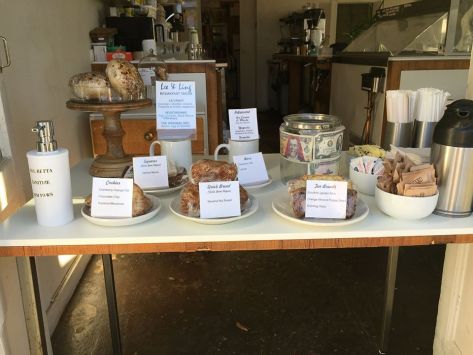
Orange Couch set  up for physically-distanced ordering at the side door

In these 90 or so blocks, enough locals live here so that we actually do have many neighborhoody things like drugstores, veterinarian offices, postal emporiums but it has become clear during this moment that even much of THAT relies on the millions of visitors who also come to these blocks, or it relies on the pockets of workers who, currently unsure of when or if they get to return to their store or will put that apron on again, are saving their bucks. Or maybe it doesn’t rely on those dollars at all but the business owners just think that it does. For whatever is actually true, what is clear is that almost all of them are closed. And they closed fast.

A few businesses tried to use social media to convince local folks to get items, but locals from other parts of town have been penalized and confused far too often by the parking rules here to dare to drive in. And even if they do brave it once in a while, most are not able to afford or stomach the majority-rule visitor-obsessed restaurants often enough to be familiar enough to check in with the others now.

As for residents: even though numbers have climbed steadily in the last 20 years, now at around 4,000 with around 1000 at or below poverty-level they mostly divide into the worker/residents of the Quarter (although far fewer than when I was one) now without income and the very very rich who have everything they need delivered by Amazon living behind their gates and private driveway.  Since 2000, owner-occupied units have risen from 24.6% to 48.2% with renter-occupied down from 75.4% to 51.8%;  fewer of us renters and therefore likely less of us remaining who seem to live here because we love it and not because we depend on it for work or because it is a family inheritance or peccadillo hideaway. As a result, those able to go get items from the restaurants who tried to offer food is even a smaller group than those other areas of town.

The other obvious issue clearly seen now that the Quarter is only serving its residents: it is so very very white which wasn’t the case when I moved here as a teen. And even though it has become clearly whiter in terms of residents since the pre and post 84 World’s Fair development furor,  on a normal day the cross-section of tens of thousands of workers, hustlers, and visitors allow the FQ to be as diverse and energetic as any place in this city, pound for pound, 24 hours a day, 7 days a week.

Not right now though. The only faces of color or heard talking in other languages here during COVID-19 have been the sanitation folks, grocery workers and security personnel. The usual Quarter workers and artists who represent the diversity of our city are home in their own neighborhoods which since 2005 are far far from here. (Which ironically, also means that the multi-generational food entrepreneurs offering good, culturally appropriate food to a cross-section of New Orleanians are also now far from here.) That diversity is the heart and soul of what makes New Orleans interesting and important. And when we reopen, it’s possible that many culture bearers and much of our indigenous knowledge base may just not care to keep fighting their way back here this time – or the next.

All of this calls into question the future through this portal: what will an economy only based on tourism offer our city, once disruptions come again and again, as we have to expect they will?

More simply and directly, what will remain alive after just this one shutdown? And what if the US opens up later this summer just as we hit the height of hurricane season?

In only a month, I have already seen 1-2 brand-new commercial For Rent signs, talked to business owners who are mulling the idea of not reopening their storefront that cost upwards of tens of thousands of dollars per month, and have heard of a few neighbors who are moving away to live with family or to cheaper cities to replenish their savings. One has to imagine that restarting the tourism wheel will take a while, especially when rumors (and logic) have it that JazzFest will likely not operate in 2020 or if it does at all, be a much smaller and leaner version. We’d have to assume the same will go for French Quarter Fest and others as they depend on sponsors as much as visitors. Connected to that is the outcome we have to expect if the seasoned staff of the past few decades that ran our best places like clockwork will not return intact.

So the question is how will we look once through this portal? Will the French Quarter adapt as it always has, or will it finally “die”- meaning become smaller, less lively, maybe owned by more out-of-towners with deeper pockets who move more to the middle in terms of what they present as New Orleans? That could mean losing what had been a critical mass of authentic experiences and becoming too small to entice enough visitors to hold this city together.

Or maybe – just maybe – this old city will just adapt as it has so many times previously.

In 2008, the book Building the Devil’s Empire offered the intriguing analysis (via many years of archaeological digs around the old city) that by the mid-1720s due to the failure of New Orleans as a tobacco exporter and the effect of Law’s Mississippi Bubble bursting,  France had basically given up on this colony, although not turning it over to the Spanish until the 1760s. Yet those digs show lively trade and activity in those 40 years, proving that New Orleans became a smuggler’s capital by turning its attention to the Caribbean to find its own opportunities even though that was against French law. That “rogue colonialism”, as Dawdy names it, she believes was mirrored in 2005 when the federal government did its best to thwart returning residents and stymie small businesses yet many found a way around that to survive and even some to thrive.

That rogue colonialism is clearly an adapt or die portal which could be vital for whenever the country opens back up for business. Do we have another one in us here? And if so, what will that version center on: regional food?  port activities? design for climate challenge places?

And maybe to help that, possibly commercial rents in the FQ will come down to reality. Maybe people will see the need for downsizing their place to something smaller and more communal as only the Quarter can offer. Maybe my idea of Canal Street and Pontalba being offered tax credits to become rent-controlled to entice residents to move upstairs into all of those decaying camera shops will happen.

I hear bike shops around town are doing bang-up business right now; maybe we’ll see a few open in FQ again.

Maybe less crap made in China will be for sale in our shops and more useful services for all residents can return. Shutter repair? Seamstresses? Metalwork? Mule-driven delivery around the city?

Maybe the French Market can add a splash park on the concrete pad, a storefront library, citywide compost drop off and community or senior services along its many block span to serve the entire city in some manner?

In any case, the way through this portal does seem to require a push to something new even if it might actually resemble something old and tested.

The question is: can we begin to turn in that direction?