Great overview of the locations for this series and, really, just some great houses and sites around New Orleans to visit for any reason.
American Horror Story: Coven Location Guide | Deep South Magazine – Southern Food, Travel & Lit.
Great overview of the locations for this series and, really, just some great houses and sites around New Orleans to visit for any reason.
American Horror Story: Coven Location Guide | Deep South Magazine – Southern Food, Travel & Lit.
(original post from 2013)
This is a nice little house in the 1000 block of Royal Street between Ursuline and St. Philip. The family that owned for the last 80 years sold it after using it as rental property for much of that time. The new owner is reportedly from New Orleans and is moving back to live in this house, once renovated.
Literally, the house has been taken down to its front and side outside walls and will be expanded over the next year or more. That back house has been empty forever and they will deal with it after the front house is done.
Stay tuned for more pictures over the next few months….
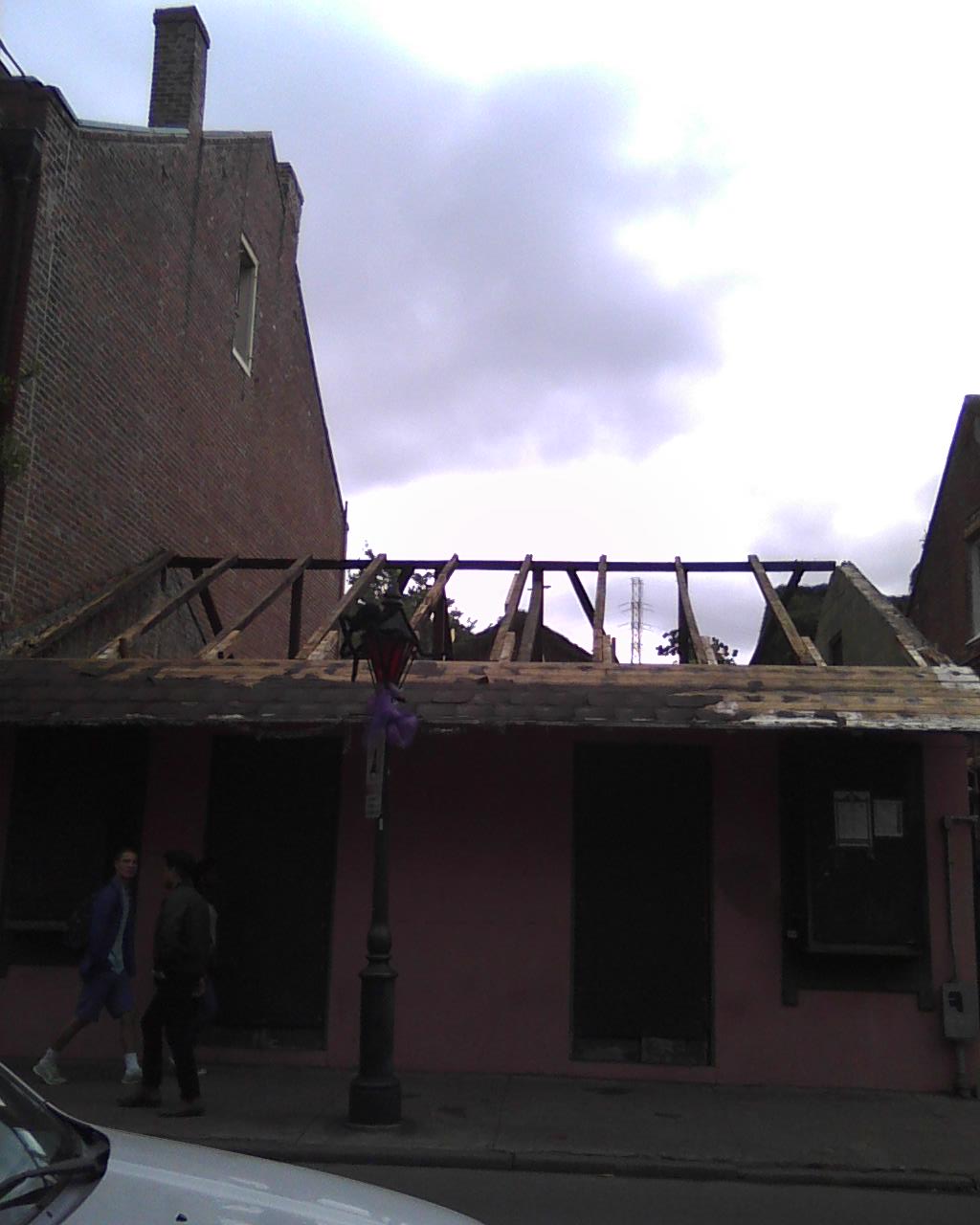
The front of the house as of 10-18-2013

looking into the house from the courtyard
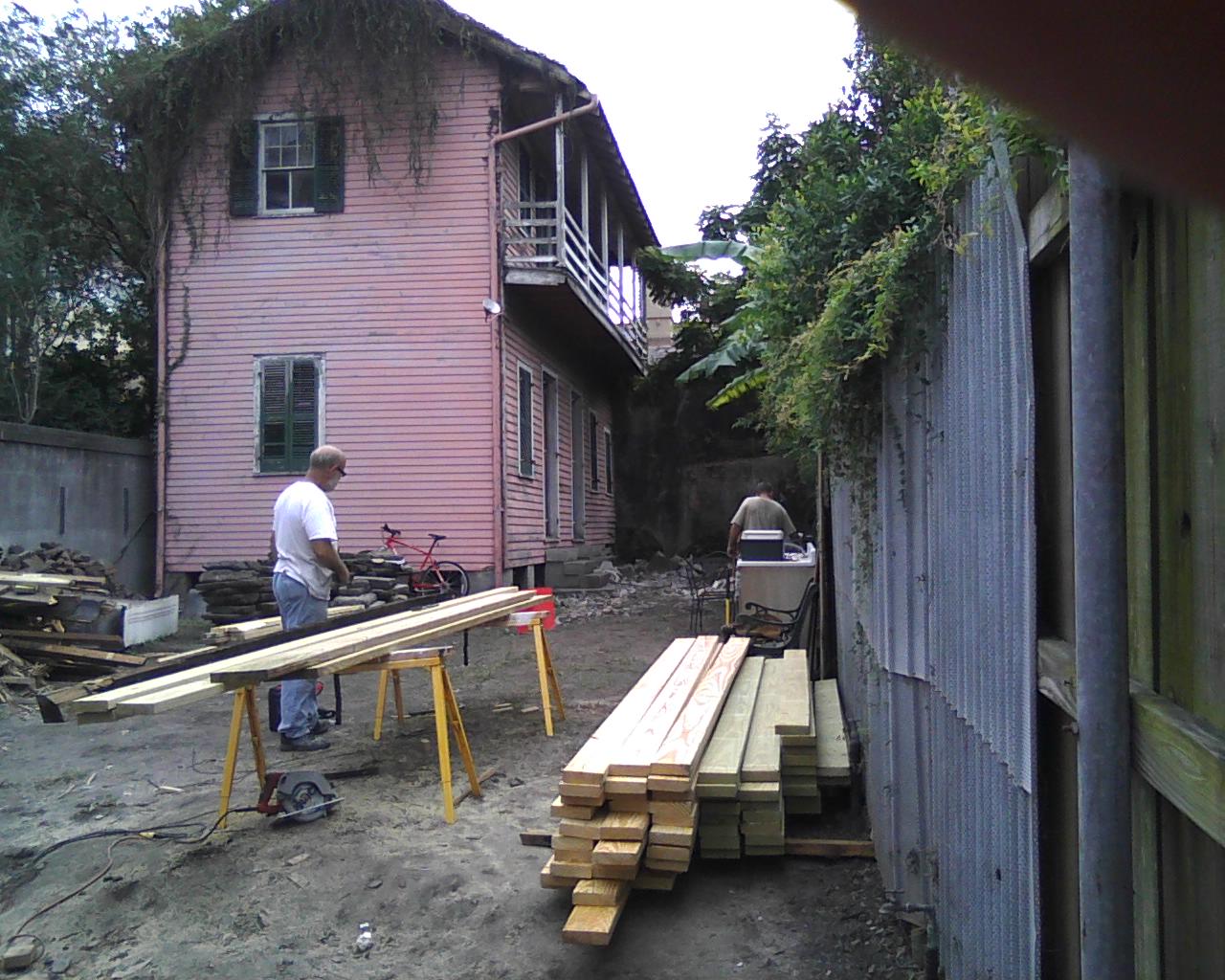
The long abandoned house at the back of the property in the courtyard.
Another practical history lesson from Richard Campanella, a geographer with the Tulane School of Architecture and a Monroe Fellow with the New Orleans Center for the Gulf South, is the author of “Bienville’s Dilemma,” “Geographies of New Orleans,” and the forthcoming “Bourbon Street: A History” (2014). He may be reached through rcampane@tulane.edu or @nolacampanella on Twitter.
Until just a few years ago, each of the seven districts elected its own assessors, who staffed their own offices and assessed taxes independently — a system unique in the nation. It took civic intervention after Hurricane Katrina to finally consolidate those political redundancies.
Plantations, faubourgs, Creoles, Anglos, competition, expansion, drainage, politics, taxes: embedded in that seemingly mundane map are sundry episodes in the human geography of New Orleans, going back 200 years.
The exhibition explores the lives and work of Gypsy Lou and Jon Webb through objects from Blair’s Collection as well as paintings by Rockmore (including his widely recognized “Homage to the French Quarter”) and photographs by Johnny Donnels. The display also includes copies of each title in Loujon’s small but celebrated catalogue, while illuminating the Webbs’ relationships with other self-proclaimed outsiders—the people, the places and the environment that inspired the creation of Loujon Press.
“The exhibition offers a glimpse into the vibrant artistic life of the French Quarter in the early ‘60s and introduces visitors not only to the aesthetic of that time but to the fascinating people that created it.” said Cave
THNOC » Presentation featuring Edwin J. Blair, JoAnn Clevenger, and Neeli Cherkovski.
An absorbing piece by Katy Reckdahl about the demolition of the public housing.
As usual, Reckdahl has humanized a complex story and showed how community is the heartbeat of New Orleans. The story of the demolition of public housing since the Federal levee breaks is not about the need for “new” houses, but about the commercialization and gentrification of our neighborhoods in the hopes of attracting younger, white residents and excluding those people of color who live there now. Now that Iberville has now been turned over to the developers, it will severely restrict the ability of the workers of the Quarter to reach their jobs easily. I believe that the city has had the destruction of Iberville as one of their main goals for years and have finally desensitized most residents enough about developers greed to actually get it started now.
I am in agreement with many for the need to redesign the public housing to the streetscape by reducing the number and orientation of the buildings, but I cannot agree that removing almost all of the well-built brick townhouses for wood townhouses and making most “market rent” will help anyone but those developers. Regular people who have lived near and worked in the Quarter for generations will have to move away and many will look for jobs nearer to home. This destruction of good housing without the addition of jobs and supportive social services is emblematic of the inequality that government’s actions now often represent.
Maybe this administration that has been busy helping developers can add some public transportation choices for those workers to be able to get to their homes that will now be further away.
And beyond that, the fact that families and friends that will be broken up, never to be able to live within their community again must be remembered.
“On weekends too, he occasionally passes through the complex, to say hi to a friend’s mother or simply reconnect to home.
“If my life is a game of tag, it’s my base,” he said.”
Sent to me on this rainy morning by my French Quarter friend, Jonny:
The Historic New Orleans Collection is working on the Brulatour House on Royal Street, which has a long and storied history, including operating as the Arts and Crafts Club for a number of years in the early part of the 20th century. Many of its artists used its facade and courtyard for inspiration for many art works, which is why the courtyard will look so familiar to so many people when it is finally opened to the public.
The HNOC uploaded some pictures of the work of the discovery of a well in the courtyard. The previous paving that can be seen near the top is fascinating.
EarthSearch dig at the Brulatour House at 520 Royal Street


 French Quarter block by block
You must be logged in to post a comment.