Home-grown Fruits and Vegetables Uncommon in Early New Orleans

As someone deeply involved in regional food systems, I am always searching for detailed descriptions of earlier food systems wherever I work. Here in my own region of the Gulf Coast, I often find a common misperception that the level of truck farming found in and around the city in the late 19th century and early 20th centuries (due to the large number of Sicilian and German immigrants) was representative of the agricultural system of the earlier colonial eras. However, most accounts I have read indicate that the port was the entry point for much of the food and drink that the region used and plantations were mostly used for growing and exporting commodity crops from the earliest days until the present day, with market crops quite limited.  Therefore, I was gratified to find this passage in Public Spaces, Private Gardens : A History of Designed Landscapes in New Orleans by Lake Douglas:

“The French botanist and explorer Charles-César Robin (ca. 1750–?) discussed his travels in Louisiana, West Florida, and the West Indies between 1802 and 1806 in his three-volume Voyages dans l’intérieur de la Louisiane … (Paris, 1807):

‘The high cost of labor is reflected in the high price of vegetables in the markets, where fish, game and meat are very cheap, these not being the product of much labor. Vegetables are so rare that sometimes they are lacking altogether. In the spring there are no first fruits, although the cold spells are so transient that with a few precautions one would hardly notice the winter. No one knows anything about seed beds, greenhouses or shelter, nor anything at all about the art of vegetable gardening. In the dry periods of summer there are no lettuces or other leafy vegetables, because no one waters or protects the young plants. Notwithstanding the fact that a person near the city can make six, seven, eight, nine, ten piastres a day from the sale of vegetables, not even these exorbitant prices have stimulated anyone to perfect this branch of agriculture. I have examined several of the large vegetable gardens. They are shameful, not to the slaves who cultivate them; they don’t know any better, but to their masters who hardly bother to oversee work outside of the fields. The expense of slave labor on the one hand prevents the introduction of new products, and, on the other, stunts the ingenuity and industry of the masters themselves’  These observations are obviously those of someone well acquainted with horticulture, cultivation techniques, and agricultural economy. They suggest that, well into the nineteenth century, the community itself was not self-sufficient in growing fruits and vegetables and was still dependent upon external supplies for these needs” (italics added).
French Quarter

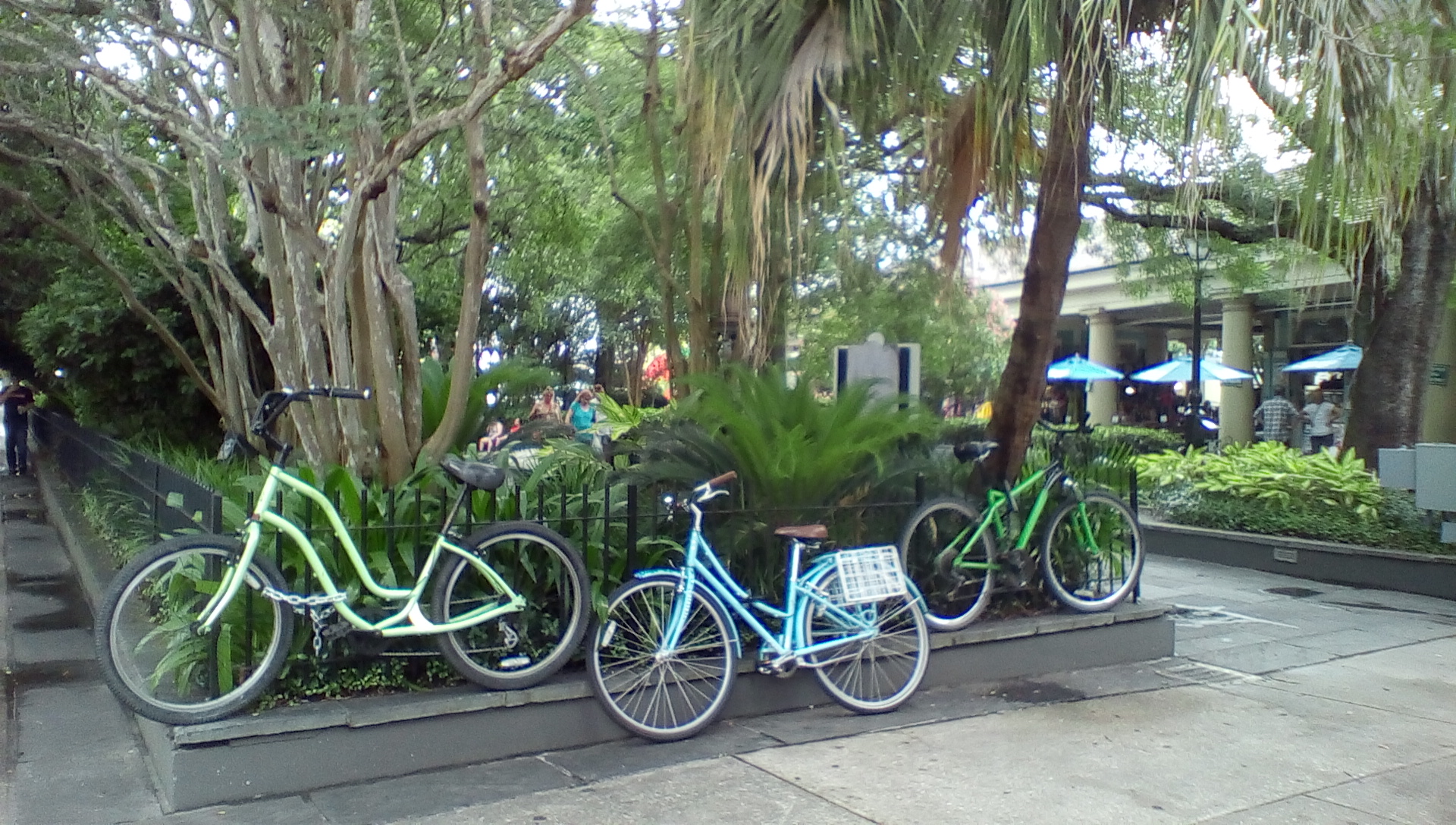
FQBikes@latrobe

bicycles locked at Latrobe Park

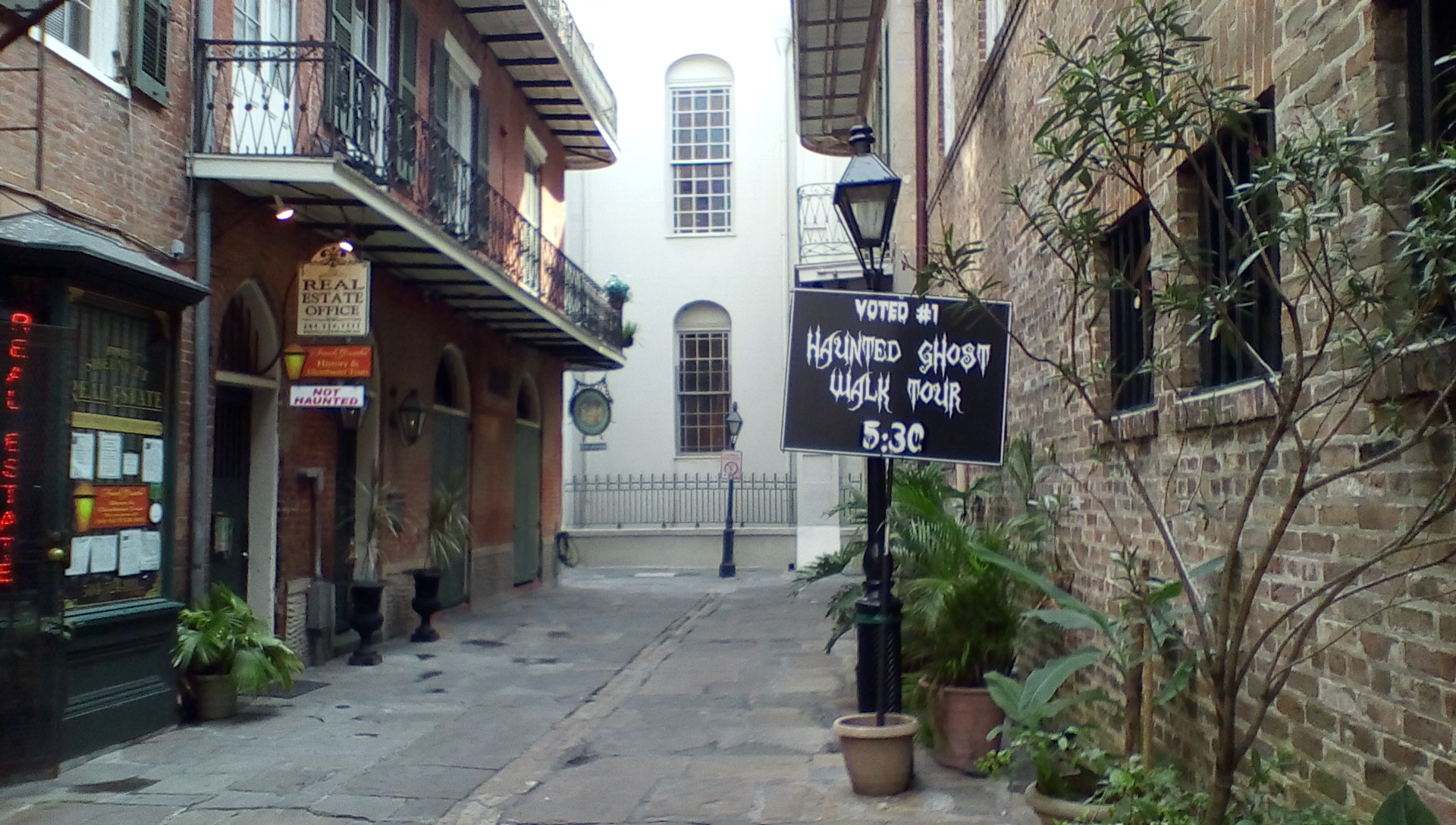
hauntedtours530

haunted alley

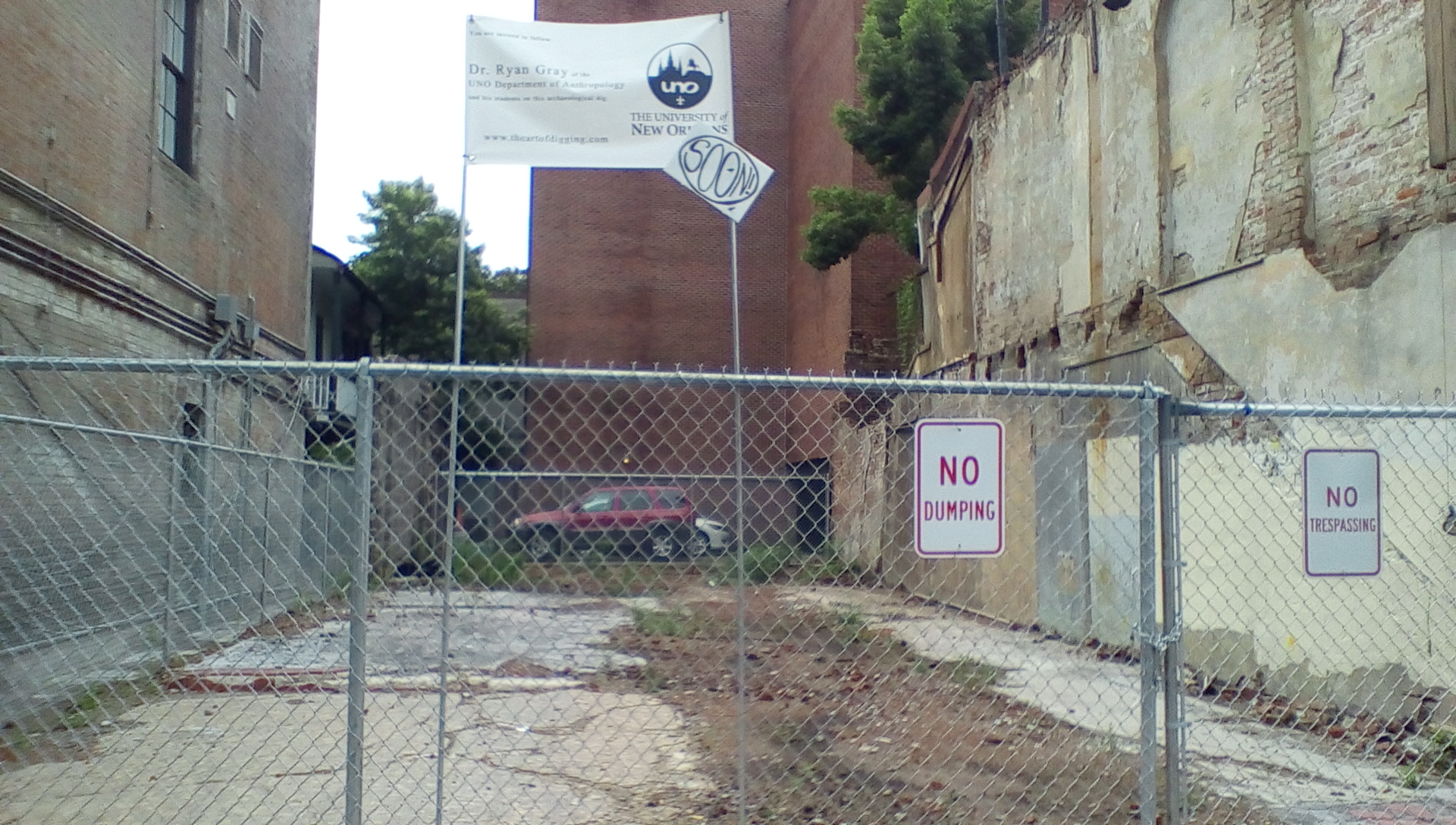
RoyalArchaelogicaldig

Dig about to start on Royal Street

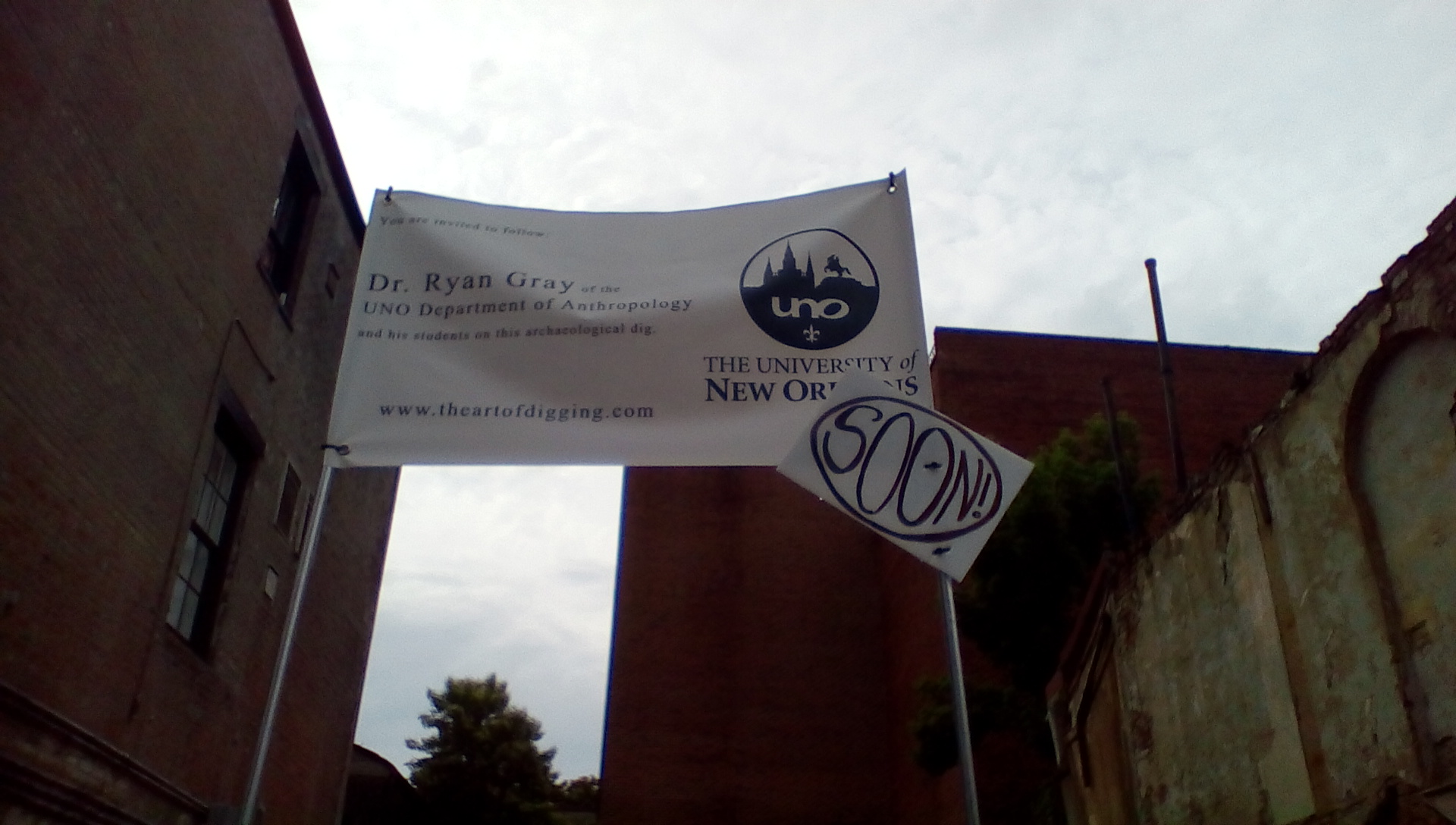
RoyalArchaelogicaldig2

UNO dig at Royal Street

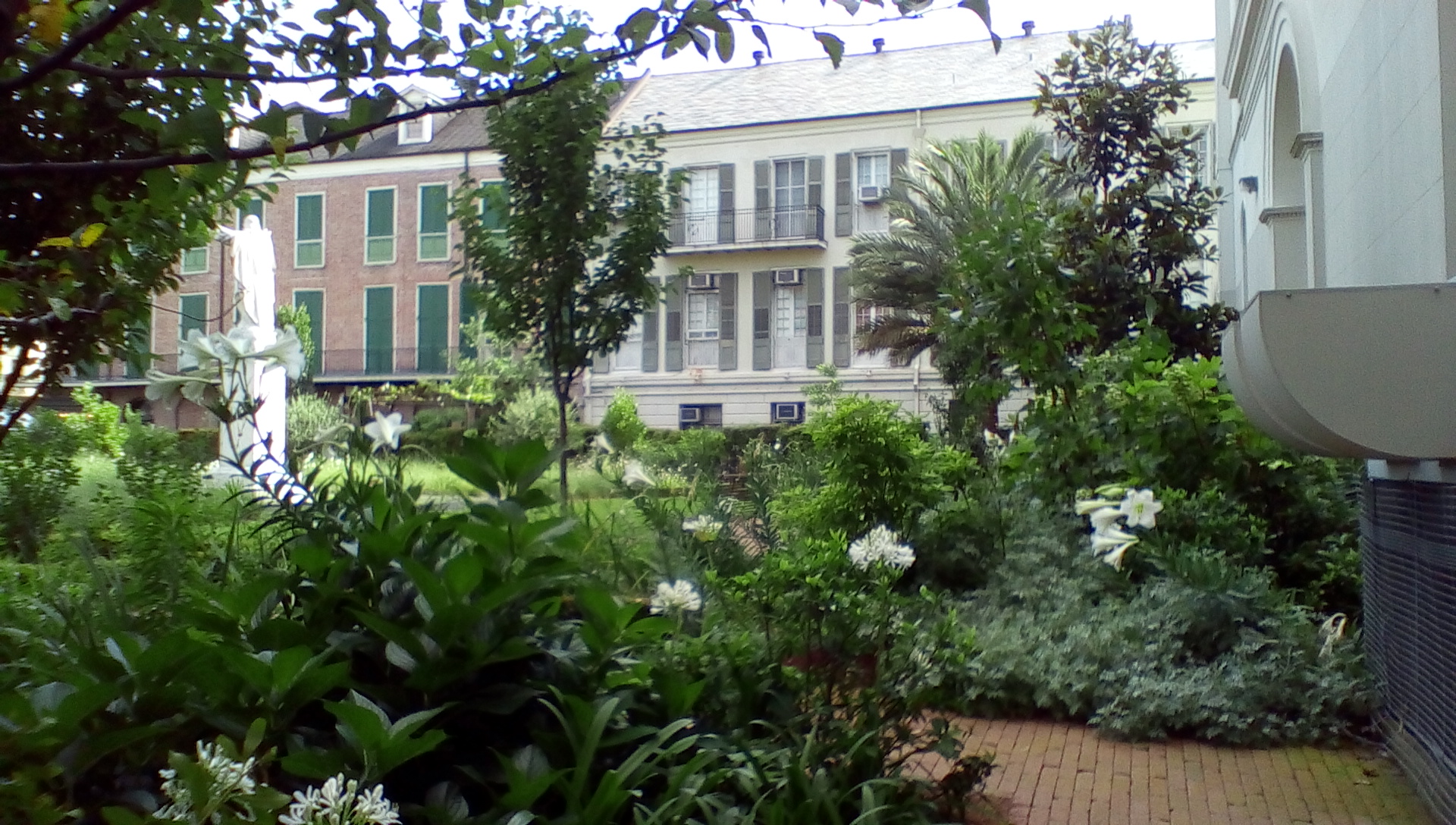
St. Anthony Garden

St. Anthony’s Garden

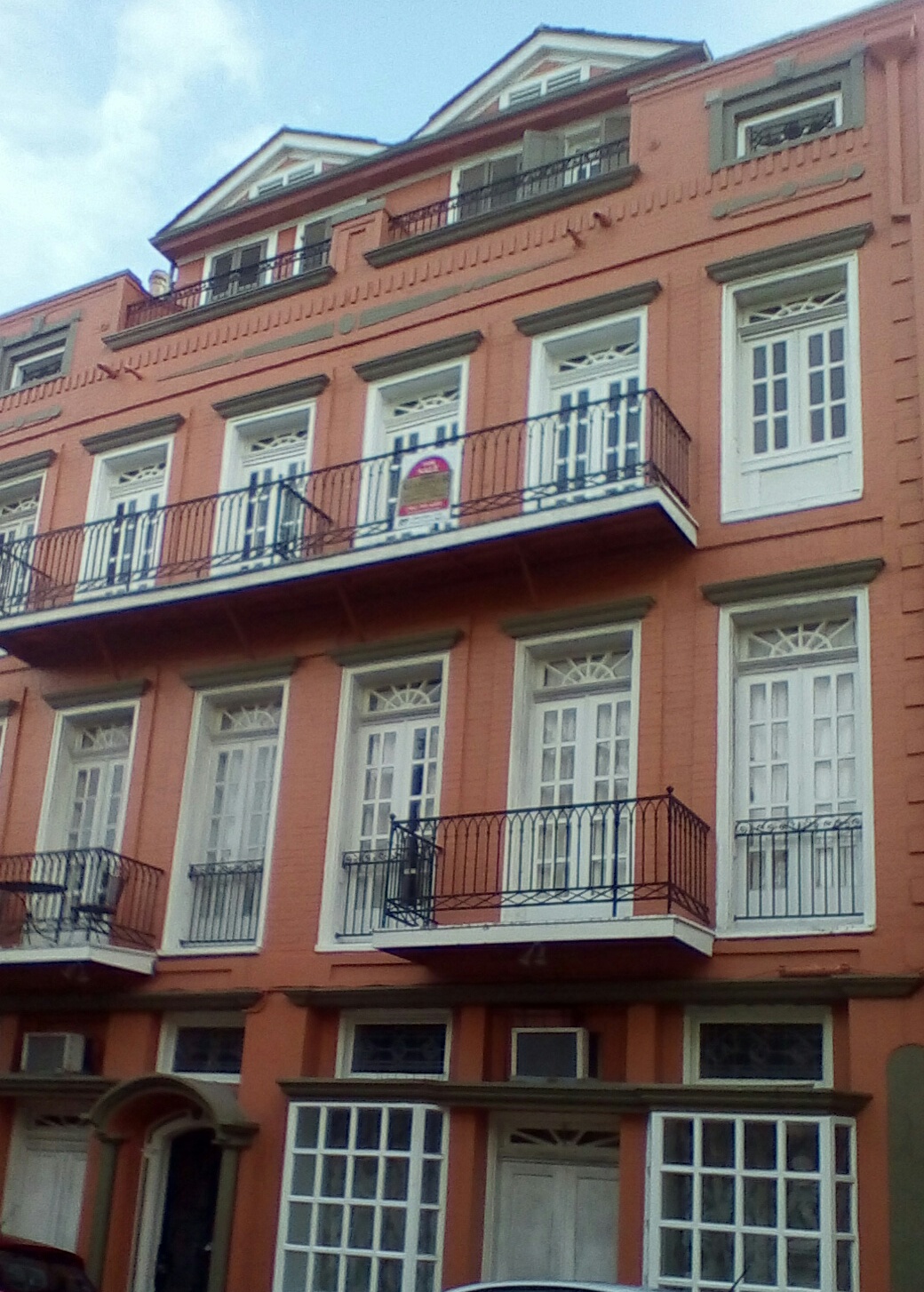
UrsulinesBuilding_kindlephoto-1044909

Ursulines between Royal and Chartres

Excerpts from A Field Guide To Trees- Bill Lavender

the night’s young
you’re not

bark
that sensuous brown surface
it grows on trees and barroom walls

compared to this
the passing of the body is nothing

what happens when humanity finally boils

things I imagine saying to the tree
just go

the tree that represents itself has a fool for a client

Fortin Street Stage

As a veteran of the Fortin stages (mine was directly behind the Jazz Tent), yeah you rite.

The Typist's avatarOdd Bits of Life in New Orleans

by the time I stop drinking and start thinking about sleep
by the time we’ve eaten the last of next-door jimmy’s hot meat
by the time my feet have shuffled their last hussle
on the public blacktop ballroom of Fortin Street
and the hustle has all gone downtown to Bourbon
and the bustle has all gone downtown to Frenchman
and the last of the one-song, school-kid bands
and the last of the weary ice-cold water men
have carried themselves home weary to the bone
and one sad bicycle hangs abandoned on the fence
and the can picking man passes on his sad, last round
i will stand on Fortin Street and glisten to the sound
the last frantic arpeggios vibrating in the silence
attenuated into memory, a faint flow of the distant glory
like the milky way backdrop to the asterism’s story–
then, yes, then and only then will I…

View original post 13 more words

New Orleans City Council (mostly) bans big trucks in French Quarter

I could show you DOZENS of these pictures...

I could show you DOZENS of these pictures…

Honestly, large signs that warn of this ban at each street that directs traffic into the Quarter will help. Additionally, high fines for being in the Quarter, levied from photographs submitted by any citizen who is willing to also sign an affidavit that the photo is real; say 500.00 to start…
Maybe the French Market Corp could make some income by using small electric trucks to deliver some goods from larger trucks delivered to their Barracks shed to restaurants and bars in the center of the Quarter?

Trucks longer than 36 feet can no longer freely maneuver through the historic neighborhood. That is unless their owners opt to pay $125 a year or $10 per trip to basically dodge the ban.

New Orleans City Council (mostly) bans big trucks in French Quarter | NOLA.com.

Navy Week in New Orleans

http://nolanavyweek.com/

Screen Shot 2015-04-22 at 9.26.44 AM

Ships from the U.S. Navy, Coast Guard, Great Britain and Canada will line the shores of the Mississippi River and you’re invited to join in on the action. Starting Friday, April 24th, the ships will be open for General Public Visitation – explore as many as you can! Hours for ships may vary by day, so take a look at our calendar or the individual ship’s pages and start planning. School and community groups are also invited to learn more about scheduling private group tours.

    Historic New Orleans Collection will have lectures for Navy Week

As part of New Orleans Navy Week 2015, The Historic New Orleans Collection will host a special presentation on April 27, from 9:30 to 11:30 a.m. at THNOC’s Williams Research Center, 410 Chartres Street just a few blocks away from the riverfront, where the visiting ships will be docked.

The program will feature two lectures moderated by Cyril Lagnavec, who teaches at Jesuit High School and the US Naval College.

William H. Forman, professor at the Naval War College in New Orleans, will open the program with his talk “The 1814 Battle of Lake Borgne: Prelude to Victory,” which will examine the naval engagement between US and British forces that preceded the monumental Battle of New Orleans.

Jason Wiese, associate director of THNOC’s Williams Research Center, will follow with his presentation “United States v. Andrew Jackson: The Fight over Martial Law in New Orleans,” which will explore Jackson’s decision to impose military rule in New Orleans in December 1814 and to keep it in effect after the war’s end, as well as the controversies that ensued.

New Orleans Navy Week will take place April 23–29, 2015, with a host of events at venues throughout the city. The program at The Historic New Orleans Collection is free and open to the public. Reservations are encouraged and may be made by calling THNOC (504) 523-4662 or emailing wrc@hnoc.org.