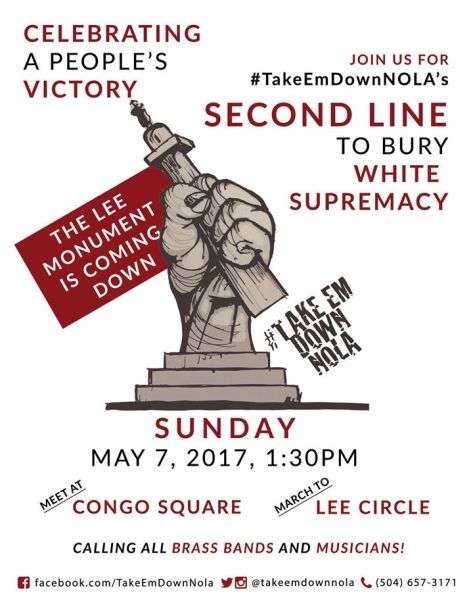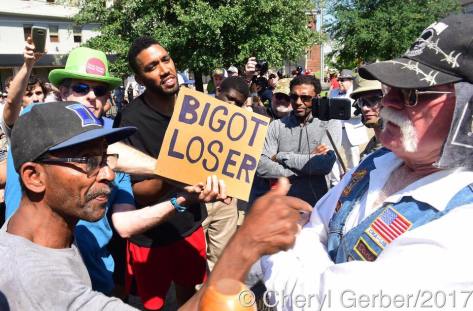
Don’t underestimate our resolve to change and don’t excuse yourself either.

18199294_10156128207808761_6745629308151966361_n.jpg

NOLa may be “Confederacy Statue Central” right now but it is now and has long been a public hotbed around ensuring the civil rights of people of color. If you know the why of the streets names of A.P. Tureaud or Oretha Castle Haley among others, or remember the fight by Dorothy Mae Taylor who was the first African-American woman to serve in the Louisiana House of Representatives who (when serving as on N.O. City Council) insisted that those using public amenities for their parades had to sign a pledge that they did not discriminate on grounds of “race, gender, handicap or sexual orientation.” then you know what has been done here. (Believe it or not, a few century-old krewes stopped parading instead of affirming their belief in equality which showed the need for her pledge.)  Or if you have talked to those who have been on the front lines since at least  Father Twomey was around, you know the subject is lit and has been for generations here.

If you doubt that, here are some signs of it. This is a collection of different things people here have done or said, so choose the stories that are helpful to you:

_________________________________________________________

• Go to Treme and view the cross made of shackles put up in 2004 at the church of St. Augustine built in the 1840s by free people of color. Read about the 19th century War of the Pews where whites and FPOC duked it out to see who would have prominence in this church. The FPOC won by purchasing 3 pews for every one a white person bought and even bought pews so slaves could attend services.

jat4qe959uje4z3jbtbxlrggtll.JPG

The grim, rusting monument standing outside the church honors those countless slaves who perished uncounted and unnamed. As the bronze plaque affixed to the wall behind the shrine explains, the monument was primarily inspired by the number of unmarked graves that have been unearthed in the city over the years, but is also dedicated to all of those who died ignominious fates during the American slave trade.

 _________________________________________________________

• Or read the piece in Playboy  which includes my favorite new image of these statues from someone I already admired: a local writer who is described by the author of the Playboy piece as “Maurice Ruffin, a native son who’s a lawyer, restaurateur, and novelist rolled into one—a NOLA combo for the ages. He scoffed at the idea that there could be any doubt about the preponderant local sentiment, and not only among his fellow African Americans. “Does anyone think that most people in this city want to keep those horcruxes up? “ he asks. “Of course not. That’s why the pro-monuments people are mostly out-of-towners.”

_________________________________________________________


• If you still doubt our resolve to find and share the truth, search out the telling of the real history now happening on social media, in person and in close quarters in family homes. This quote below was in response to one of those posts by someone who thinks of themselves as the keeper of the history but who was just quoting fake propaganda taught in our schools circa 1880s-1950s:

Actually, 143 years ago a minority calling itself the White League, whose primary goal was sustaining white political power in Louisiana, overthrew the local government, and forcibly disarmed and disbanded the black state militia. The monument, erected in 1891 and honored with wreath-laying ceremonies by children of White League veterans until the 1930’s, went up at the time Jim Crow laws were widely passed (for example, the 1890 law barring black and white Louisianians from riding together in railroad cars.) Today the monuments are being defended, with threats of violence, largely by white supremacists.
Which long-ago time did you wish to honor here?

Dozens and dozens of these calm explanations from New Orleanians to other misguided Southerners and adherents to the White Cause movement exist.

_________________________________________________________

• I also like this comment below by a friend of a friend on FB, that mirrors my experience up north too. I remember the neighbors of my parents’ generation laughing about how there was a code used on police scanners to indicate a person of color had crossed into my lily-white suburb. The car would be stopped, likely ticketed for some minor or non-existent traffic offense, and turned around to the Cleveland border. Yeah, I’m looking at you, Lakewood Ohio.

As to the underlying racism of “just between us” moments, in the nearly 30 years since I moved here, I have always found my hometown of Chicago to be much more racist than New Orleans, if for no other reason than that, in Chicago, black culture is considered sub-culture and in New Orleans, it is the culture. Growing up in Chicago, you could, as a white person, go your whole life not encountering black people in social settings, if you wanted to live that way (yuck!). Here, that would be next to impossible, except in the highest economic brackets.

What’s also important about that one is it is been my experience that those without family ties to this place, or more correctly, those with some family ties and time away someplace else- are often the ones who have a hard time with the removals and who favor some unlikely “middle ground” of the statues remaining but with a plaque. That has always seemed to me the definition of the old phrase about putting lipstick on a pig. These folks are often very forgiving of all of the oddities of the place and become expert in telling stories about New Orleans to outsiders in a way that shows the charm of it all and hides the shame. Yet, it is time that they also confront the statues of Jim Crow and like the lady above, truly become a local by saying it is time for some of that shit to go.

_________________________________________________________

• What a favorite writer with one of the keenest eyes for modern American farce, Joan Didion  said almost 50 years ago about why she came to the South:

…that for some years the South and particularly the Gulf Coast had been for America what people were still saying California was, and what California seemed to me not to be: the future, the secret source of malevolent and benevolent energy, the psychic center.”    (2017). South and West. Alfred A. Knopf

Malevolent and benevolent energy. I think I’ll steal that forthwith. But sadly she was right- the South’s lack of self-awareness about it’s own energy was this country’s future in 2016+. Writer Nathaniel Rich wrote in the foreword to Didion’s book:

How could the hidebound South, with its perpetual disintegration and defiant decadence, at the same time represent the future? Didion admits the idea seems oxymoronic, but she is onto something. Part of the answer, she suspects, lies in the bluntness with which Southerners confront race, class, and heritage–“distinctions which the frontier ethic teaches western children to deny, and to leave deliberately unmentioned.” In the South, such distinctions are visible, rigid, and the subject of frank conversations.

_________________________________________________________

• A drum roll, please. The next two worthy statements about what is happening here (good and bad), one from a native New Orleanian and the other from a decades-long resident who has extended the culture through his contributions:

CW Cannon: Memo to liberal media: New Orleans hasn’t just ‘joined’ movement against white supremacy

Michael Tisserand: In New Orleans racism is harder than stone

So come on. Learn along with us and explore YOUR own area’s history of inequity and confront your own privilege. Because it is there.

I do that daily in a city with a majority African-American population who have given the world so much culture and indigenous knowledge and community that is hilariously and evidentially so wrong when those with pointy heads here say they are superior. Still, the subjugation of the majority of people (or in those areas where they are a minority, it doesn’t matter) continues and it is time for us to truthfully see our country as not entirely made by Daniel Boone or John Wayne but also by millions of hard-working and creative people who are not identified by monuments and are not white and not men. America was not made only by white people and yet remains a place where going to the better schools in any town or the nicest suburb, or the corporate meeting will offer mostly whiteness. And going to the prison or the changing room in the hotel employee area will show the opposite.

This does not ask whites to hate themselves or their own history but instead asks them to see themselves as part of a larger humanitarian future where the color of skin should not offer any advantage. To see the evidence of institutional racism that we benefit from in a thousand tiny ways and too often don’t spend any energy to rid our places of it.


As I wrote that last part,  I stopped to read this post by native Cheryl Gerber, which is a thoughtful and heartfelt outpouring:
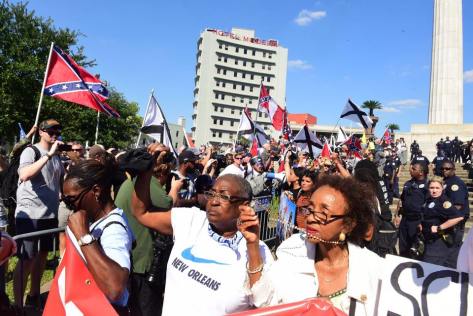
18423999_10156140909268761_1526295210909244867_n

Photo by Cheryl Gerber 2017

This particular photo haunts me.

There have been a handful of events in my life that have really shaken my complacency. Like the time in my early 20s when I did jury duty in a murder case and I was the only white juror and the only juror who believed the policeman’s testimony. That really opened my eyes. I didn’t know better, but I do now.

And when the planes struck the towers. I convinced myself that no one could have seen that coming but the signs were there.

And when the levees broke. For my entire life I had been told that our city could drown, but I didn’t believe it. Not even when the cat five storm was barreling straight toward us. I should’ve known. I do now.

And when we elected you-know-who. Didn’t see that coming, but I should have.

And now I am equally, if not more perplexed by my community who wants to keep the Confederate monuments up. Even while they have drawn hate groups from across the country. Even while our African-American neighbors have been complaining and marching for decades.

This photo of Pastor Marie Galatas, who ran for mayor in 2006, really shook me out of my complacency. I have seen her march and preach for decades. And while I never thought she was a joke, I never really took her as seriously as I should have — not until I saw her holding up her cross and bravely marching past KKK members hurling the N-word toward her. I can’t believe she still has to march! She and others have been trying to tell us for years that racism is our city’s biggest issue. While I haven’t been blind to racism in our fair city, I have been guilty of wearing rose-colored glasses. Now I see clearly.

Yeah Cheryl.

It is also important for all of us here to remember that we do this work on our own biases in a city that can have an impressive history of different races and ethnicities respecting and honoring each other. The Italians and Creoles living together in the Quarter for 100 years; the Vietnamese being cheered as heroes when they stood up to City Hall post-Katrina; the black and white faces of ACORN/A Community Voice fighting for minimum wage hikes, to stop the sell off of the public water system, the intrusion of a industrial truck corridor in their shared neighborhood in 2017; and last but not least, the multi-generational sea supporting the city’s takedown of these concrete nooses held tight by our ancestors’ post-Reconstruction Jim Crow attitudes.


Latest: Wynton Marsalis weighs in on the takedown and the racism of his hometown.
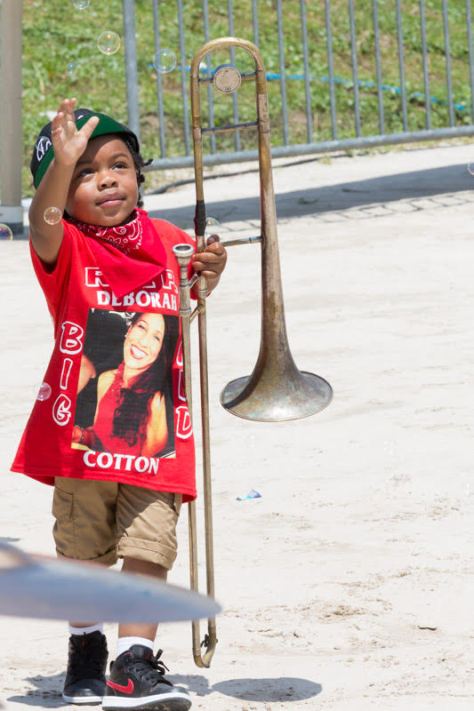
Jazz in the Park

Today’s Schedule:

4:00 to 5:00 DJ 9th Ward Wonder

5:00 to 5:30 Second Line Parade

5:30 to 6:45 Joe Krown Trio featuring Walter Wolfman Washington & Russell Batiste

6:45 to 7:00 Intermission

7:00 to 8:15 Russell Batiste & Friends


Armstrong Park Jazz

Deborah Cotton, writer struck in Mother’s Day New Orleans second-line shooting, dies at 52 

A very great lady. R.I.P indeed.

This is part of a letter she wrote about those responsible:

I feel no anger or vindictiveness toward those who shot me. Instead, I feel sad. As I move on with my life, the young men who perpetrated this crime are facing the rest of their lives behind bars. They are in their 20s and have already lost their chance at a full, free adulthood. I’m not alone in my stance. In a recent report by the Vera Institute, 69 percent of survivors of crime nationwide said they would prefer people be held accountable through alternatives to prison, including rehab, mental health or drug treatment, or community supervision.

Deborah Cotton

Cheryl Gerber’s pics of Deborah’s memorial second line


Photos by Stephen Charles Nicholson of tiny JazzFester 5.7.17jflast-4.jpg

INVISIBLE CHEFS: Where are New Orleans’ black chefs?

A panel conversation on why in New Orleans, where African-Americans are fundamental to the cuisine, there are relatively few prominent black chefs.

WHERE & WHEN:

New Orleans Jazz Market
(1436 Oretha Castle Haley Blvd.) Wednesday, May 3, from 5:45 to 8:30 p.m.

Moderators:
Brett Anderson (NOLA.com | The Times-Picayune) Zella Palmer (Dillard University)

Panelist and Organizer:
Tunde Wey (cook/writer)

Panelists:
Vance Vaucresson (owner Vaucresson Sausage Company) Jordan Ruiz (chef/owner The Munch Factory) Ericka Lassair (owner/operator Diva Dawg food truck)
Adolfo Garcia (restaurateur)

Todd A. Price
Dining Writer
The Times-Picayune

The People’s Grocer-Review

It is my opinion that New Orleanians are either fascinated by the Schwegmann Brothers Giant Super Markets saga, recounting their own connections to the stores at the drop of a hat or if they have no shopping history there, are completely bored by the attachment that others have to it.

My family is in the latter camp and so never has been heard wailing over its loss and never spent any time preserving any of Schwegmann’s famous printed shopping bags or any of the political buttons within my late grandmother’s massive collection of New Orleans menus, World’s Fair, Superdome souvenir items and Carnival clutter.

My own experience with the chain was also slight- In the 1980s, I did regularly go to the Schwegmann’s out on Airline, but more as a visitor to a strange land than as a shopper. I went with my pal Roger who sold fancy kitchenware to department stores and high-end shops, where I would help him set up displays and tag along as he talked to the buyers. Since he was constantly assessing retail and observing cultural connections in his beloved adopted city, Schwegmann’s appealed to him as something uniquely New Orleans and yet with industry-leading ideas like the bank and the pharmacy within its massive footprint. He loved the food counter and the bar. I learned to appreciate retail analysis in those days while at the Airline and the West Bank stores, listening to Roger explain why John was brilliant in his design and product choices. He would have loved meeting Mr. Schwegmann. He would have loved this book too.

Yet, the list of who will enjoy this book is not just those with a personal fascination for the deep local culture that begat this chain, or those with Roger’s and my obsession for retail histories. Really, anyone who wants to learn more about 19th century German immigration to the area, or the layout of corner stores before supermarkets, or of pricing strategies in the pharmaceutical or dairy industries, or of how early 20th century “fair trade” laws stymied discount pricing, or of the history of the Bywater area of New Orleans, or of the political arena of the latter part of 20th century Louisiana, or of later generations of family businesses who can quickly and shockingly kill the goose that lays the golden egg, will also find this book a keeper.

It is important to note that this is a biography of John Schwegmann and not only a history of the supermarkets that he founded and made into a chain of 18 beloved stores. Because of that, the family’s history is front and center especially in the beginning of the book and may delve more deeply than those without local connections care to know but I suggest readers stick with it even if the family history is not the reason for reading this book. That history offers important detail in the shaping of this supermarket innovator, likely responsible for making him into the type of businessman and later politician who relied on his own intuition, his deep allegiance to his city and a small group of loyalists for advice or support. It also shows how deeply the grocery business runs in the Schwegmann family, and yet how often family turmoil existed among struggling immigrant families even back in those days, too often remembered as perfectly halcyon. That honesty of the family interviewed and the author to note the Schwegmann family life squarely and honestly, is to all of their credit.
This bio also offers many anecdotes from those who were there to show how John was a force of mostly good in the high-stakes world of grocery and drug sales, fighting for principles that most corporate leaders would not spend time or money to fix, all shaped by the place and people of his city. His home life may be viewed at times as calculated in terms of his handling of wives and mistresses but author Capello rightly doesn’t linger too long on modern interpretations of John’s morals and reminds us that the businessman maintained warm relationships with the mothers of his children even after the marriages ended.

The book spends more time on Schwegmann’s world travels and later political life, which was not as impressive as his business career. That career in Baton Rouge was derailed by his opposition to Hale Boggs and almost everyone else, leading to his constant no votes and also not helped by some of his political stunts like having a goat milked while testifying against the milk commission. Those responsible for the building of the Superdome were also targets of his wrath, forecasting many other fights a generation later by communities around the U.S. questioning the logic of taxpayer-sponsored sports arenas.

The research behind the book is impressive, especially when so many other writers of New Orleans history use cliches and oft-told stories that may or may not be true rather than doing the work to find primary and accurate details. Capello’s background in writing technical papers lends itself to a detailed analysis of the retail industry and of the trends in pricing, product development and store design that Schwegmann pioneered. The timeline of the collapse of the chain is shared in unsentimental fashion and should allow New Orleanians to finally understand exactly how son John F. allowed the collapse to happen in such a short amount of time.
The author’s obvious unlimited approval of the free market system as defined by Schwegmann and others rings loud and clear throughout this book even if a few might quibble with some of the broader denunciations of the old public market system (which supported the port, small family businesses and farms by offering regulated food sales in every part of the city for 250 years) or, of his portrayal of John having an entirely altruistic nature in fighting for some of the price discounting that benefited his stores so clearly in a city that had no other supermarket chain to compete with his for decades.
I’d love to see Capello add to his research on this family and this sector with later papers on the superstore sector’s (meaning post Schwegmanns) complete lifespan in New Orleans and others across the U.S. with more attention paid to how the makers of things were ultimately priced out of their small production work because of this discount pricing strategy. It would also be interesting to see the author detail how the concept built and consolidated multi-generational family fortunes for discounters like this one and the Arkansas-based Waltons among others, and what those families have done with their newfound power. The destruction of Main Street might also be examined in terms of the formation of the superstore era, an era that now seems to be slowing with the latest retail category killer- the internet – and the Millennial generation’s expectations of impersonal speed and 24 hour convenience of online shopping over local retail culture and family shopping trips.
Still, there is no doubt those low prices and huge new stores meant that the mostly poor residents of this old city in those days felt attended to if they were lucky enough to have a Schwegmann (Brothers) Giant Super Market within distance of home. And with an air-conditioned bar with the cheapest liquor in town to drown their sorrows at for good measure.
I expect that this book will be used in university courses on retail and marketing, as well as in any history course devoted to the people who made New Orleans great. John Schwegmann’s story, as written in The People’s Grocer, certainly deserves that.

The People’s Grocer can be ordered here.

Traffic Study for FQ users

The fact that questions 10 and 11  require you to answer as preferring one of the options and did not included a None of the Above choice means this is a poorly worded survey which will skew the results.

I added this to the last text question:

These 2 questions (10 and 11) REQUIRED an answer which is unfair and should have included a none of the above answer. My response should not be recorded as I do not prefer any of those options but the questions were required to be answered in order for my survey to be saved. Please count them as none of the above.

_______________________________________________________________________________

Please find below a link to the French Quarter Traffic Study Survey, which is being conducted as part of the City of New Orleans Citywide Public Safety Improvements plan.

Specifically, the French Quarter Traffic Study is focused on the transportation, traffic and delivery issues associated with the proposed changes to vehicular traffic flow on Bourbon Street.

There is one survey for French Quarter residents and one survey for French Quarter business owners.

 Why – We are administering this survey to ensure that residents and businesses across the French Quarter have an opportunity to participate and inform the Traffic Study.
 Time – The survey will take approximately 10 minutes to complete.
 Privacy – Your privacy will be protected; only the City and its contractor will have access to the raw survey data.
 Deadline – The survey should be completed by close of business on Friday, April 28, 2017.

Participate in the Survey for Residents: https://www.surveymonkey.com/r/FQ_Reside…
Participate in the Survey for Businesses: https://www.surveymonkey.com/r/FQ_Busine…

If you do not have access to a computer, please call 504.658.ROAD for assistance with participating in the survey.

We appreciate your willingness to engage in this process. Should you have any questions, you may direct them to 504.658.ROAD or send e-mail to roadwork@nola.gov.