The Futilitarians- Review

The Futilitarians: Our Year of Thinking, Drinking, Grieving, and Reading by Anne Gisleson

In short: I think this ranks as one of the best memoirs to come out of the South in some time. I’ve been waiting for someone to use the Katrina timeline to truly tell of the pain and random brutality that is so normalized here that it is often clichéd in the retelling. Gisleson’s take on New Orleans life is important in that she is a native of the city and it has been my experience that that is a too-small group writing about New Orleans in recent years. Her tender and often witty memoir frames how the city shapes – and sometimes breaks – family and friends, leaving the survivors to live with the absurdity of existence where most of one’s day is wrapped up in the trivial even as the tragic stays near, ready to overwhelm one’s own thoughts and fears when the night falls. Or, when tragedy is made personal via the faces or actions of the other souls that populate the city, sitting on bar stools at breakfast time or dancing for tips on Bourbon Street.
As a writer, she knows she will write about her family tragedies and confesses that her father told her at his regular lunch spot at the Rib Room that he would stop talking to her if she did. Just like most Southern daughters would, she simply waited until he passed to do so. His story is a big part of this book, as his personality and aspirations defined the family life even though he kept his own set of secrets that were only been partially glimpsed then or understood by his children to this day.
The overt search for meaning in the post-Katrina era is captured by the group of friends who begin to meet as the Existential Crisis Reading Group. Gisleson offers entertaining descriptions of the attendees, and what they offer each other in terms of solace or clarity but the moments of her solitary musings about her family, her own history, and the city are what make this memoir. While discussing Borowski’s 1946 painful short stories “This Way For the Gas, Ladies and Gentlemen” (inspired by his own concentration camp experience) she makes an excuse to take her son to bed so she could escape the room to instead lie in the dark with him sleeping next to her, looking and listening through the open transom, illustrating her momentary discomfort at sharing high emotion over what has been lost, what is still not absorbed and her own part in it all. Even though slightly removed, the presence of friends comforts and the house with its mark of previous generations who lived there before – some successfully- quiets her unease. That was a passage I returned to again and again, feeling she had captured one moment of the sweetly painful experience of life here in our land of misrule.
Her discomfort is partly because of her survivor’s guilt and from the realization that the family tragedies may have helped she and her remaining siblings make a more emphatic mark in the world. Suicide is a confounding subject for survivors, searching for meaning in the trivial things left, never knowing what had mattered, what had helped and what had hurt.

Not surprisingly, essayist Joan Didion, author of the brilliant book about her own family tragedies in “The Year of Magical Thinking” is mentioned; Gisleson considers Didion’s defense of writing painful truths about other people as “we tell ourselves stories in order to live” and originally dismisses it. Then, as she realizes her own urgent need to tell these stories she concludes that Didion may be right after all. And that addressing the murky emotions that people live with after horrible things happen is the furthest thing from futility and instead, is pretty close to transcendence which may lead, finally, to peace.
View all my reviews

Bill Borah, who steered an interstate away from the New Orleans riverfront, dies at 79 

The entire French Quarter (and Treme) should stand up in unison and salute Bill.

“The expressway, which would have eliminated pedestrian access to the river, was envisioned as part of the interstate highway system. It was the brainchild of the New York City planner Robert Moses, who had proposed it in 1946 as a symbol of progress that, he said, would alleviate French Quarter traffic. In his vision, the expressway would sweep down Elysian Fields from North Claiborne Avenue until it reached the river, then run alongside it until it connected with what would become the Pontchartrain Expressway.”

“Not all of Mr. Borah’s initiatives succeeded. He was on the losing sides in opposing the redevelopment of the St. Thomas public housing complex – a plan that included a Wal-Mart – and the demolition of 67 acres of a Mid-City neighborhood for the University Medical Center.

Because Mr. Borah abhorred what he called “planning by surprise,” he drafted amendments to New Orleans’ Home Rule Charter requiring the city to have a master plan with the force of law to guide future development.”

Source: Bill Borah, who steered an interstate away from the New Orleans riverfront, dies at 79 | NOLA.com

7th Ward Haiku

Peter Boutte
August 27, 2016

“Like a house of cards”

The weight of the world
Is balanced on our shoulder
Divide we fall

remember

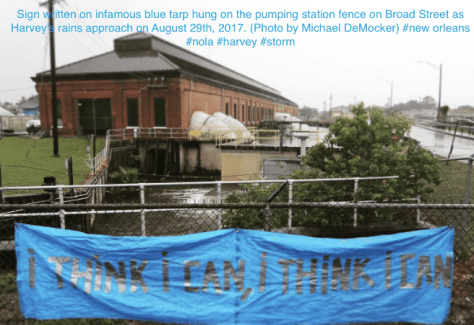
Okay. I promised myself I wouldn’t and yet here I am talking about the anniversary of 2005. But I’d like to be clear that I am just talking to my neighbors in New Orleans and across the Gulf Coast. Not that I don’t appreciate you, my fellow Yankees and you Canadians and Westerners and your fierce concern for a fair shake for our city. I do, but I feel like I’ve spent these years talking to you about New Orleans and Louisiana and Mississippi and sharing the secret greatness of it with you and you either get it or you don’t. You either believe we matter or you don’t and there is nothing more I can say right now to help you understand. But I’ve had little time for my neighbors and pals here so this is for them because so many of them are downhearted and angry about the state of their place.
Now that we have the distance of time to raise our eyes and look about, it is very clear that we have lost a tremendous amount that is not going to return. My grandmother died in July of 2006, after returning in January to her remodeled and unfamiliar home. That home that her family had done their best to make right after dozens of trees fell on the property and one on the corner of her house. I am convinced she looked around her town for a bit and just said no thanks. I can understand that as many of my friends have packed up and moved away – for good most of them – because they are bitter or they are sad, so sad- or frightened by the real possibility of it happening again.
I wrote the next paragraph to friends in exile in December of 2005 (kept it in the email folder so named):
I know some of you have heard comments from some New Orleanians about your decision to not come back right now. Some people are acting badly about who is here now and who is not. I (and many others) understand why it is not feasible for some folks to come back right now. I think that it is very clear thinking to make sure that you are taking care of yourself and family, as well as doing what you must do to keep a job or children going.This is a frontier town right now, and not too pretty or easy. The ups and downs are dramatic and ongoing. I tell you, I would not be here either right now if my work did not depend on it. Having said that, I am glad I am here. I am glad because I can help with direct action, which is my thing, but if your thing is keeping the awareness up in other places, cool.I know each of you is doing the good work out therein the “normal” world. Thank you for that and please know all of us- whether on Esplanade Avenue or Main Street- are in this together.
—————
Some of those who received it replied with gratitude and promises to return and some did not reply at all. Some of those who didn’t reply returned soon and some never did. I was wrong a lot about who would stay away longest and who would return. You never can tell.
I don’t know what wind event or infrastructure collapse or political spite is coming for us next, but there is one thing that I do know: the cool and lovely fall IS coming and with it, second lines and festivals and outdoor movies and football and satsuma season and much more. And then it will be Carnival season and we will sit together on neutral grounds and laugh and sing and dance and shake our head in amazement that people work every day and shovel snow when they could be here. I’ll bike to the park and meet friends for a walk around the Big Lake or make plans to meet for drinks for “an hour” and still find we are still there 3 hours later laughing until we cry, wiping tears away with paper napkins. The server will smile and bring us more drinks and napkins, pleased with our fun. I’ll stand on a corner good-naturedly arguing politics with favored friends who I find walking their dog and when done, will go back to my car thinking how amazing they are.Stopping in a store near my house, I’ll have a looong chat with the shopkeeper and find we went to the same high school or that he is related to my next-door neighbor and neither of us will be that surprised by the many connections. Artist friends will touch me with their enthusiasm and talent, so open and loving to a world that rarely honors them. My mother will proudly show me all of the young bananas on her trees and ask me once again if I know of anyone who wants them-if not, can I just put them on the curb, cuz somebody will take them.And in doing all of this, we’ll get through it again. Hopefully without any evacuation scares or more oil spilling and then we’ll have had another season to catch our breath and keep rebuilding even as we watch more of why we want to rebuild slip away or be taken from us. And really, that knowledge of loss past and present and likely in the future does connect us and make the time together sweeter. It doesn’t always make it easier but makes you feel less alone or unsure. So I hope you don’t hide away this week or next; embrace the ragged and the unfinished or shake a fist or raise a finger at the profanely new and shiny. Who cares what the world says about us or about 2005 or the city since; all that matters is what we think, what we do and how we shape it. Take in all of it with the grace and humor that we are awarded at birth or as soon as we kill that first palmetto bug (and keep right on talking) and let’s just go sit at the river and visit and remember.