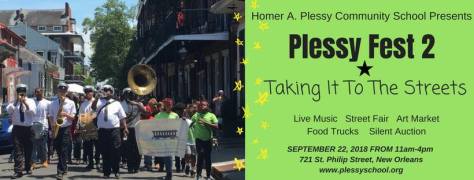
Plessy is Taking it to the Streets
From local activist/writer/publisher Rachel Breunlin today on FB:
A very old crow was on the edge of the neutral ground on Esplanade this morning. I stopped to check on him and he flew a little distance away. His murder of crows was stationed in the live oak trees around him. A neighbor said she had fed him this morning and that the year before she had buried a crow who died by her house and the others visited for days: “Aren’t crows the keepers of departed souls?” I went home and called Michel to see if we could take him to the animal rescue but when we returned, he had been hit by a car. We stood under the calls of the crows who flew around his body. In the city, he had many friends.
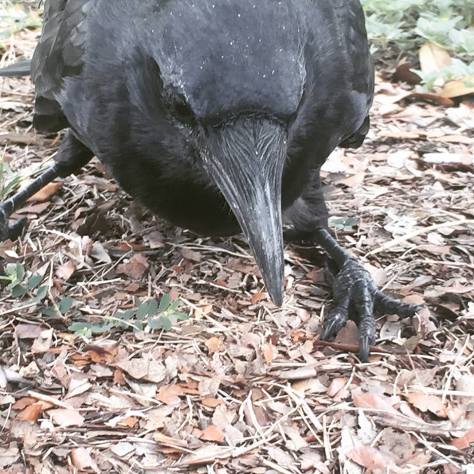
That we notice, honor, and mourn all living things is one of the great characteristics of the New Orleans experience.
In light of the city’s Tricentenniel, Bulbancha: Decolonized Walk of New Orleans seeks to recenter the founding narrative of New Orleans on the area’s original inhabitants. We will explore the rich pre-colonial history of “New Orleans” by retracing the footsteps of the many indigenous groups who flourished here before the arrival of Europeans, back when this land was called “Bulbancha”. We will walk along the city’s pre-colonial roads to visit the some of the locations of the earliest native markets and settlements. The walk will also highlight the vital role that indigenous peoples played in the founding and development of New Orleans as a city. We will hear stories of native resistance to colonization and confront the myth of European dominance in the region. Participants will be encouraged to adopt a decolonized lens, in order to better understand New Orleans and many aspects of its unique Creole culture as undeniable products of indigenous culture.
All walks will begin at the Bienville Monument located between Conti, Decatur and N. Peters streets and will end at Congo Square. We will begin on time and participants should allow for approximately two hours. Sliding scale $10-$20 (no one turned away for lack of funds). Please call (504) 656-6306 to reserve your spot. Walk-ups will be accepted if spots are available. Private walks available by appointment. All walks are led by local indigenous folks who descend from the tribes discussed on the walk.
I wrote this in 2015. I still agree with it.
Okay. I promised myself I wouldn’t and yet here I am…But this time I am only talking to my neighbors in New Orleans and across the Gulf Coast. Not that I don’t appreciate you, my fellow Yankees and you Canadians and Westerners with your fierce belief in a fair shake for our city. I do, but I feel like I’ve spent these years talking to you about New Orleans and Louisiana and Mississippi and sharing the secret greatness of it with you and by this point, you either get it or you don’t. You either believe we matter or you don’t and there is nothing more I can say to help you understand. But I’ve had little time for my neighbors and pals here so this is for them because so many of them are downhearted and angry about the state of their place.
Now that we have the distance of time from 2005 to raise our eyes and look about, it is very clear that we have lost a tremendous amount that is not going to return. My grandmother died in July of 2006, after returning in January to her remodeled and unfamiliar home. That home that her daughter had done her best to make right, working hard to make even better in some cases. Still, I am convinced Mary Louise looked around for a bit and just said, no thanks. Many seem to know exactly how she must have felt as friends have packed up and moved away – for good most of them – because they are bitter or they are sad, so sad or frightened by the real possibility of it happening again.
At the end of 2005, I wrote this email to friends who had not returned yet:
I know some of you have heard comments from some New Orleanians about your decision to not come back right now. Some people are acting badly about who is here now and who is not. I (and many others) understand why it is not feasible for some folks to come back right now. I think that it is very clear thinking to make sure that you are taking care of yourself and family, as well as doing what you must do to keep a job or children going.This is a frontier town right now, and not too pretty or easy. The ups and downs are dramatic and ongoing. I tell you, I would not be here either right now if my work did not depend on it. Having said that, I am glad I am here. I am glad because I can help with direct action, which is my thing, but if your thing is keeping the awareness up in other places, cool. I know each of you is doing the good work out therein the “normal” world. Thank you for that and please know all of us- whether on Esplanade Avenue or Main Street- are in this together.
——————————–
Some of those who received it replied with gratitude and promises to return and some did not reply at all. Some who didn’t reply returned soon and some who promised to come back quickly never did. I was wrong a lot about who would stay away and who would return. You never can tell.
I don’t know what wind event or infrastructure collapse or political spite is coming for us next, but there is one thing that I do know: the cool and lovely fall IS coming and with it, second lines and festivals and outdoor movies and football and satsuma season and much more. And then it will be Carnival season and we will sit together on neutral grounds and laugh and sing and dance and shake our head in amazement that people work every day and shovel snow when they could be here. I’ll bike to the park and meet friends for a walk around the Big Lake or make plans to meet for drinks for “an hour” and still find we are still there 3 hours later laughing until we cry, wiping tears away with paper napkins. The server will smile and bring us more drinks and napkins, pleased with our fun. I’ll stand on a corner good-naturedly arguing politics with favored friends who I find walking their dog and when done, will go back to my car thinking how amazing they are. Stopping at a store near my house, I’ll have a looong chat with the shopkeeper and find we went to the same high school or that he is related to my next-door neighbor and neither of us will be that surprised by the many connections. Artist friends will touch me with their enthusiasm and talent, so open and loving to a world that rarely honors them. My mother will proudly show me all of the young bananas on her trees and ask me once again if I know of anyone who wants them-if not, can I just put them on the curb, cuz we both know somebody will take them.And in doing all of this, we’ll get through it again. Hopefully without any evacuation scares or more oil spilling and then we’ll have had another season to catch our breath and keep rebuilding even as we watch more of why we want to rebuild slip away or be taken from us. And really, that knowledge of loss past and present and likely in the future does connect us and make the time together sweeter. It doesn’t always make it easier but makes you feel less alone or unsure. So don’t hide away this week or next; embrace the ragged and the unfinished or shake a fist or raise a finger at the profanely new and shiny. Who cares what the world says about us or about 2005 or the city since; all that matters is what we think, what we do and how we shape it. Take in all of it with the grace and humor that we are awarded at birth or as soon as we kill that first palmetto bug (and keep right on talking) and let’s just go sit at the river and visit and remember.
Oh, I am digging this woman’s language and her approach.
…She took his advice to heart and founded Untold RVA the next year with a mission to tell the city’s untold historic narratives in order to inspire self-determination in today’s Richmonders. A serial entrepreneur who has hustled as a face painter, loc twister, jewelry importer, and even a vegan iron-chef champion, she incorporated as an LLC, having no interest in grant-based non-profit fundraising….
…At first, Untold RVA was a self-directed effort and a money-losing proposition. In conjunction with a carpenter, she made wooden signs, called “portals,” at a cost of $600 each — a big expenditure, especially if any were stolen or vandalized. Then she discovered posters and had a revelation. “Typography is my superpower,” she says.
…Egunfemi maintains a hard-line stance in favor of the tactical-urbanism approach for commemorating the history of enslaved persons in Richmond. “I don’t think we should use Gilded Age methods to memorialize ancestors,” she says. “Why build a $1-million statue when the schools are falling apart?”
One of the best writers to emerge in recent years asked his social media followers and friends about our city and about gentrification. He was intrigued by one example I used in our discussion and asked to include it:
Darlene Wolnik talked to me about how what we eat has been altered. She explained how mirlitons represent my changing hometown. “Back when the city had hundreds of chain-link fences, mirliton vines thrived and could be found everywhere. Our grandparents stuffed shrimp in them and made it a holiday. Once those chain-link fences were torn down for high wooden walls, the mirliton had nothing to hang on and largely disappeared.” Darlene had pinpointed the connection between the choice of so many New Orleanians to build fences you could see through versus high-collared bulwarks to blot out the world. A desire to isolate killed the mirliton.
Maurice has captured the mixed emotions of life “after” recovery in a disaster city, and is slowly recreating the scene of the crime that we all witnessed from 2005-2010. I urge everyone to read anything that you find with his name on it and to share with those who are in harm’s way, either of nature’s making or from their government’s malfeasance. In other words, everyone.
Other standout pieces by Maurice:
I don’t have to leave New Orleans, it’s leaving me: An interview with Maurice Carlos Ruffin
I am sharing a stunning reflection of returning home written by a Southern daughter who is quite aware of the awfulness that exists in America and especially in the American south.
As someone who is assisting my mother in wrapping up the details on the sale of my grandparent’s house just north of New Orleans, I understand her wish to return but more than that, the wish to offer roots to her family in the South. The culture of a family home is a real thing here, much more so than in other parts of the U.S. that I regularly visit.
With the sale of the family home , I know I will daydream about that acreage across the lake, remembering the cool, quiet mornings and the blinding afternoons with the cicadas screeching and the crawfish holes popping up across the “lawn” after a rain. The sound of the kitchen door opening, and the smell of the bar soap in the bathroom. Yet, the area around it is changing so quickly that the South that even I remember is fast disappearing, which must be viewed positively and negatively at the same time. Gone are the little stores with hot food and live bait and front porches. Gone too though is their Dixie memorabilia, although much of it is probably just tucked in backyards and closets. In the end, seeing the expanding whiteness of the citizens around Mandeville, more designed cul de sacs that often serve the same purpose as true gated communities, and fewer activities designed for all socioeconomic clusters that do remain in St. Tammany, I could not muster the interest to make an offer to my family to purchase this property.
So while I accept the reality that means my family’s history in that place has ended, I hope it has lasted long enough to anchor me in the South for the rest of my life. Or maybe Ward’s work will be able to stand in for Mandabita and keep me rooted.
Her words reminded me of Isek Dinesen’s mournful but tender words from “Out of Africa”:
If I know a song of Africa, of the giraffe and the African new moon lying on her back, of the plows in the fields and the sweaty faces of the coffee pickers, does Africa know a song of me? Will the air over the plain quiver with a color that I have had on, or the children invent a game in which my name is, or the full moon throw a shadow over the gravel of the drive that was like me, or will the eagles of the Ngong Hills look out for me?”
Excerpt from Why I Decided to Return Home to the South:
I like to imagine that one day, I will build a home of cement, a home built to weather the elements, in a clearing in a piney Southern wood, riven with oak and dogwood. I’d like a small garden where I could grow yellow squash and bell peppers in the summer, collards and carrots in the winter, and perhaps keep a few chickens. I wish for one or two kind neighbors who will return my headstrong bulldog if she wanders off, neighbors who I can gift a gallon of water in the aftermath of a hurricane. I like to think that after I die, my children will look at that place and see a place of refuge, of rest. I hope they do not flee. I hope that at least one of them will want to remain here in this place that I love more than I loathe, and I hope the work that I have done to make Mississippi a place worth living is enough. I hope they feel more themselves in this place than any other in the world, and that if they do leave, they dream of that house, that clearing, those woods, when they sleep.
Link to the entire piece:
Jesmyn Ward: Why I Decided to Return Home to the South | Time
 French Quarter block by block
You must be logged in to post a comment.