bye bye Dryades Public Market

I guess sticking a tagline with your name is good enough for people to think your business served a cross-section.

This is what every story led with: “Dryades Public Market … the grocery with a mission (italics added) in Central City is closing today.”

Maybe the name public market fooled some people; really there should be a way that they should have been stopped in using that. Unfortunately, there is not.

As someone long involved in local food systems, I watched this idea sited on the ever-valiant Oretha Castle Haley with hope but more trepidation, and even a little more skepticism. Here are 2 posts from my public market blog where I referred to this entity.

In the late stages of design, I had been contacted by the developer, but I pretty much ignored the emails. (1) I felt there were better minds likely in the fray already, (2) I didn’t trust the local partner to do right by farmers based on what was being reported to me by some of them, and (3) I had moved on to more national work and felt I couldn’t give as much local context as I once had.  Still, they kept calling, so I went to meet with them.

In short, they strongly suggested to me that they knew their local partner was full of shit but felt they were too far along to stop. (I also remember that they kept telling me how many parking spaces this place would have-in exasperation, I finally said that in terms of what they wanted to happen and in knowing the area, parking wasn’t going to be the draw that it was for their projects in NYC. That they needed to let that go.)

What they wanted was some help in figuring out how to still make the idea work. We tossed around some ideas, but the lure of the food hub concept was too hard for them to resist  (although my memory was my only suggestion was to dump the partner publicly and reach out to a cross-section of chefs/farmers/organizers to come up with something else. They were definitely not gonna do THAT at that stage.) So what New Orleans ended up with was 3 different plans in about the same number of years: the “food hub”concept, followed by the “food hall” concept (run by good people who brought in other good people but had to do it without the financials being figured out and without a rebranding kickoff), and the last which was a bit of a desperate dab of a high end specialty store and a hot food line. All in all, nothing worked, even with a lot of truly well-meaning people doing their best to make it work.

I see people on Twitter calling for this to be relocated or even revived because of the “food desert” issue, but it is hard for me to see how people think this idea can work for either of those issues. (Also see folks calling out for ALDI’s or Trader Joe’s to come in to the site. Umm, not only is the square footage not even CLOSE to their wheelhouse, but the characteristics of a successful site for either is not even close to being present in New Orleans proper. It sucks but that is what it is. Capitalism.)

Food desert as a term doesn’t adequately describe the problem and for most organizers across the U.S, has been replaced by food apartheid.  This situation also is better served by that latter term, as OCH has long been one area well known for across-the-board disinvestment by the usual money for the 30 years before Katrina. Now of course, every developer is there using it to build more upscale apartments and eateries which serve only the new population. That is apartheid.

I also see people on social media responding to the news of this closing asking for the “culture to be saved” as if DPM had ANY relationship to our diverse, locally relevant food history or public market/corner store/Schweggie history. Let’s be clear: this blip on our screen is a result of the post-2010 culture designed almost entirely by our “cultural” (read NOT) mayor Landrieu, and the many developers who now have a complete hold on the city. That era was all about “white box delivery” as the goal, with the content being figured out later. Meaning so not New Orleans.

Situating this high end “market” (it hurts me to even write that word in relation to DPM) on OCH, in the midst of the incredible work done by long time activists to fight for equitable development was in in itself a mockery and so out of scale to the rest of the street it was doomed to fail because New Orleanians cannot be fooled.  Because what is true of New Orleanians is that, in terms of good ideas, they don’t believe they start with buildings; they believe they start with relationships, and they could see that this one had few.

If you were going for some level of authenticity, you’d go to Cafe Reconcile, Ashé Cultural Arts CenterRoux Carre, Casa Borrega, Church Alley (before it moved), Zeitgeist (also before it moved), bank at Hope Credit Union and so on. If you did those things, I find it hard to believe you would also enter the clubhouse that was J&J/DPM and spend your money there. And many of those “unfooled” New Orleanians I talked to said exactly that.

And yes, I went. I tried. And I felt out of place, and manipulated by a few wicker basket of bananas and apples and fancy water and a jar or two of local honey being sold to me as a grocery store. I left angry and embarrassed as to what this neighborhood which has survived so much was being offered even as the money was falling all over New Orleans. A crappy clubhouse.

So let’s be real and call this what it was: a bad experiment unworthy of OCH and New Orleans, learn from it,  and move on to better ideas.


Angels eat gumbo

62112280_10219589084300331_6026565004415729664_n

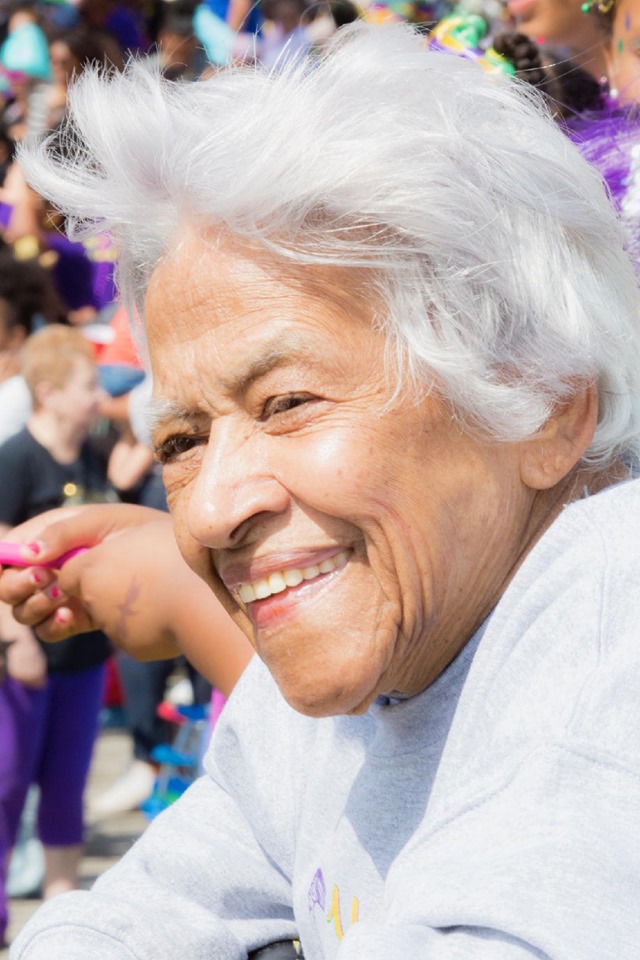
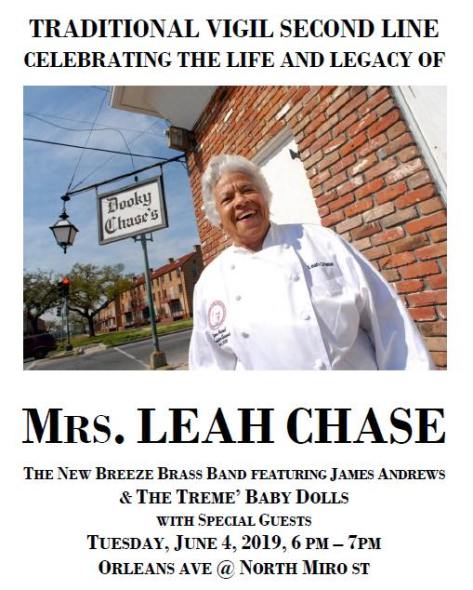
The Chase family is heartbroken to share the news that our Mother, Grandmother and Great Grandmother, Leah Chase, passed away surrounded by her family on June 1, 2019. Leah Chase, lovingly referred to as the Queen of CreoleCuisine, was the executive chef and co-owner of the historic and legendary Dooky Chase’s Restaurant. She was a major supporter of cultural and visual arts and an unwavering advocate for civil liberties and full inclusion of all. She was a proud entrepreneur, a believer in the Spirit of New Orleans and the good will of all people, and an extraordinary woman of faith.
Mrs. Chase was a strong and selfless matriarch. Her daily joy was not simply cooking, but preparing meals to bring people together. One of her most prized contributions was advocating for the Civil Rights Movement through feeding those on the front lines of the struggle for human dignity. She saw her role and that of Dooky Chase’s Restaurant to serve as a vehicle for social change during a difficult time in our country’s history. Throughout her tenure, Leah treasured all of her customers and was honored to have the privilege to meet and serve them.
While we mourn her loss, we celebrate her remarkable life, and cherish the life lessons she taught us. The Family will continue her legacy of “Work, Pray, and Do for Others.”

Grateful To You,
The Chase Family

In lieu of flowers please make donations to the Edgar L.“Dooky” Jr. and Leah Chase Family Foundation – P.O. Box 791313 New Orleans, LA 70179


Peter Boutte

As the pillars fall

And history fades away 

Angels eat gumbo

Megan Braden-Perry

Sad day, though we know Heaven is the best place ever. Rest well, Mama Leah. 💕

A true raconteur, freedom fighter, black Creole queen, and truly the grande dame of Creole cuisine. 


Jessica Harris, an author and expert on food of the African diaspora, in a 2012 interview:

“She is of a generation of African-American women who set their faces against the wind without looking back.


Jarvis DeBerry

Mayor LaToya Cantrell

Leah Chase served presidents and celebrities, she served generations of locals and visitors, and she served her community. She was a culture-bearer in the truest sense. We are poorer for her loss, and richer for having known and having loved her. She will be badly missed.


Ian McNulty’s lovely obituary


Poppy Tooker celebrates her friend on her show Louisiana Eats.


Dames de Perlage tribute to Chef Leah


What can we do? (a lot)

Recently saw a Twitter post  from a writer that went something like: race is an imagined point of reference, however, racism is not.

As I read that tweet, I wondered what the response would be if I shared that on other social platforms. I assumed much of it would be passive “likes” (you’ll have to imagine my eye roll) and “shares” (my more dramatic eye roll), including from some who seem to have not begun to examine how this society is designed so only whiteness –  either meant literally or operating in the white world as currently allowed – is “winning.” How it offers privilege and access that subjugates people of color even when the  white person is not acting in any personally racist manner. I say that because some  of those I would expect to share it have actually been heard by me to say the infamous “I don’t even see race” or “I don’t think race is the real issue, class is ”  or “I’m tired of this being the only discussion that is happening” (?!) and other cringeworthy statements.

On another level of this, this morning I had a convo with a neighbor who works with tourists which started out relatively calmly but soon included the removed Confederate statues, and led to her shouting to the air about how she had never owned slaved and “they” had received all of the reparations “before” now. How the black people “she knows didn’t want” the statues taken down. (Really, it was a set of statements I have heard in exactly the same order and level of vehemence dozens of times, which in itself, I find very puzzling.  Still, the outcome of our talk was that she thinks I am out of touch, and I think she is dangerous and easily led by those who need to use her for their agenda.)  All I can hope is that I made at least one point that may require her to look it up later and ponder it. It is why I have tried to become calmer when I find these folks in my path, and try to stick to one or two points that may connect.

So between the  outwardly liberal but casually racist,  and the working poor who vilify both those who fight the institutions of racism and those who must live within them, it is hard to see how to help.

Then I read this passage in Toni Morrison’s “The Source of Self-Regard: Selected Essays, Speeches, and Meditations” a book that is becoming as important to my core reference library as Jane Jacobs, Solnit, and Thoreau.

One likely reason for the paucity of critical materials on this large and compelling subject is that in matters of race, silence and evasion have historically ruled literary discourse….

…It is further complicated by the fact that ignoring race is understood to be a graceful, liberal, even generous habit. To notice is to recognize an already discredited difference; to maintain its invisibility through silence is to allow the black body a shadowless participation in the dominant cultural body. (emphasis added)

That passage was very helpful in ways to better understand the weakness of the white response to institutional racism and how even those with a strong liberal political platform subvert the discussion.

In this majority African-American city that I reside, evasion of the facts and the support of invisibility for people of color is the inertia we fight. What that means to me is a path forward for white allies is through statement of facts again and again. And not to pervert the honest discussion with a false equivalency like class divides as the only divide or to reduce the severity of the issue to the level of one’s own personal method of operating in the world.

These are the words that I now stick to when making the ask among white people to consider the warped reality that we benefit from: Deliberate. Privilege. Unequal. Negative meaning. Power of position.

And to lift the story of inclusion and diversity as often as we can, in every sector we can work and live. In my own work of food and farming, white-led organizations have long been those most recognized and funded, with people of color only a tiny smattering of the staff and partners. Doesn’t mean that those good folks were personally racist but it does mean that in the desire to move the dial on other issues, deep systemic issues of race were ignored. (Deliberate privilege to gain power of position.)

Now, the in the 5th decade of this work in the US, many of those organizations and others led by people of color are finally starting the big conversation of how racism is at the heart of production and at the heart of our political, legal, social, and economic systems. And this larger lens is scary and humbling but it also feels exciting and powerful. To listen more deeply and to participate in more approaches, and to accept that the privilege I have is not even fully understood in this half century of living and so cannot be said to be erased yet. I’m willing to do more and to do it as an ally still learning what I do not know. And to live in and celebrate Bulbancha.

Are you?


7th Ward Haiku

“Where oak trees grew”

Parades, bands, costumes
A two piece popeye’s double
Underneath the bridge


Peter Boutte, author

Leona Tate continues New Orleans’ education

Today, Tate is working with the exhibit designers to re-create her first-grade classroom. Almost certainly, visitors will see three small desks pulled close to the chalkboard in the corner classroom. All the windows will be covered in brown kraft paper, as they were in 1960, so that no one could see in or out.

But visitors to her classroom will see no other desks. At Frantz school, a handful of white students braved crowds of hecklers for the entire school year. But McDonogh 19’s enrollment quickly plummeted to three. “For the rest of the year, it was just me, Gail, Tessie, and Miss Meyer, our teacher,” Tate said.

At first, people expected the white students would return to New Orleans schools, after a few days or maybe a few weeks. That didn’t happen. It was a prime example of structural racism in action, Tate said.

Some students from the two desegregated schools in New Orleans transferred to newly built, all-white “private” academies that used state per-pupil funding to operate. Immediately after desegregation, school buses paid for by segregationists picked up white students from the city’s 9th Ward and took them across county lines to neighboring St. Bernard Parish, where the all-white schools took them in, with the state picking up the tab.

https://hechingerreport.org/as-a-6-year-old-leona-tate-helped-desegregate-schools-now-she-wants-others-to-learn-that-history/amp/

Kara Walker and Jason Moran: Sending Out A Signal

Golden Age of New Orleans Literature with Nancy Dixon

My pal and one of favorite storytellers and literary critics, Dr. Nancy Dixon was on Susan Larson’s Tricentennial Reading List this week. This whole series by Susan is magnificent. But start with “DoctorDix”

Nancy Dixon with Susan Larson


Home page of series