Events this week: Glam, literary New Orleans


Join us for an evening of carnival-inspired fashion and festivities! Hosted within the Presbytere’s Mardi Gras exhibition, this runway show will present works inspired by the lavish costumes and gowns on display, worn by local performers and models. Attendees will get an after-hours view of Grand Illusions: The History and Artistry of Gay Carnival in New Orleans, which highlights the ground-breaking work of local costumers and krewes and provides further inspiration for how carnival attire can influence year-round fashion. This event is made possible through a partnership with Louisiana State Museum, Friends of the Cabildo, and New Orleans Fashion Week, and all proceeds will benefit the museum.

Purchase tickets here


Wednesday (10AM): September 25th
Tickets: $20 Members | $25 General Admission 
Departure Point: 1850 House Museum Store (523 St. Ann St.)

Celebrate the Tennessee Williams Festival with a two-hour French Quarter Literary Tour. The French Quarter and New Orleans served as a muse for some of most important American writers of the 20th century including Tennessee Williams, William Faulkner and Truman Capote. Follow their paths through the French Quarter and see how the city impacted their writing.

Purchase tickets here


RIP Leigh Harris


Our Darlin’ Leigh.

https://www.nola.com/entertainment_life/keith_spera/article_79024e24-dd03-11e9-b7d4-7f33ed1b73a6.html?fbclid=IwAR3S13LFlX6LrrhhSTgoYicT0Tsyfu7mIqXjfL04yQKG2yhYELEhT7bmq6E

Thursday September 26 at 11:45 AM CST: WWOZ 90.7 FM New Orleans and Jimmy Anselmo remember Leigh Harris aka LITTLE QUEENIE 


A job, a gig, and a hustle – and a cracker.


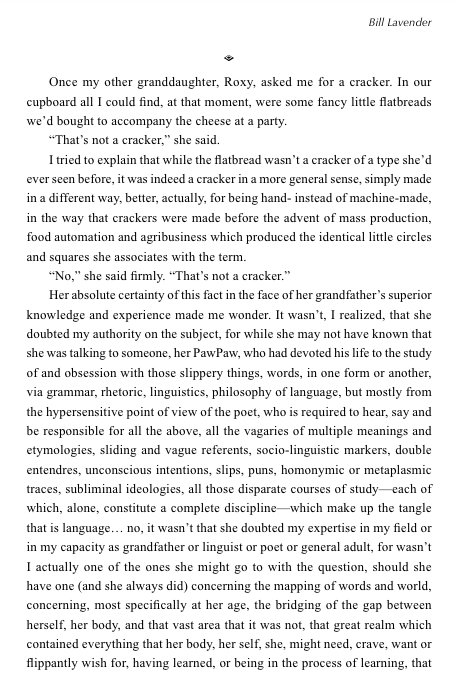
On my other blog, I try to show my appreciation for an essay that local poet Bill Lavender has written. In it, I mention the part about Roxy and the cracker. You are welcome.


Lavender_cracker1

LavenderCracker2.png


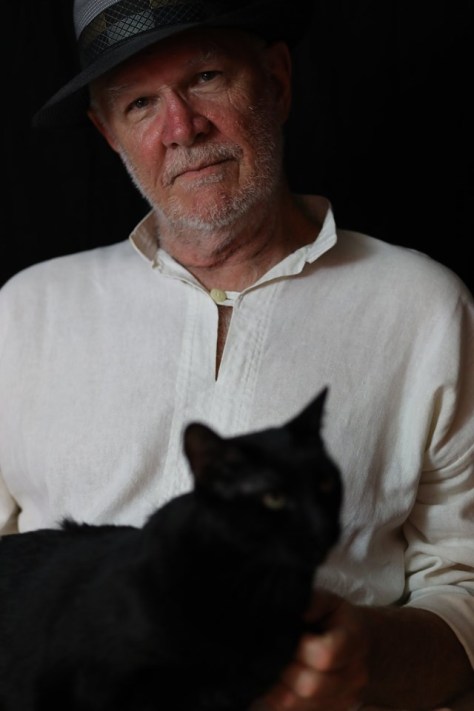
photo of Bill by writer Louis Maistros

70828988_10158759332926754_6244070124039438336_n.jpg


The Death of a D.C. Funeral Home

At its peak, from the 1950s through the 1980s, Hall Brothers performed as many as 140 funerals a year.

In 2018, it handled four.

“They moved out or died out,” the owner, Richard Ables, 77, whose uncles founded the funeral home in 1941, said of his lost clientele.


The view beyond Hall Brothers’ front stoop — a new condo tower to the right, another rising to the left, a former Wonder Bread factory turned into a WeWork space down the street — in no way resembles what Ables remembers from childhood. In those years, he spent afternoons and weekends hanging out at the funeral home, stowing himself in empty caskets during games of hide and seek with his cousins.

In later years, they befriended a worker at the Howard Theatre who sneaked them in a side entrance to see the likes of Smokey Robinson and the Temptations, Chuck Brown, James Brown and Aretha Franklin.

“If we saw a white person, we’d ask, ‘What are you doing here?’ ” Ables said of the neighborhood. “Now it’s the opposite.”

https://beta.washingtonpost.com/local/dc-politics/at-center-of-changing-dc-requiem-for-a-funeral-home-that-catered-to-blacks/2019/09/05/c03767ca-8614-11e9-a870-b9c411dc4312_story.html

The Patriotism of the 1619 Project

On August 20, 1619, a ship carrying about 20 enslaved Africans arrived in Point Comfort, a coastal port in the British colony of Virginia. 

If you have somehow missed the rollout of the New York Times 1619 project, I hope you will find time to get a printed copy, listen to the podcasts, or find  another way to catch up. This project – groundbreaking, truth-telling, and comprehensive – is a tremendously collaborative endeavor, created and led by brilliant journalist Nikole-Hannah Jones that offers a wide base of knowledge about America’s entanglement with enslavement, and how our systems have been designed to subjugate people, using the construct of race. The other great point made across the essays, the photos, the podcasts, and more is how deeply felt the patriotism is among black Americans who continue to patiently reach out to their fellow compatriots to try to explain what must be fixed.

Excerpts from Nikole-Hannah Jones’ August 14, 2019 NYT essay that introduced her 1619 Project:

They say our people were born on the water.

When it occurred, no one can say for certain. Perhaps it was in the second week, or the third, but surely by the fourth, when they had not seen their land or any land for so many days that they lost count. It was after fear had turned to despair, and despair to resignation, and resignation to an abiding understanding. The teal eternity of the Atlantic Ocean had severed them so completely from what had once been their home that it was as if nothing had ever existed before, as if everything and everyone they cherished had simply vanished from the earth. They were no longer Mbundu or Akan or Fulani. These men and women from many different nations, all shackled together in the suffocating hull of the ship, they were one people now.

What if America understood, finally, in this 400th year, that we have never been the problem but the solution?

..At 43, I am part of the first generation of black Americans in the history of the United States to be born into a society in which black people had full rights of citizenship. Black people suffered under slavery for 250 years; we have been legally “free” for just 50. Yet in that briefest of spans, despite continuing to face rampant discrimination, and despite there never having been a genuine effort to redress the wrongs of slavery and the century of racial apartheid that followed, black Americans have made astounding progress, not only for ourselves but also for all Americans.


Sept 6 interview w/ Nikole-Hannah Jones:

…what I’m arguing is that our founding ideals were great and powerful. Had we in fact built a country based on those founding ideals, then we would have the most amazing country the earth has ever seen.  But black people took those ideals very literally, and have fought to make those ideals real. And because of that, I say that we are — as much as the white founders whom we recognize — that we are the founding fathers of this country. So yes, it is patriotism, but not that type of blind, performative patriotism that is simply about trying to camouflage the nation’s sins and not trying to fight for the true ideals. But the type of patriotism, I think, that says: If you love your country, you have to fight to make your country the country that it should be.

Does any particular piece of criticism or praise stick out to you?

The criticism has been all about the framing, because people can’t actually criticize the facts.There was some critique that I was centering black people and not spending time on Native and Indigenous people, and I understand it to a degree. I did not want to render Native people invisible, but this was a story about chattel slavery. But I think it also speaks to how little good, comprehensive, smart, empathetic coverage we have of the two most marginalized groups in America, which are Native people and black people.


The 1619 Project at the New York Times

bye bye Dryades Public Market

I guess sticking a tagline with your name is good enough for people to think your business served a cross-section.

This is what every story led with: “Dryades Public Market … the grocery with a mission (italics added) in Central City is closing today.”

Maybe the name public market fooled some people; really there should be a way that they should have been stopped in using that. Unfortunately, there is not.

As someone long involved in local food systems, I watched this idea sited on the ever-valiant Oretha Castle Haley with hope but more trepidation, and even a little more skepticism. Here are 2 posts from my public market blog where I referred to this entity.

In the late stages of design, I had been contacted by the developer, but I pretty much ignored the emails. (1) I felt there were better minds likely in the fray already, (2) I didn’t trust the local partner to do right by farmers based on what was being reported to me by some of them, and (3) I had moved on to more national work and felt I couldn’t give as much local context as I once had.  Still, they kept calling, so I went to meet with them.

In short, they strongly suggested to me that they knew their local partner was full of shit but felt they were too far along to stop. (I also remember that they kept telling me how many parking spaces this place would have-in exasperation, I finally said that in terms of what they wanted to happen and in knowing the area, parking wasn’t going to be the draw that it was for their projects in NYC. That they needed to let that go.)

What they wanted was some help in figuring out how to still make the idea work. We tossed around some ideas, but the lure of the food hub concept was too hard for them to resist  (although my memory was my only suggestion was to dump the partner publicly and reach out to a cross-section of chefs/farmers/organizers to come up with something else. They were definitely not gonna do THAT at that stage.) So what New Orleans ended up with was 3 different plans in about the same number of years: the “food hub”concept, followed by the “food hall” concept (run by good people who brought in other good people but had to do it without the financials being figured out and without a rebranding kickoff), and the last which was a bit of a desperate dab of a high end specialty store and a hot food line. All in all, nothing worked, even with a lot of truly well-meaning people doing their best to make it work.

I see people on Twitter calling for this to be relocated or even revived because of the “food desert” issue, but it is hard for me to see how people think this idea can work for either of those issues. (Also see folks calling out for ALDI’s or Trader Joe’s to come in to the site. Umm, not only is the square footage not even CLOSE to their wheelhouse, but the characteristics of a successful site for either is not even close to being present in New Orleans proper. It sucks but that is what it is. Capitalism.)

Food desert as a term doesn’t adequately describe the problem and for most organizers across the U.S, has been replaced by food apartheid.  This situation also is better served by that latter term, as OCH has long been one area well known for across-the-board disinvestment by the usual money for the 30 years before Katrina. Now of course, every developer is there using it to build more upscale apartments and eateries which serve only the new population. That is apartheid.

I also see people on social media responding to the news of this closing asking for the “culture to be saved” as if DPM had ANY relationship to our diverse, locally relevant food history or public market/corner store/Schweggie history. Let’s be clear: this blip on our screen is a result of the post-2010 culture designed almost entirely by our “cultural” (read NOT) mayor Landrieu, and the many developers who now have a complete hold on the city. That era was all about “white box delivery” as the goal, with the content being figured out later. Meaning so not New Orleans.

Situating this high end “market” (it hurts me to even write that word in relation to DPM) on OCH, in the midst of the incredible work done by long time activists to fight for equitable development was in in itself a mockery and so out of scale to the rest of the street it was doomed to fail because New Orleanians cannot be fooled.  Because what is true of New Orleanians is that, in terms of good ideas, they don’t believe they start with buildings; they believe they start with relationships, and they could see that this one had few.

If you were going for some level of authenticity, you’d go to Cafe Reconcile, Ashé Cultural Arts CenterRoux Carre, Casa Borrega, Church Alley (before it moved), Zeitgeist (also before it moved), bank at Hope Credit Union and so on. If you did those things, I find it hard to believe you would also enter the clubhouse that was J&J/DPM and spend your money there. And many of those “unfooled” New Orleanians I talked to said exactly that.

And yes, I went. I tried. And I felt out of place, and manipulated by a few wicker basket of bananas and apples and fancy water and a jar or two of local honey being sold to me as a grocery store. I left angry and embarrassed as to what this neighborhood which has survived so much was being offered even as the money was falling all over New Orleans. A crappy clubhouse.

So let’s be real and call this what it was: a bad experiment unworthy of OCH and New Orleans, learn from it,  and move on to better ideas.
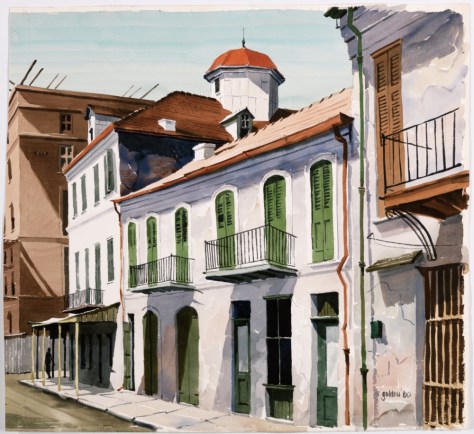


I feel ghosts

From @AmandaSoprano. Nothing more to say.

“It’s August 29th. I feel ghosts. The ghosts of what New Orleans was. Ghosts of her lost souls. Ghosts of ppl still living who were prevented from coming home. Today is a whole fucked up All Saints Day unto itself.”