Dear Indywood: Listen, change, repeat

IMG_0739

mailed April 15

Dear Indywood,

Enclosed find my rewards returned for backing your project on Kickstarter. I also ask that you remove my name from your list of supporters. The idea of a downtown movie house was very appealing to me when I read your request for support as the clock was ticking down on your campaign and so I backed it. I was pleased by your enthusiasm for the idea and for your location. However, I’d like to register my displeasure with your recent actions by returning my rewards and withdrawing my visible support.

When I read about the robbery at your shop, I was sorry and sad for your troubles but assumed that your impulse would be to reach out to the neighborhood to help construct a community that could look out for each other and one that might also begin to consider the effect that so much concentrated development is having on a previously diverse and vibrant street. That maybe the best response you could have to random violence being visited on your place of business would be to assume it was happening to others and to knock on doors and to offer some help to the neighborhoods on both sides of St. Claude.

Instead, I was directed to posts and vlogs authored by the Indywood team and found your newfound shock about street lights near your place being out and your statements about installing buzzers and “lots and lots of lights, ignoring the neighbor/HDLC” (sic) agreements and lofty talk of being on the edge of gentrification (I hear that it had originally been written as on the “forefront of gentrification” please tell me you thought you were joking with that).

I am very sorry that you had this happen to you, but to act as if it only happens to you is the first sign of privilege. The second is the immediate talk about securing property with things that will separate you physically and socially from your neighbors. The third is to advertise that St. Claude is not safe as if this crime has made it so, rather than the already existing and growing divide of richer and poorer that your (our) investment has contributed to it being ever more hardened into long-term reality. The fourth is the shock and hurt over you seem to have in being called out on it via social media.

Let me be frank: like you, I gain from white privilege. Everywhere I go in America, I am welcome and can reasonably assume I will not be randomly stopped for driving or walking anywhere simply because I am white. I can walk into any employment situation and at least get a fair(ish, I am a woman after all) screening based on my actual credentials. I can dream of owning a house in any parish if I so desire. I was afforded a pretty good free education that suggests I can operate behind a desk or even manage others. It has taken me many years to truly understand how those and many other benefits are not evenly offered to everyone.

I live here in New Orleans partly because my culture is not the dominant culture, or at least it wasn’t when I moved here over 30 years ago from an entirely white suburb of a shrinking Midwestern city. That point is very important; what I mean is that I was able to see my unequal position as a white person in terms of the continuing colonial imperialism that I profit from but also to have the chance to live here at a time (well at the waning end it seems) when the African-American community still had real prominence in government and in the culture. I had the luck to work and live in a majority African-American U.S. city during a time when it hosted a true renaissance in music, dance, photography, organizing among many other areas that brought the adoration of the world to us. And in lieu of blue, pink and white-collared white people being around to teach me, I learned from those people of color who were still here. I went to St. Claude Avenue to talk with repairmen who knew everything about the machines brought to them. I had all African-American teachers and principals at my high school. At every workplace, I knew to ask to be trained by those matronly ladies who work hard in every city; the thing is by my time here, they were almost all women of color.

I must share that I was surprised by the grace and the lack of recrimination my neighbors had when talking with me, so very often willing to meet me more than halfway and to patiently show me how my unfair edge had made the world seem a certain way when in fact it was actually not that way at all.

So, we muddled through for a few decades, sometimes getting closer to each other and sometimes further from each other. And then, as we say, Katrina happened.

The destruction of the physical space was hard but the ongoing destruction of that enduring culture was and is worse.

The number of longtime residents who cannot return is enough to populate a medium city, with almost all of them African-Americans.

The neighborhoods that they had held together through the generations of segregation and separated levels of economic opportunity were then either ignored or sold off.

Suddenly, it seemed we were moving back to the time when people of color had to offer white people an explanation for being pissed off at inequities, at hearing daily language that is woefully ignorant. The difference is that now it is not said overtly in terms of color but rather, in code words of class and opportunity as if everyone was being offered the same.

And so if it needs to be said to you, I’ll say it: it is not the same. The opportunities are not equal. They have never been but over the last few years, the astonishing blitheness of the easy takeover of every cultural treasure long created through community and artistic expression is overwhelming. The neighborhoods being transformed into versions of how whites (newly arrived mostly, but to be fair, not always) want to see New Orleans, all done with ironic detachment is painful.

So your hard work to create your thing on St. Claude is real and you should be respected for that, but it is not fair. The opportunity to get that liberal arts education and to be “white kids from Colorado” who can pick up and move to a city and have the skills and connections to open businesses is not because you have run the same course as your 7th ward neighbor and then beat him to it fair and square.

The crime that happened to you did not just happen to you. The crime in our city is overwhelmingly directed at people of color and includes some from authority figures too, the type of crime which white people largely get to avoid.

The idea you had is great but it now feels a little like you see it as a playhouse for you and your friends ambitions and less like a community place (think about it: once you get that buzzer, what would happen when a couple of African-American kids used it at 8 o’clock at night?) This is why I cannot support Indywood at all until some real change happens.

Why I wrote this tiresome long letter is because I want you to have that same opportunity I had when I came here so many years ago: to truly learn from this place and to change. I’ll still hope for you to be successful, but I’ll more fervently hope that you understand how that is made possible and that you’ll do your best when it happens to lift every boat and not just lock yours nice and tight.

I wish you both good luck. More recent news make it seem as if you are taking the lessons to be learned more seriously than before realizing that you, like all of us, have some prejudices to unlearn. If that is the case, I applaud it.

Here is the same idea but said clearly here by local activist Kenny Francis: If you’re thinking about an issue and your identity is not the one that is being threatened or harmed, your role should be to listen, to understand the privilege you have in not being affected by that issue, and to listen to those who are and what they are saying they need. That’s how you be an effective ally, that’s how you bridge divides.

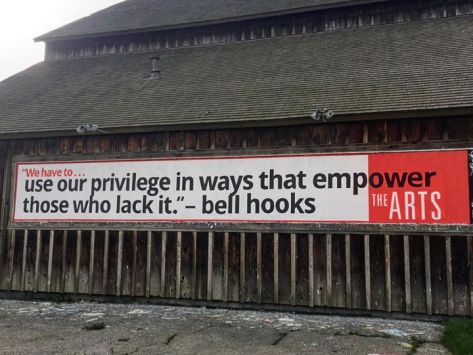
Or, we can just listen to bell hooks:
15936618_10154069681476174_4981054074990207887_o.jpg

“The German Bazaar of New Orleans, 1915”

Wednesday:Lecture to highlight local German American event during WWI
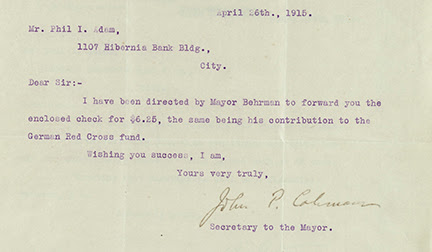
Letter from the office of New Orleans Mayor Martin Behrman responding to request for support for the German Bazaar; April 1915;THNOC, gift of Deutsches Haus, 2008.0113
a lecture by THNOC Deputy Director Daniel Hammer, presented in conjunction with the exhibition At Home and at War: New Orleans, 1914 – 1919
Wednesday, April 20, 2016
extended exhibition viewing: 5:30 – 6 p.m.
lecture: 6 p.m.
Williams Research Center, 410 Chartres Street
Admission is free. Reservations: (504) 523-4662 or wrc@hnoc.org
                              
On Wednesday, April 20, THNOC Deputy Director Daniel Hammer will discuss the 1915 German Bazaar, an event that helped fortify a sense of community identity among the city’s German Americans.
In April 1915, nine months after World War I engulfed Europe, the German community in New Orleans held a major public event to raise funds for the German and Austrian Red Cross, while also educating fellow citizens about the German war effort. The United States would not enter the conflict for another two years, and Germany and Austria had not yet become the subject of intense American pro-war propaganda. The event was supported by a number of prominent community figures, including then-mayor Martin Behrman (see above), and was a tremendous success, in part because of the city’s rich German culture.
The existing documentation of the event is remarkably complete, making the German Bazaar a rare window into the life of the German American community of New Orleans at a critical time in history. Reserve your seat for the lecture today by emailing wrc@hnoc.org or calling (504) 523-4662.

My take on this take on Jane Jacobs and New Orleans

Post in The Lens by urban critic Roberta Brandes Gratz:

What would Jane Jacobs make of our post-Katrina transition from ‘death’ to ‘life’?


My response:

I always appreciate Roberta’s take on things, even though I think that she (and The Lens) sometimes rely on a narrative that is preservation precious, meaning it focuses on historic corridors and “worthy” buildings over a real housing criticism. Her exultation over the neighborhood corridor boom is a bit odd when in New Orleans, neighborhood mom and pops simply never went away but instead brought back after the levee breaks whiter and trendier than before.
Maybe the real issue is the feeling I often have that too many people still have a vision in their head of a return to the halcyon days of Main Street America, circa 1950, and expect city hall to deliver us a version of that, even though our lives and shopping have changed completely. That thinking limits the potential of old corridors and gives tacit approval to keep them empty until someone can redevelop them as before rather than re-imagining storefronts as low-income rental units or as rooms for unhoused population or shared workspaces or (gasp) even green space where buildings were before.

However, Roberta was spot on in her early assessment of the new hospital zone – about it being a developers boondoggle and about offering those jokers retail leases at ground floor and not about a better hospital than Charity.  That one of its aims wasto kill the street retail of Canal Street of one type by moving it to Tulane and likely make the old street filled with very exclusive shops and hotels- that is already coming to pass.
She is right about the code busting happening at City Hall: the new CZO is a joke. A form-based approach to zoning would be much more appropriate to our city than what we got.
The argument about streetcars is sort of lame, as the Rampart line going to Poland was stymied by the railroad and not by local policy or willingness, and the lack of public transportation is a deep and long problem that is not changed by that type of investment that involves streetcars which are clearly for the visitor.

Of course I am annoyed by her ignoring the French Quarter, my neighborhood, which is still a neighborhood and pound for pound the most active, diverse and mixed use area in the city in any 24-hour period; yes we have millions of visitors in our midst, but also have a somewhat steady population since K (and the changes correlate to the Orleans Parish census), more residents than the Marigny, or Bayou St. John or some other areas. We got our problems and some of them like development (or an overemphasis on festival culture!) are getting worse like every other area, but don’t dismiss us just ‘cuz that is the “supernative” thing to do when talking about New Orleans!

Since she was a many-times return visitor who then bought a home (although I think she may have since sold it) I am surprised at her toss off of the short-term rental issue. It seems to me it requires a thoughtful approach by thinkers like her, as she must know that it has allowed many homeowners to keep their house here and to do repairs and new residents to decide where to buy, and so when used well by principal homeowners, this system can be a boon.

But let’s give her writing the credit it is due: “Jacobs did not try to dictate how things ought to be; she wasn’t prescriptive..Local wisdom, she found, is where the best ideas for change take root. They don’t come from political leaders, planning professionals, developers or credentialed experts.” This is so right and because it is what I try to do in my work, I am glad to see it written so beautifully and simply.


(another response I posted the same day to a VCPORA story in the Advocate on lower population in the Quarter since 2000):

First, according to the Data Center, the numerical changes in our FQ neighborhood correlate to the dip in the entire parish. Second, those changes have a lot to do with the love affair planners and neighborhood associations have with encouraging massive single home renovations over incentivizing real mixed use. And the resident and business associations allowing heavy trucks in by just paying a small fee, actively discouraging bike or scooter parking, allowing film and festival culture to take over our area constantly are part of the problem residents have to overcome. Here are some things associations can do right now to swing the pendulum the other way: work to incentivize rent controlled apartments by offering tax breaks to those homeowners who have little used property (including upper floors of commercial buildings, especially on Chartres, Decatur and Canal), walk to find and fine those who hang key boxes on their gate that indicate illegal STR units, create a citizen reporting app to allow FT residents to file complaints immediately and directly about code violations and stop focusing on tshirt shop raids and instead focus on adding amenities that residents care about.

Chris Rose Again

From “The irredeemable Chris Rose”by Michael Patrick Welch published in 2015 in the Columbia Journalism Review:

While shaking off his writer’s rust with Rouse’s, Rose has also begun studying for the French Quarter tour guide exam. “I have a passion for public speaking,” he says as we wander said Quarter, past a band of young street musicians struggling to sound and look like old street musicians. “I see people paying $20 apiece for some guy to spend two-and-a-half hours telling stories while he’s drinking a beer—that would take me three restaurant shifts of eight hours apiece to make that much money. Plus, these guys are making up ghost stories, when there are so many true stories in this town.”

His name, he hopes, will be part of the draw. “If I was nobody, there is no way I could pull it off,” Rose admits, lighting a cigarette on the corner of Burgundy and St. Louis. He looks awkward smoking—like’s he’s old enough to know better. “I am counting on the fact that I can go to the concierges and have instant credibility. And what I love is there’s also a lot of writing involved: I’m gonna publish a book with each tour, so you can also just buy the book and take the tour yourself.”

As Rose explains his new plan to me, a man with Louisiana plates rolls down his truck’s window to interrupt us: “You still writing? You in any newspapers?” he asks Rose. “You were in the Gambit last I saw you.”


All of Michael Patrick Welch’s excellent piece on the rise and fall and rise and fall and the leveling off of Rose

Recent Facebook post from Chris Rose · New Orleans

I am pleased to announce that I am now a legally licensed tour guide for the City of New Orleans. With that in mind – and given the season — I want to invite any Jazz Fest visitors – and locals, of course – to consider a fun and easy going romp through French Quarter history and lore.

At this point, I am offering a Rock and Roll themed French Quarter walking tour, featuring tales of madness and extravagance involving Led Zeppelin, the New York Dolls, The Animals, The Kinks, LeAnn Rimes, the Grateful Dead, Jimmy Buffet, Jerry Jeff Walker, Lenny Kravitz, Emmylou Harris, the GoGos, REM, Fats Domino and many, many more.

I also have a general catch-all omnibus French Quarter tour that covers history, architecture, literature, true crime, politics, the movies, celebrities and pop culture. (In the near future, I will be offering extensive tours dedicated solely to each of these topics as well.)

* Please note: I do not offer ghost or vampire or other fictional tours. No offense to my friends in their chimney sweep hats and capes, but the truth is so much more interesting than what you could make up in this town.

If you are interested in such an adventure, I am available any time, day or night, for individual or group bookings. The tours are confined to the French Quarter and take anywhere from 2 to 3 hours, depending on how slow we walk and how many bars we stop at. The cost is $25.

After decades of writing stories about New Orleans, its characters, history and quirks, I have decided to speak them directly. I would be honored to host and entertain you and any friends and family who might be interested in a genuinely offbeat and original look at this city.

For private or group bookings – or further information – please contact me at chrisrose504@gmail.com or call me directly at 504.352.2535

Lastly, please, folks: Feel free to forward this message on down the line to friends and family. This is not a lark for me but the start of a new business enterprise and career and one more way for me to do what I love most and do best: Sing the sweet, sweet praises of this crazy, beat down, sexy, beautiful, misfit city I call home. New Orleans.