Review of her new memoir Last Chance Texaco: Chronicles of an American Troubadour by Rickie Lee Jones
My rating: 5 of 5 stars
Yes, I am a longtime fan. I remember the SNL appearance and the beginning of her FM play with Chuck E; My friends and I (bc that was how you watched SNL then) were struck by the originality of the songs and of the singer herself. As suburban kids, we were a little awed but very charmed by her total commitment.
I carried her cassettes in my secondhand cars for decades, rewinding perfectly to replay and replay some of my favorite songs: The Horses, Company, Last Chance Texaco, Coolsville, Ghetto of My Mind… the list goes on too long to have it all here. Now it is digital and even longer.
But I think even if I wasn’t a fan of her music (and now someone who seems to frequent many of the same places and has a few people in common, neither of which is that unusual in New Orleans), I think I’d still have purchased this. I love memoirs. When done right, the well-told personal story is more fascinating to me than any tale.
The movement implied in one of her greatest songs had Rickie arranging her book in sections of “The Backseat, Riding Shotgun, The Driver’s Seat, and The Way Back Seat” showing how one’s journey/quest isn’t always led by its protagonist. Her story has elements that I and many other mid-20th century American kids recognize too well, full of broken homes, drugs and drink, friends and love dropping in and out, and violence out there on the road, which astonishingly, was often just a near-miss for Rickie and for so many of us. At least she had the job of a Troubadour to explain why she stayed (stays) out there for so long. Even with the romantic job description, she admits to the dead-ends she herself pursued, the people she may have moved on from maybe before their time in her life should have been completed. But that’s the deal isn’t it – if you keep moving forward, you’re gonna leave people behind. Leaving is the drug I think many of us can’t kick.
If you are looking for “famous people” stories, she throws in a few, but only because they are meaningful to her travels. This is an artist’s story, and so hers to decide what and who was important and life-changing and illustrative Her love and empathy for those who were a roadblock are extraordinary to me. I’m not as evolved & stay mostly pissed at everyone.
It’s extraordinary but not surprising, as her listeners and readers know, having felt the sweetness and tenderness in her work since the beginning.
In the song, it’s the last chance for love along a road that may not have options coming up again. In the memoir, there is hope and promise in Rickie’s story that she has come to see success is about choosing new happy over the old hurt, and always, the freedom to create over the pursuit of empty fame. She also accepts the importance of family, realizing that they always have the sign lit for each other.
And of course, her travel story is certainly not done yet. So, if you are out there and see a woman with a guitar, a smile, a sweet voice, and a lot of killer songs under her arm…
View all my reviews
Author Archives
Movin’ On Up
I suppose I don’t have to explain why in the fall of 2020, I decided to prioritize getting a healthier and more comfortable place to live and work. After 40 years on and off in the city (all in the Quarter or MidCity) I’ve lived many varied versions of the New Orleans renter. Since Katrina though, I’ve barely made a home, instead living as minimally as possible, and sometimes for years roaming about as a house sitter. Don’t get me wrong- I make great spaces with lots of funky touches but they are not everyone’s cup of tea when it comes to size or amenities.
I enjoyed it all really because I wanted to spend most of my time and money on creative people and pursuits. Still do. But with the lockdown, a lack of concern from the property owner where I had been living, and the remote work likely sticking around for a bit, I took a deep breath and did something many New Orleanians say they would like to do someday:
I moved to the Upper Pontalba* on Jackson Square.
To answer your first question, no, the waiting list isn’t outrageous. At least not currently. At least not on the city-owned side.
To answer your second question, no the rent isn’t out of scale with post K city rent prices (yeah I know…) At least not currently. At least not on the city-owned side.
The process was not super quick or even clear at times, even though the property management staff did a fantastic job trying to explain the system and being enthusiastically supportive of the current tenants and in getting new people in. Lovely folks.
If you have read this blog for a while, then you know I am have been doing research on the timeline and people of Jackson Square since the Pontalba Buildings were built in 1850. That research is to tell the story of how the French Quarter was meant to be transformed by these buildings and even though it didn’t really work out as its owner expected, the original city square was saved and beautified. My business card even has an old postcard of the Square and the Lower Pontalba.
So it felt like a sign when I had the opportunity.


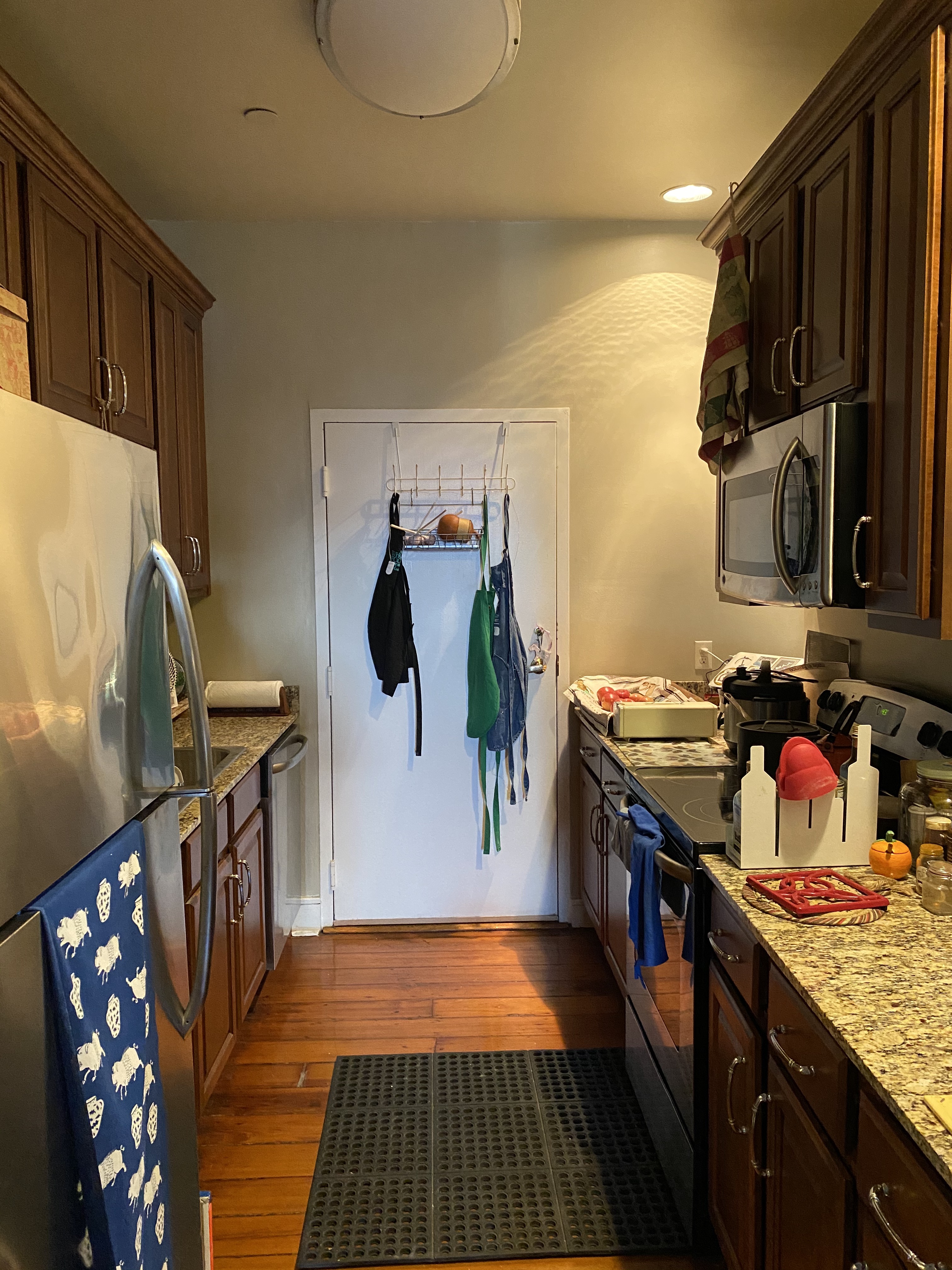
This move has offered a new vantage point for me, and also some inspiration too for my research and writing. I am sure that inspiration is true for some of my neighbors too.
Interestingly, the Lower side seems to have a very different tenant relationship and attitude about that building from its caretakers. I’ve actually known more people who lived on that side and so have spent a fair time in those apartments. All agree that the state side is not as updated, and the rents are higher. Lots of long term tenants headed out in the last few years when the rents skyrocketed, and those who remain tell me stories of their interaction with the state that are either combative or cold.
Over here as of now, this has been a very good choice for me and there are a few apartments available which is not that common. So maybe this is a opportunity for you.
http://upperpontalba.org/apartments/leasing/
*Upper is the St. Peter side, Lower is the Saint Ann side of the Square. Upper was donated to the city by local civic leaders (Alfred Danzinger, Jules D. Dreyfous, and William Runkel) via the Pontalba Building Museum Association in 1930 which then donated it to the City of New Orleans. As part of a Federal Works Progress Administration-funded project, the row houses are reconfigured into 50 apartments and the ground floor commercial spaces are converted into residential spaces. (Commercial spaces return in the 1970s to the Uppper Pontalba.) In the 1990s Morial Adminstration did the last major renovation on the Upper Pontalba to the tune of 8 million bucks.
The Lower was donated to the state around the same time before the Upper by William Radcliffe Irby* Once in a while, I do silently thank him. And I also thank our Micaela too.
*from 64 Parishes: On Saturday morning, November 20, 1926, Irby went about his day in his normal manner. He visited the bank, performed a few routine duties, and had a mid-morning cup of coffee. He next took a cab to the Tharp-Sontheimer-Tharp undertaking parlors at Carondelet and Toledano Streets. The Times-Picayune reported that Irby “greeted the attendants affably” and told them he had “come to make arrangements for a funeral.” He looked at coffins on the second floor and then requested a morning newspaper. When the undertaker went downstairs to fetch the paper, Irby, sitting on a sofa, fired a revolver into his right temple. He left a note “requesting simplicity in his funeral.” A second note cited an “incurable heart disease” as the reason for his suicide. He was buried in New Orleans’s Metairie Cemetery.
Best and Worst of 2020 French Quarter
I’ll do my best to refrain from making too many weary references to the past year. If I do, just kick me under the table and I’ll move on…
Walking around here during the holidays is usually a bustling, sparkly mood enhancement- lots of holiday lights, special events, and more local sightings than normal. Knowing most of you didn’t make it down here (and thank you for that), I’d like to bring you my “Best French Quarter moments.” And because it seems necessary, I am also going to list my “Worst French Quarter moments.” Here’s the thing: I am going to mix them all up. As I find more in my notes, I will add them.
Best/Worst of French Quarter 2020
Stanley’s adds seating outdoors and evolves its menu
Jewel of the South adds seating in parking lot next door and reopens
Many tourists ignore mask mandate
Manolito keeps making its signature drinks at window
Golden Lantern Bar follows the rules, does contact tracing and keeps its good cheap drinks and cheerful professional staff.
Mona Lisa has hilarious conversation with world via its daily window notes, also offers good Italian food
Mattassa’s continues its struggles, even with residents increased grocery needs and Rouses closing for long period in December
Valentino Hotels renovates
Le Richelieu Hotel renovates
Relaxed parking enforcement
Fewer cars in Quarter
Hard Rock* demolition is still not done by 1031 Canal Development
10 months later, neighbors’ remains (Anthony Magrette, Jose Ponce Arreola, Quinnyon Wimberly) are finally all removed from Hard Rock* collapsed building
Nelly Deli (Quarter Master) renovates
Cafe Envie on Decatur reopens in April with careful rules in place
FQ Rouses/A&P gets a whole new do inside with pretty floors and room to move about
My mom gets better after long spring/summer illness (not COVID) and comes home to her beloved Quarter
Blue bike racks become bigger eyesores
Copper downspout thefts increase again
FQ dogs are even more blissed-out with increased walks and long stretches of time with their people
Jackson Square artists’ carts and art are thrown into Mississippi River by malicious malcontent
Saint Ann construction is completed (?)
Soap hawkers on Royal continue to harangue passersby, rarely wear masks during COVID mandate.
Some bars ignore mask mandate
Mayor orders Willie’s Chicken Shack to close for duration after COVID restrictions are ignored
Clarinetist Tim Laughlin offers evening balcony concerts on Royal
Place d’Armes bell captain Chris Stall and valet staff maintain a cheerful and helpful vibe to neighbors and visitors throughout stay-at-home summer
Backatown Coffeehouse hangs in on Basin, keeps sweet potato pies and coffee flowing.
City Hall pays attention to the potential of the Quarter, asks for input
City Hall chooses the wrong place to suggest another pedestrian mall
Signmaker gets windfall with numerous “anti-mall” yard sign orders
#JazzFestingInPlace at WWOZ is a triumph
Neighbors sit outside nightly and talk quietly and safely on Chartres, on Barracks, on St. Philip, on Bourbon, on Saint Ann…
Reggie the cat remains at large; family still hopeful for return
Homer Plessy at the Little Red Schoolhouse announces renewal of its charter
After more than 100 years at that location, Tujague’s leaves its 823 Decatur home,
Tujague’s opens at 429 Decatur Street at end of the year
Chef Jerry Mixon moves on from Cafe Amelie
Vieux Carre Wine and Spirits keeps serving the liquor-needy.
Bike lane is added on N Peters/French Market to Elysian Fields
Pedestrian striping and traffic calming upgrades are added to area around Crescent Park bridge
Unhoused population get hotel rooms for short period in summer
Retail stores begin to disappear in summer. My last informal count: 15 establishments gone in last 6 months.
French Quarter Festivals does online Holiday Concert series, culminating in Christmas Even concert by Irma Thomas. Miss Irma’s “O Holy Night” rendition remains perfect
Heavy rain storms brought on by climate change are so severe across the city that even the French Quarter floods, a rarity (2 such came in October, November)
HNOC does #NolaMovieNight with clever social media commentaries during movies.
Neighbors on Saint Ann hold safely chalked early pandemic dance party with appropriate music
I decide to check off a bucket list item and move to the Pontalba apartments, hopefully increasing my work on Mercantile Jackson Square writing project
Frogs croaking from courtyard garden ponds and pools all through quiet summer months
City Hall baits the sewers to stem rat infestation
Mary’s Ace Hardware on Rampart reports bar owners, restauranteurs, and homeowners outnumber the usual contractors are coming in to their well-stocked, 2-story establishment.
Oversized and unmitigated “prayer event” is held on river in November, pointedly ignoring all mask and distancing protocols.
Protest for Black Lives Matter are peaceful, well-organized, and citizens follow mask and (mostly) distancing protocols asked for by its organizers.
NOPD attempts scare tactics by reporting phantom piles of bricks hidden near Black Lives Matter protest site, tells neighbors of phantom buses filled with counter-protestors, neither of which materialize or are proven with any photographic evidence.
- The Hard Rock Hotel is owned by 1031 Canal Development (Mohan Kailas).
Palmer holds ped-friendlier FQ meeting
WHAT: Virtual public meeting to discuss pedestrianization plans for the French Quarter
WHEN: Monday, August 17, 5:30 PM to 7 PM
WHERE: ZOOM
- Meeting Link: zoom.us/j/99052390624?pwd=V2duZTBwZUpsdkVhNFF2U1RwWFFVdz09
- Meeting ID: 990 5239 0624
- Passcode: 192217
Please note: Due to the expected high number of participants, questions will only be allowed through the Zoom chat feature and text messages. You can also submit your questions and feedback in advance by emailing tiffaney.bradley@nola.gov .
Iterative participatory design: can City Hall and the Vieux Carre pull it off?
The City of New Orleans has begun to sound out their ideas around creating more pedestrian-only malls in the French Quarter through some contact with residents and through the media. Part of their idea seems to be spring from the idea that those using the Quarter need more room in this era of 6′ safe spacing, and another aspect seems to be that since we lack the millions of tourists that our Quarter businesses depend on for revenue, we need to realign our 80+ blocks to bring our neighbors to use it and add more local-focused businesses.
If those are the actual goals, then I am for this idea, although with strong reservations. Those reservations include all City department’s ability to listen and learn from the varied number of Quarterites which includes more than those who are full-time homeowners or business owners who have easy access to the decision makers on Loyola. It also must include workers, culture bearers, unhoused people and their advocates, renters, and those part-time homeowners who do love it and care for it (so not the illegal Airbnb-ers of which there are dozens and no obvious recent enforcement to keep them from becoming unchecked again.) And of course, to take in consideration the ideas and concerns of residents in Treme, Marigny, CBD, Central City too because they are clearly impacted by decisions made for the FQ.
Because these ideas have seemed to come out of very recent, very serious COVID-era needs and so haven’t run the usual years-long cycle of public meetings, some folks have suggested that this new ped-focused design is going to become another Riverfront Expressway-type issue. Although the comparison seems a little overwrought to me, I can certainly see part of their point. For those new to this, the Riverfront Expressway was a 1940s-1960s elevated elevated six-lane expressway project, 40 feet off the street and 108 feet wide along the Mississippi River. It was added to the planned I-10 design which (contrary to a local legend) was always planned for Claiborne* and was not moved there when the FQ residents successfully fought the Expressway spur. The Expressway suggestion was made via a 1940s consultant’s report on New Orleans by the infamous Robert Moses who thought by keeping auto traffic flowing through (over?) the Quarter it would actually benefit it. Of course he and other planners didn’t understand the Quarter, but back in those days people like Moses were unelected kings and their opinions became policy without the need of any other input.
(*However, even though the story of it being moved to Claiborne from the riverfront is incorrect, the reality of the I-10 being built on Claiborne did happen for exactly those same racist policies: that the historic and beautiful tree-lined Claiborne Avenue was sacrificed because it was the Black St. Charles Avenue and therefore had no political power. So whether or not FQ residents saved their neighborhood by sacrificing another is or isn’t precisely true doesn’t really matter, as it does seem be true that they did little to nothing to stop their neighbors in Treme in getting carved up again and again, before the I-10 and after it, and is still happening.)
So to some, the idea of the City throwing an idea out that is hastily designed at City Hall or only takes in some of the needs of some seems familiar. And that the I-10 and Riverfront experience suggests that someone or many someones will bear some negative brunt of the idea through what many sociologists and others like to call “the unintended impacts” of these multi-level decisions.
The truth is any solution that assists our world-class (what probably should be a UNESCO site!) historic neighborhood and its surrounding area will only work if the input is tremendous, dynamic, and sensitive to the needs of many. Yet what anyone who has been in these discussions can see is that everyone is coming to this with a lot of assumptions; for residents, its often assuming the City is not acting in good faith; for the City, its often assuming that Quarterites are inflexible or not interested in benefits that help others. And I also suspect based on my interactions that many at City Hall don’t believe we actually have residents here or serve other needs than as the main corridor for tourism.
Based on all of that, even though I am more in favor of these ideas than others, I’d suggest that the City might start with simpler ideas and then ask a lot of questions. Maybe start with adding protected bike lanes in and out of the Quarter, work on safer bike parking (more and more business owners are cutting bikes locked up for a shift from their gallery posts and few employers offer safe parking), add many more public transportation options for workers and locals, come up with some dynamic parking ideas for residents and workers, deal with illegal STRs and noise infractions- and maybe start to test these ideas by using their French Market property first. A French Market property project could do a lot to calm residents fears and can also test out ideas before those unintended impacts across a larger area cripple and divide the residential and business community of the Quarter. I’ve jotted down many ideas on my blog previously for the French Market space that including adding a storefront library, community health agencies, maybe an evening Louisiana-id carrying-only splash pad, pop up food truck events, and lots more of what we saw this week: the sheds and public space used for sharing regular city departments information and health work as it was for the COVID site this last week with hundreds in line in the market space to get their free test.
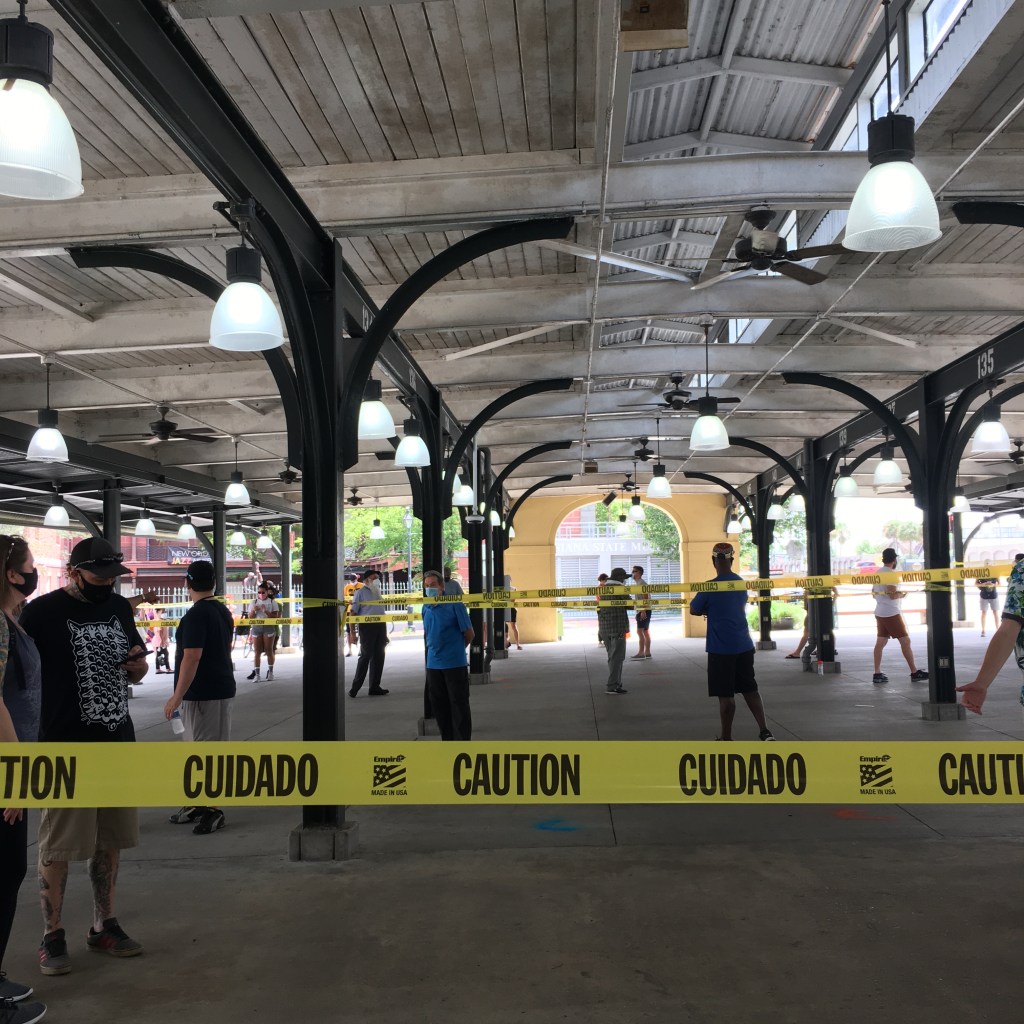
Once successful, the City can then quickly move to testing out single or 2-3 block ped areas, such as some I have noted previously include Wilkinson Row, Madison Street, the 1100 blocks of Chartres (which has St, Mary’s the Old Convent, Keyes museum, a boutique hotel) and adding local-friendly partnerships to activate those such as those NOMF musicians You Got This events, other health screenings, walking circuits similar to the Big Lake at City Park, or just rows of potted trees to add shade and beauty.
In any case, let’s all take a deep breath, do some homework, create some short term pilots, check our own assumptions and privilege, and listen as much as we talk.
Paper Monument: McDonogh Day Boycott

Phase 2 Tour Guidelines
Oh, we’ll be watching!


You must be logged in to post a comment.