Author Archives
A Home on Decatur
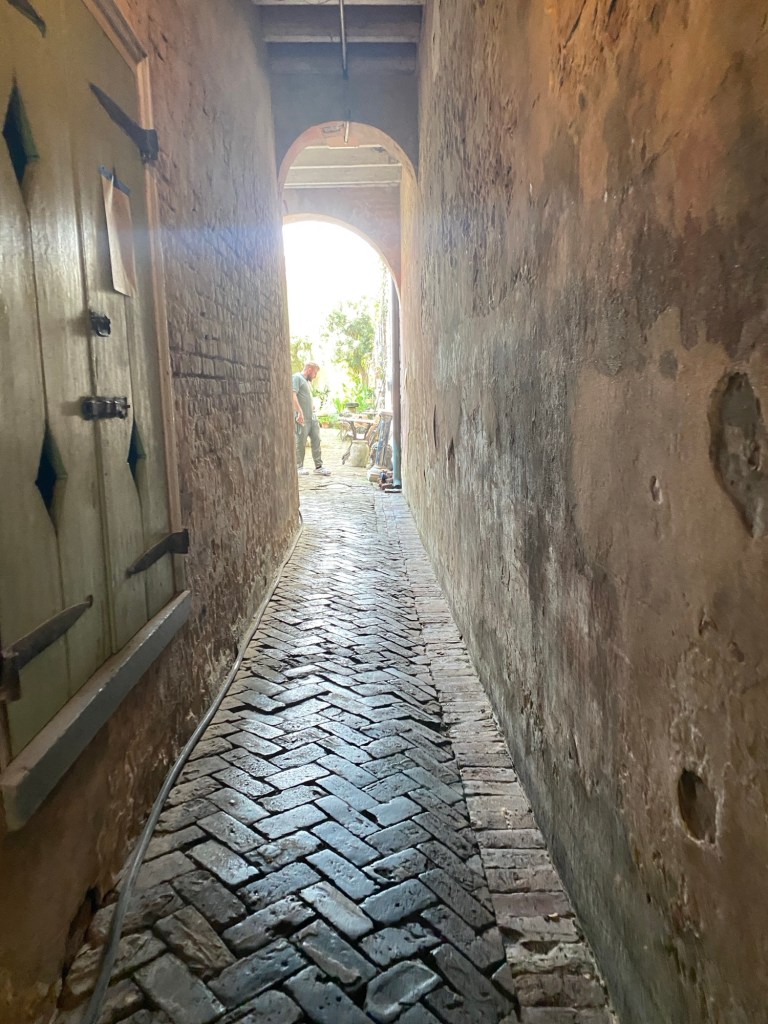
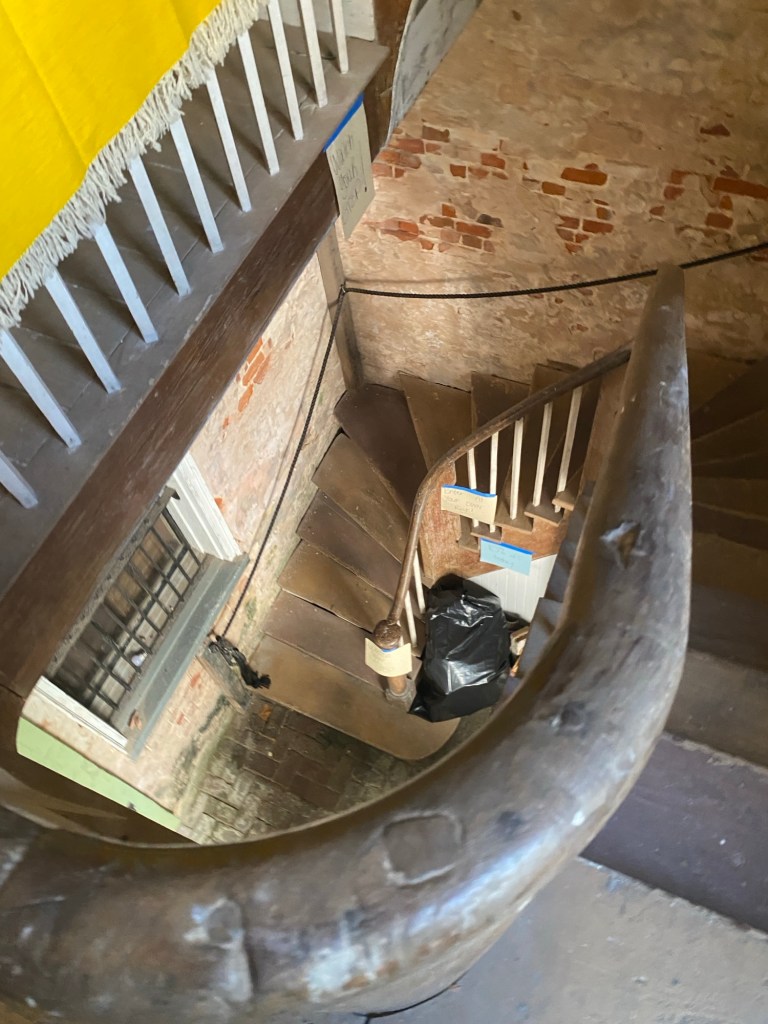
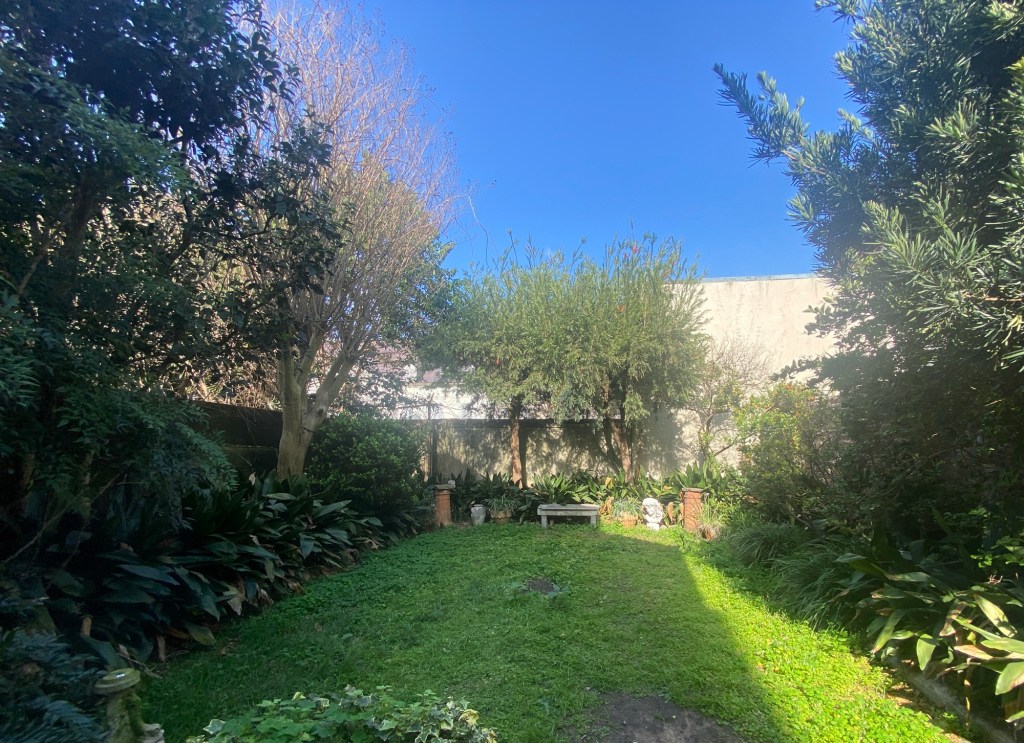
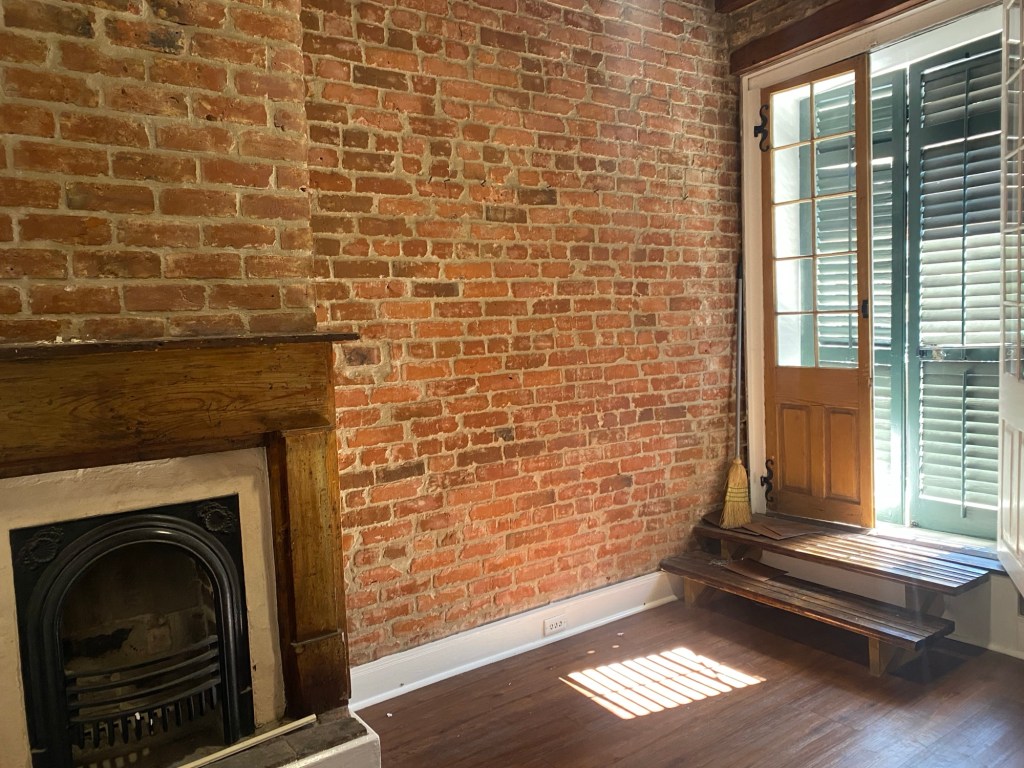
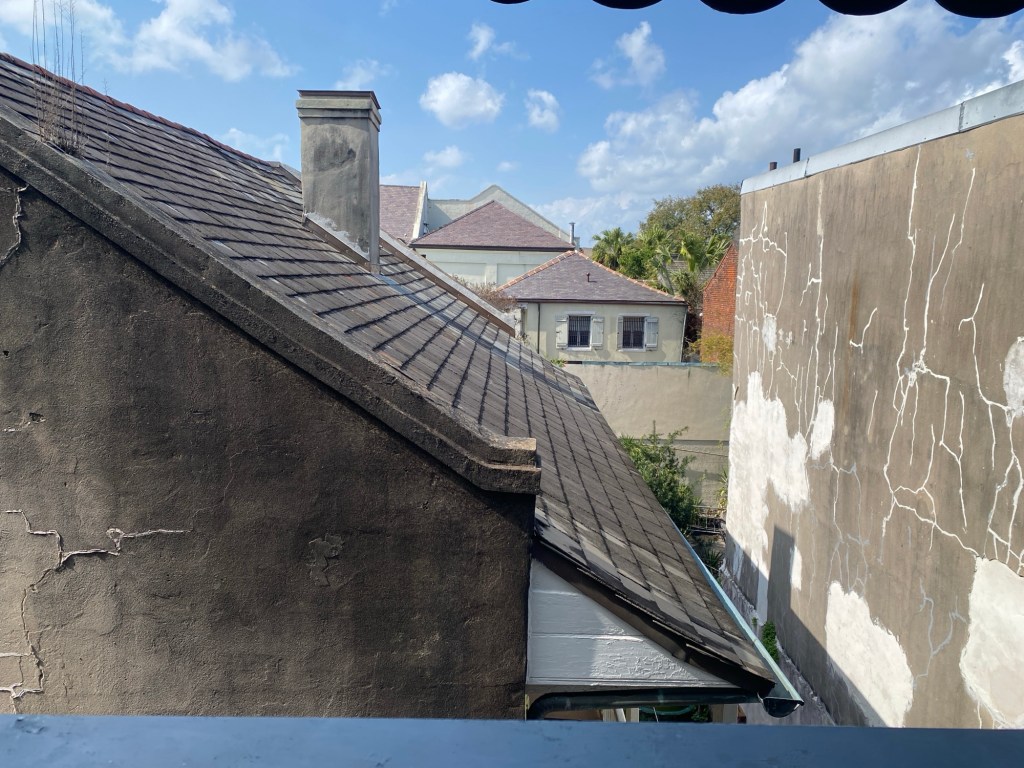
We lost a long time FQite last year and this week, Occasional Wife had his estate sale at his home in the 1100 block of Decatur.
RIP Fred Lawson. You contributed a lot and based on your students and fellow teachers’ tributes, you were deeply respected at Ben Franklin.
His name is also familiar for those who care about preservation, as he served on the Vieux Carre Commission among other activities.
I’m always honored to go in and get a sense the life that was lived and to feel how the space was loved.
The home had a typical layout for the FQ, although another story higher (and also with a full-sized attic) than those with the same design on most other streets of the FQ. It also has a unusually relaxed green space at its edge (which backs up to the Ursuline Convent museum) and likely means the occupant gets a truly peaceful idyllic outdoor space on a particularly raucous block of Decatur.
5 stages of Carnival parade parking
1.5 hours before: perfect spot! lets go grab a drink!
1 hour before: oh my god this is a great spot! i can’t believe we got it. let’s try to grab a drink before we head to the parade…
30 minutes before: cmon you can squeeze in there! okay everyone grab a couple of beers from the cooler, we’ve got to hurry.
15 minutes before: that car is gonna take our space! dammit.
well we’ll just park over here and walk to the end of the route to catch it. everyone chug because we have to walk fast…
parade starts: i don’t care if that’s a driveway. fuck
them. and just pull right up
to their bumper; they’ve got room in the back. hey, I drank everything while we circled; anyone have anything else to drink?
Barkus is a game changer (STILL!)
(From 2011)
Before my time, parades used to roll through the French Quarter. Well, really, they used to roll through lots of neighborhoods.
Now one has to get to the Uptown side of things or at least stand on the dividing line to participate in float parades, except for Endymion. However, I stay far from that Mid City mess which is held on the last Saturday before Fat Tuesday. To explain my p.o.v., just know that some groups start to camp out on the Thursday before Endymion and that it seems to celebrate white middle class New Orleans more than any other parade in the city. And even though I am in that number, I know we have no proud history of adding much to Mardi Gras, music or food around here. So, when we throw a parade, you can expect it to be loud, big and lacking some finesse. So good luck to those brave enough to make it. Me, I wish ol Endymion would find that long sleep again.
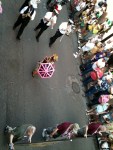
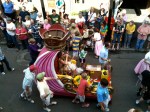
My schedule is usually seeing 1-3 parades and 1 of them is one of the 2 walking parades in the French Quarter. Barkus is almost always the choice.
What I like about it:
1. It benefits a worthy cause-pet rescue and allows any brave dog owners to participate.
2. It is the right scale. Those folks have to stay sober enough to walk miles with their dogs but drunk enough to wear feathers or shirts that match them.
3. It has a sense of humor. South Pawcific?
4. It’s over before dinner time.
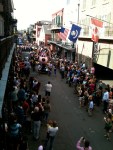
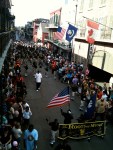
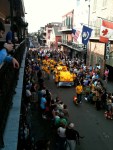
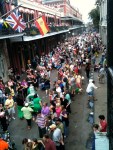
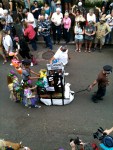
I have been watching it recently from a friend’s place on Saint Ann to watch the crowds. Some of us sit on the balcony, some of us draw up chairs on the ground, chatting with anyone near enough to be caught. What I have noticed is that much like French Quarter Festival, it seems to be bringing in locals who spend the day roaming the Quarter and reacquainting themselves with it. I see groups of people chatting for hours, sitting with a beer and their chair set up in the sun. Children are very plentiful and the Barkus participants keep an eye out for them to bestow their trinkets first.
Many parades are somewhat hierarchical: we sit waiting for the masked riders to roll by hoping to catch their eye or their ear. As glorious as they can be, they can also be passive and maybe even a little cruel. I find the walking parades much more interactive and personal.
Really, it is one of the reasons why the Quarter remains useful: in a small way, like Tahrir Square, we use it to perambulate and to connect and if we need to, to protest. Lucky for us, a change in government is possible here with peaceful transitions.
I contend that the reason we came through our most recent federal disaster with so little strife among the citizenry was that we have this release every year we call Carnival season. It forces us to meet new people, and allows us to have the time to catch up with old friends in detail. We laugh at bad puns together, cheer a good throw or catch and generally get the anxiety and angst out.
And when we can do it in the middle of the old city with our best companions, what can be better?












Entrepreneurial Jackson Square part 2: WPA
I continue to do research on the history of the square in terms of how it has been used and reworked by entrepreneurs, including the Baroness herself.
Last January was my month to dive deeply into the city archives to find new visual clues and records to bring alive the last 170 years of the Upper Pontalba. I was able to review the rental and management documents for the building at the New Orleans Public Library…
I am hoping THIS January I can unlock the key to gaining access to the state archives to be able to research the Lower Pontalba in the same detail.
Happy to find a photo of the Works Progress Administration (WPA) era renovation of the buildings as that project had the largest influence on the buildings and the Square in their history- so far.
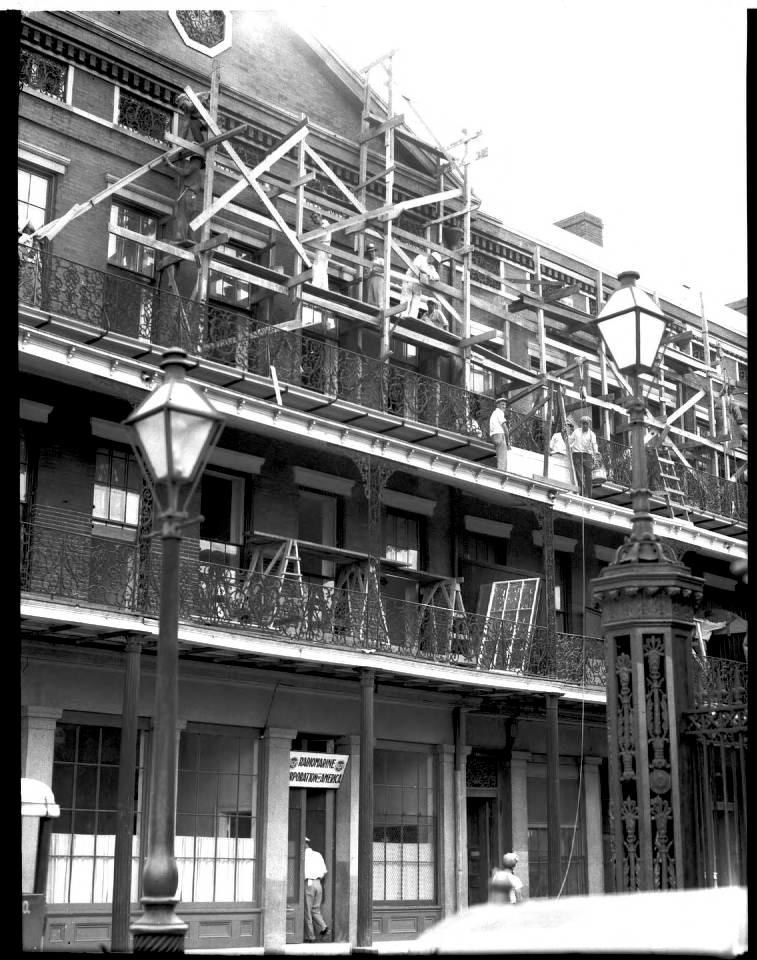
The WPA had an enormous impact on the entire city, and one could argue that it set the table for the population explosion, (which peaked at 627,000 around 1960), and the subsequent media attention that New Orleans had through the post war years,
By most accounts, New Orleans was in the top 5 in terms of completed projects through this Roosevelt administration initiative, most notably City Park where many WPA plaques and motifs can still be seen.
The Pontalbas received about $300,000 in repairs through the WPA, a staggering sum for 2 buildings that had been purchased just a few years earlier by preservationists for (likely) around 1/3 of that cost.
They had been built 80 years before for a total cost of about $330,000 and held by the Pontalba family in France through 3 generations before selling the Upper (St. Peter side) to Alfred Danzinger, Jules D. Dreyfous, and William Runkel in 1920, and the Lower (Saint Ann side) in 1922 to William Radcliffe Irby. Irby bought the Lower building for 68,000 and when he passed in a few years later, deeded it to the Louisiana State Museum.
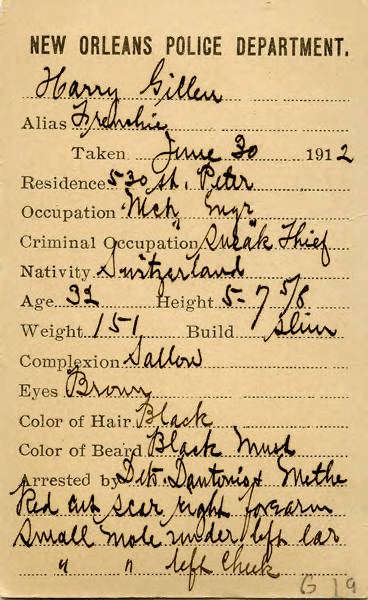
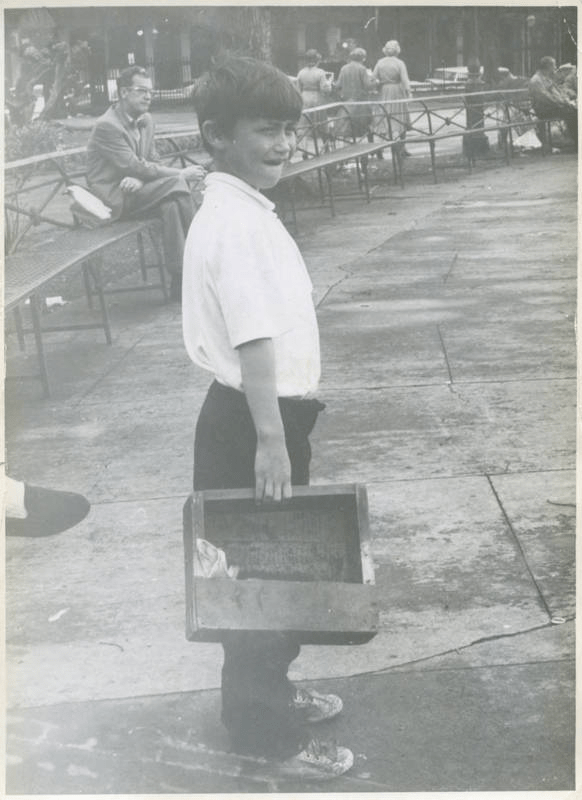
(Historic) Faces of the Square


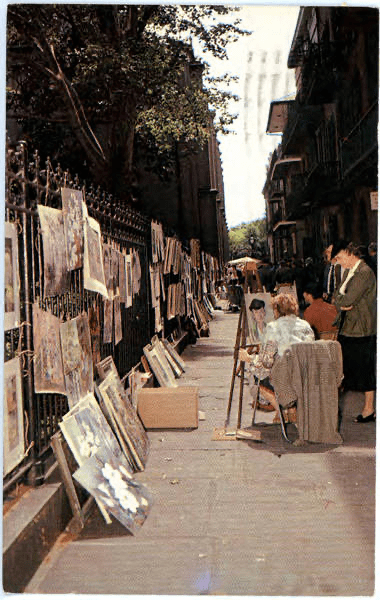
JSE: Before Retail Returned to the Upper Pontalba
Seeing visual clues about how the buildings and the open square have been designed and used and redefined during that 170 years is amazing. This pic was taken right before retail shops returned to the Upper Pontalba. Notice the sash windows on the ground floor! *Notice it is also still a road and not yet made into the permanent pedestrian mall.
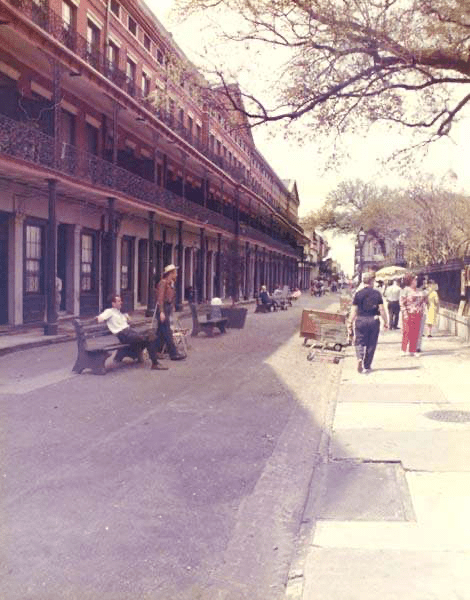
The lower Pontalba DID have some retail throughout the 20th century including the 1850 house and Tourist Center, the latter opening in 1965.
The letter to the editor below from the same year that the picture was taken indicates the tension that often arises between preservationists and entrepreneurs:
“The commission’s decision to restore the first floor shops was to bring back to the building and Jackson Square the kind of activity and occupancy originally envisioned by the Baroness Pontalba when she erected these buildings. No ‘tourist’ shops will be allowed. Only shops which will be patronized locally..””
[N.B. Henry M. Krotzer, Jr. was employed by the firm Koch & Wilson.]
— Source: Times-Picayune Author: Henry M. Krotzer, Jr., architect Date: Saturday, April 7th 1973.
 French Quarter block by block
You must be logged in to post a comment.