A French Quarter stalwart passes on

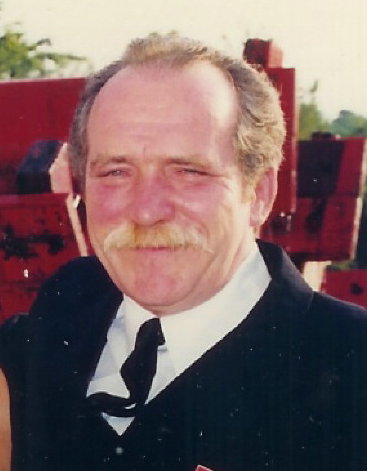
Gerald (Jerry) Grant Wiley III passed away at home in the French Quarter on July 24, 2011 after a long illness. He is survived by his loving wife June Barrios Wiley, daughters Lisa Wiley, Lisa Jewell, Dana Brown, son-in-law Michael Brown, step-daughters Angel McCready and Darlene Wolnik, and grandchildren Brian, Lisa, Jessie, and Conner. Beloved stepson Richard Wolnik preceded him in death.
Mr. Wiley was employed for 25 years for the Delta Steamboat Company, working on all three of their New Orleans steamboats over that period. He served as chief electrician on the American Queen Steamboat from its construction until his retirement in 2007.
He was born in Washington, Pennsylvania, but moved to Lakewood, Ohio as a young boy and was in the first graduating class of the “new building” at Lakewood High School. He attended Miami University of Ohio and UCLA for architecture. He proudly served two tours in the Marine Corps stationed in Vietnam and sailed the world in the Merchant Marines.
His generous nature brought him many admirers and his unfailing high humor kept him as many friends. He will be missed on the river, throughout the French Quarter and among his friends and family. No one ever bought more rounds and few told a better story.
He requested that there be no services and will be cremated according to his wishes.

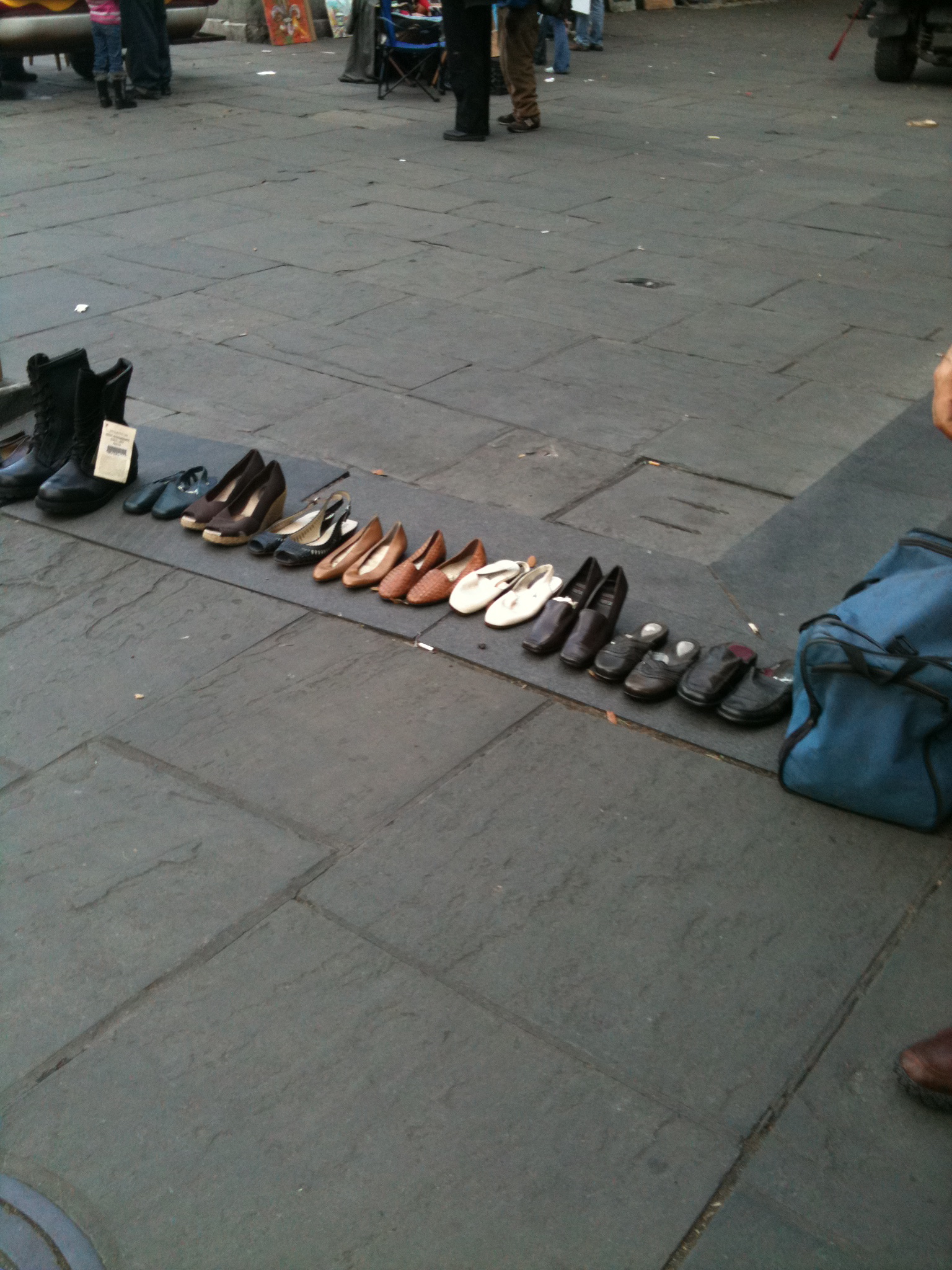
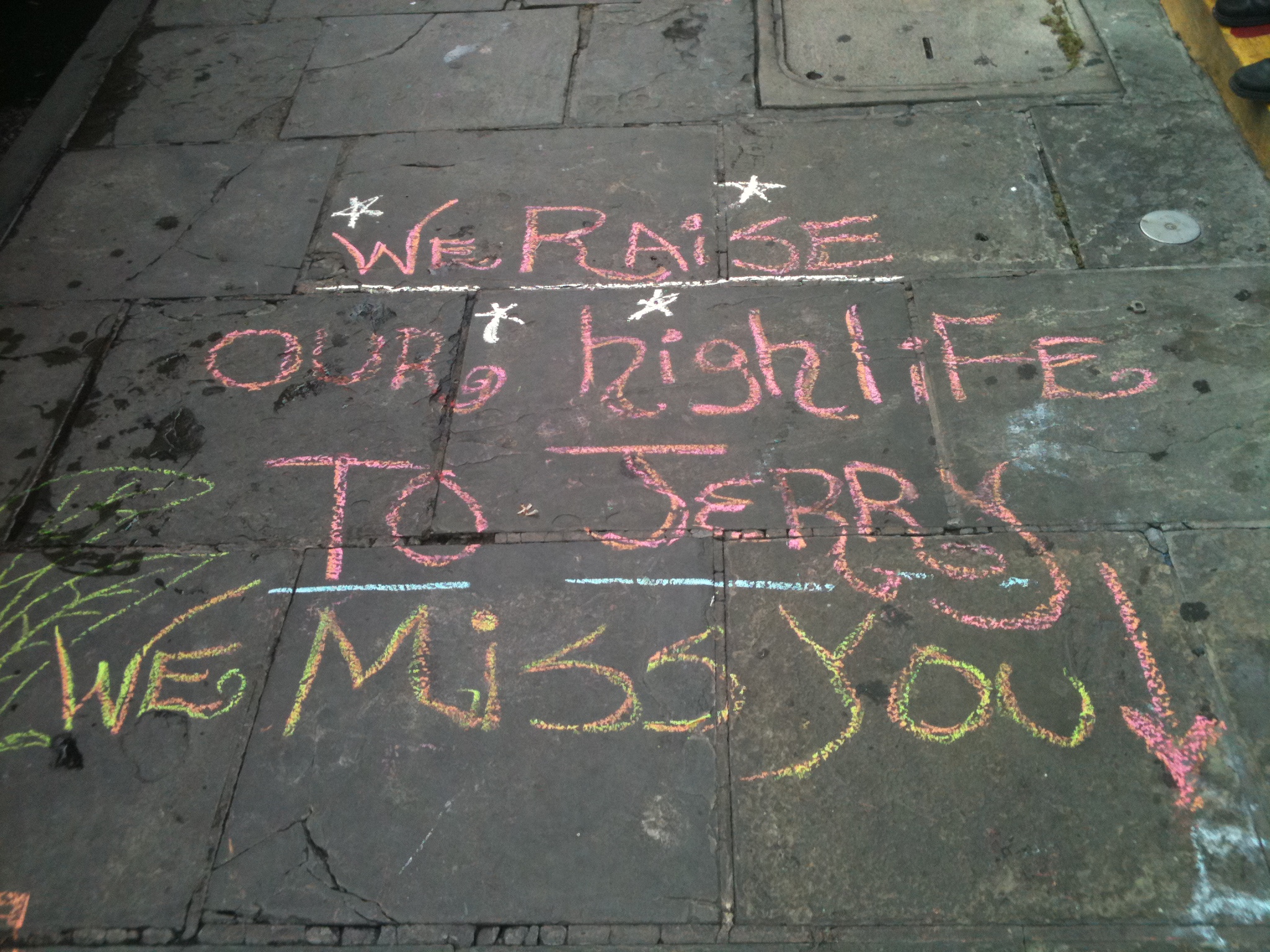
Johnny White's Bar pays tribute to their friend Jerry Wiley on July 25, 2011

Overheard in French Quarter:

Bus stops; Why have them? Are there any buses that come through here?

I like you because you’re like me. cynical.
I’m not cynical, I just give constructive advice! Do you mean, like when I called you a hipster?

Oysters off the shell? eeewww. That’s like putting a whole animal in your mouth…

Cars Banned? No. Yes. No. Some…

Facebook exchange:
Cars should be banned from the Quarter.
Cyclists in the French Quarter are learning an expensive lesson – break the traffic laws on your bike and get slapped with a hefty ticket.

———–likes this.
———- no they shouldn’t.
———–I agree with —-.
———–yes they should. 😉
———– 2 months ago I got stopped by a cop on a segway for riding through a pedestian mall but he only gave me a warning…
————I told you that all this bike path promotion was going to lead to increased enforcement.
————What bike lanes?
————let me be clear. I like the idea of bikes more than cars. But I also understand that the Quarter is a neighborhood with delivery needs and residents. I’d rather have small buses when possible, which should be added for cross town and uptown/downtown traffic, many of which should stop in or near the Quarter to allow people that are older and disabled who cannot bike.
————bikes will only increase as cars go down. you have to be a pretty confident cyclist as things stand–the ratio of cars/bikes in the city will only change as we get more car-free areas and bike infrastructure.
————i was in Oxford, England, when they banned cars from the city centre. overnight, the streets were full of smiling people, walking. it was amazing. of course there were still buses and working trucks. just no regular traffic to get in the way of the working people. the quarter is now full of frustrated people trying to drive SUVs down streets designed for people and horse carriages, in an endlessly futile search for parking. I’ve had a personal rule never to drive in the quarter for years. let’s shut down the quarter to everyone but residents, service vehicles, and buses. i don’t understand why we haven’t yet.
———– I totally agree.

I guess I have to explain it.

When I was 15, my mom moved me to the French Quarter from suburban Cleveland Ohio (via a short stop in Mandeville). We had spent many summers in New Orleans and my mother, who had grown up in the Garden District, seemed to always find her way back to the Quarter when we came to town, even with the clear-as-bell disapproval from her parents. We never spent any time Uptown; somehow she had few memories of life there and less interest in showing it to us.
So, when we moved to the Quarter, she was in her own heaven and at the same time, loosened her hold on me, so it is pretty obvious why I initially liked being there. But soon I realized this was a special neighborhood of deep history and lively city street activity and that it suited me personally. I roamed every day and some nights and met shopkeepers, proper ladies, street-walker, schoolteachers, hustlers, nuns, old old people who sat on their stoops on sunny mornings, workers who told me gossip while they swept, artists who started the day with a drink at the dark bar nearest to their room, transient people who told very little about themselves and many more Herbert Asbury and Frances Parkinson-Keyes types.
I learned to have tolerance; that was not something that had been shown to me in suburban Cleveland, even though my mother heroically tried to overcome that culture with her own New Orleans attitude. I also learned about the entire city and its history both old and newer. Like the immigrants and states and nations and all of the companion events sweeping over us, as they do…
So I write about the French Quarter because I think it represents some of the best things about city life and has some fractures that, if we mend them, we could once again have a completely dynamic city center that everyone uses at some point.
So when a colleague this week said with a laugh (about the French Quarter) as we were discussing neighborhoods , “Oh that’s not real New Orleans”, I heard it with a pang. I realize again and again when I tell people I am writing about the Quarter, many think why? How is that valid?
I think it is for the reasons above and for these:

Small businesses are the real life of any region; they show ingenuity and application in a single space. I learned about what we made and what we valued here from watching those businesses.

Food is a significant part of our city diary. Check out the offerings that span the culture in that one neighborhood.

Conversations teach: Sit in a spot in 3 or 4 different times in a single week. You will see a cross-section of the city go by and hear some amazing conversations.

24 hours, 7 days a week. It has that going for it.

Public space is necessary: Tahrir Square showed us the significance of the use of public space. We may never have to resort to that (well let’s not say never), but our public square is around 120 blocks large and sits along the river, waiting for you to use it. If and when you need it.

As for tourists, they are some of the lifeblood of the city’s economy along with the port. I know almost nothing about the port, but I talk with America and share thoughts and disagreements constantly as they come to admire our city. I wish we had better things to offer in the Quarter for all of us to mingle and know each other, so that is also why I work to make it better. And don’t forget many of those tourists are interested in more than beads and hurricanes, they might actually offer something. Lucky for us millions come to visit us.

And finally, because it’s the right scale. I can walk the entire Quarter in a few hours (and have done it many times). I can find parts that are quieter than City Park, livelier than Frenchman (well on a Thursday; nothing compares with Saturday there), more beautiful than St. Charles (age has its advantage), more radical than Bywater and so on. I don’t mean to compare but for those who ask why the French Quarter, I guess I have to.
Those blocks signify New Orleans, my own family’s history, my history, the bad and good of city life, and the potential, too.

I hope that helps.
Barkus is a game changer

Before my time, parades used to roll through the French Quarter. Well, really before my time they used to roll through lots of neighborhoods…
Now, one has to mosey to the Uptown side of things or at least stand on the dividing line to participate in float parades, except for Endymion (held downtown of Canal-for a few blocks anyway). However, I stay far from that Mid City mess held on the last Saturday before Fat Tuesday. To explain my p.o.v., just know that some groups start to camp out on the Thursday before Endymion and that it seems to celebrate white middle class New Orleans more than any other parade in the city. And even though I am in that number, I know we have no proud history of adding much to Mardi Gras, music or food around here. So, when we throw a parade, you can expect it to be loud, big and lacking some finesse. So good luck to those brave enough to make it. Me, I wish ol Endymion would find that long sleep again.
My schedule is usually seeing 1-3 parades and 1 of them is one of the 2 walking parades in the French Quarter. Barkus is almost always the choice.
What I like about it:
1. It benefits a worthy cause-pet rescue and allows any brave dog owners to participate.
2. It is the right scale. Those folks have to stay sober enough to walk miles with their dogs but drunk enough to wear feathers or shirts that match them.
3. It has a sense of humor. South Pawcific?
4. It’s over before dinner time.
I have been watching it recently from a friend’s place on Saint Ann to watch the crowds. Some of us sit on the balcony, some of us draw up chairs on the ground, chatting with anyone near enough to be caught. What I have noticed is that much like French Quarter Festival, it seems to be bringing in locals who spend the day roaming the Quarter and reacquainting themselves with it. I see groups of people chatting for hours, sitting with a beer and their chair set up in the sun. Children are very plentiful and the Barkus participants keep an eye out for them to bestow their trinkets first.

Many parades are somewhat hierarchical: we sit waiting for the masked riders to roll by hoping to catch their eye or their ear. As glorious as they can be, they can also be passive and maybe even a little cruel. I find the walking parades much more interactive and personal.
Really, it is one of the reasons why the Quarter remains useful: in a small way, like Tahrir Square, we use it to perambulate and to connect and if we need to, to protest. Lucky for us, a change in government is possible here with peaceful transitions.
I contend that the reason we came through our most recent federal disaster with so little strife among the citizenry was that we have this release every year we call Carnival season. It forces us to meet new people, and allows us to have the time to catch up with old friends in detail. We laugh at bad puns together, cheer a good throw or catch and generally get the anxiety and angst out.
And when we can do it in the middle of the old city with our best companions, what can be better?

Link to Bergen article

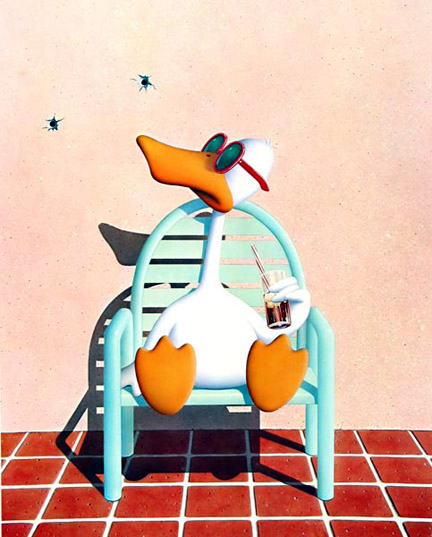
T-P writer Doug MacCash has written another charming piece about New Orleans, a bit removed from his usual art critic duties. He interviewed Margarita Bergen, a FQ fixture, ostensibly to talk about her love of champagne for the New Year’s Day edition, but every story with her is fascinating to read. The Bergen shop was one of the best (well-managed and well stocked) frame and poster shops in the Quarter throughout the 80s and 90s, closing around 2000 I think. This was during the heyday of poster sales in New Orleans, when it seemed a multitude of young drifters were framing in the back of every shop to support their drinking habits while clerks in front sold hundreds of posters of  misty  streetcars to tourists. Many mortgages were made on Jazz Fest poster sales alone; based on their windows, the Bergens did a brisk business on the Sitting Duck series for far longer than anyone else. (Now they have a shop on Decatur with my old Royal Street gallery boss, Casell.)

Cash cow poster series

Bergen article

Do the hustle. any hustle.

Just today, I was walking on the sunny side of Royal waiting for Ume to open her shop. I walked down to the next corner to see if I could get a cup of tea and a good seat at CC’s while I waited. At McDonogh 15, I sensed that the guy standing on the corner was going to ask me for something. I turned to look fully at him (always a good idea in the FQ) and realized with a start it was someone I knew from an earlier life.

He was startled but happy to see me as I was to see him. But it was clear, I had just avoided a quick hustle or at least an “ask”. Actually, he did finally ask me for a cigarette right before I left.
I told him that his family had been looking for him and he seemed oddly unconcerned. He told me he was “between apartments” and gave me no indication he was working. He looked tired, older and much more watchful than the K I had known before. I came back out and saw he had scored a smoke and was squatting in the sun, waiting. I went the other way so that we could keep our serendipitous relationship intact.
I had always recognized him as a hustler of some kind. The hustler styles differ from time to time in the FQ, but there are a few kinds that seem to stay. And let be clear: hustle in my definition is anyone who uses their wits first and foremost in situations they find, nothing planned. Nothing derogatory is meant.
1. The gay hustler. They can be seen walking a lot on Dauphine and Burgundy in the late evenings, and if you go to the bars, you can watch them enter and see the recognition on the faces of the regulars and bartenders. They are young and very blond and slight usually. Back in the days when my best friend chatted them up, they were invariably from Mississippi or Alabama. Sweet tempered and attentive to anyone who encounters them. They make many of their transactions in the “illegal economy”, but not always: sometimes they become connected to a wealthy man who has them walk the dogs, then maybe do the shopping and then sometimes they have become full-fledged partners, doing well in their own right.
2. The work hustler: We have these everywhere in the city, and really they have almost disappeared from the FQ, sadly. They would be seen washing the sidewalks in the early am, painting shutters, cutting down limbs of old trees, delivering. They were strong, capable men and women who are almost completely in the underground economy (cash only). Actually, the most visible example is the guy shining shoes on sunny days in the Square.

3. The tourist hustler: They work in any and all of the ways that tourists pay or hand over cash. Some do tours, some hawk maps, some are on the street engaging in any sort of short hustle (“I bet you I can tell you where you got your shoes”). In the informal economy (casual labor), the underground economy (a barter or a gamble) and some of the bad ones work in the illegal economy (in other words, watch your iPhones).
4. The real estate hustler: These folks always think they have come up with a new hustle and therefore often fail in the long run. They start with one building that they got in inheritance or through some amazing deal, they do okay with it. They start buying up properties and sooner or later, drugs or a corrupt contractor or a bad retail idea do them in. Or they think their connections to City Hall will allow them any coverage; unless they are the mob or the church or a university’s real estate arm, they will be wrong. They make their money in the formal economy, and are usually undone by the same.
5. The service industry hustler: man, they make the rounds from store to store to restaurant to restaurant. If you tracked their movement, you could probably see retail trends months or years before the experts do. They have a sixth sense about the places they work and what the future is. WE know that a place is okay when we walk in and find those masters working there, and we avoid the place when they leave. They make their money in the formal and informal economies (wages and tips).
6. The creative sector hustler: Jackson Square painters, French market vendors, sidewalk sales from under the coat, musicians using the acoustics on a corner to amplify for tips. These are the 20th century saviors of the area, literally as their forefathers began the Arts and Crafts Club to save the artistic culture of the area after the Opera House burned, They began the artist as resident movement back then when the FQ was only ghetto and allowed it to have a new life after the antebellum FQ had decayed almost to forgetfulness. They are the indicators of the healthy Quarter (well all of the hustlers are, but the skilled artist chief among them). They work in the formal and informal economy and sometimes might have some time in the underground economy (consignment or direct sales to the shops, cash sales, side trade work from bosses or wealthy friends).
I encourage all of these. I see all of these at work, hard at work. I expect to see more in the uncertain future.