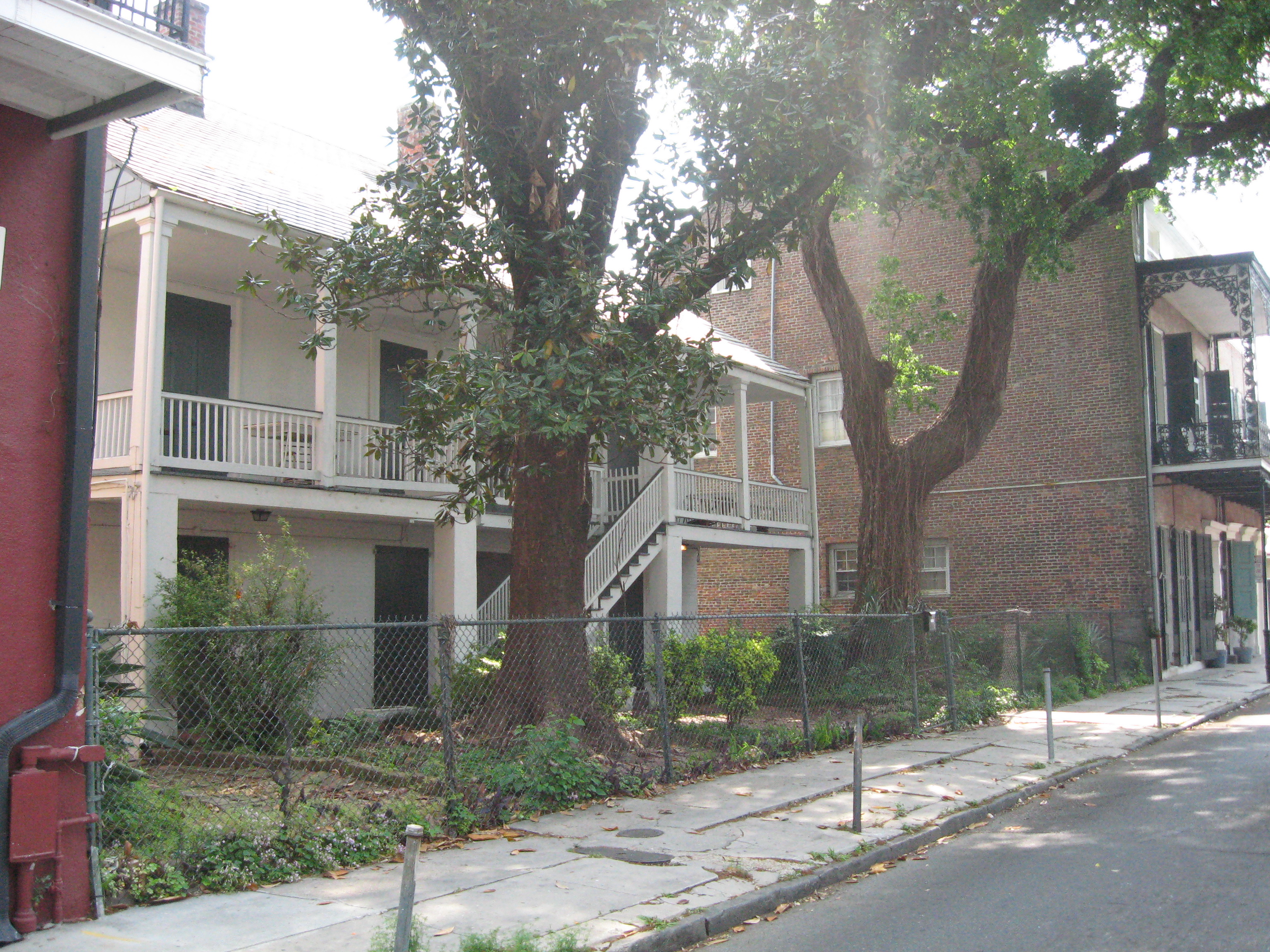
Governor Nicholls 900 block
These were built in this style to minimize the effects of heat and flooding that were common in areas near swamplands and the Mississippi River, and are generally raised on piers to stay above flood waters. There is often a large central hallway to encourage air circulation and the galleries or porches wrap around the house and are usually very deep — providing shade in the summer, keeping the sun out of the house and creating comfortable outdoor living space.This house has an amazing amount of space around it in front, unusual for the French Quarter. According to the fantastic book “Along the Banquette”, it is the same house moved from Gabriel Peyroux property on Bayou St.John, to the “city” in 1781. If so, this makes this house one of the oldest in the city.
Also, the width is also unusual, as back in French rule, taxation depended on the width of your house not the length. The camelback style (2 story living area rising from the back of the house) is often seen as a direct retaliation to those tax laws. Interestingly, after some taxpayers complained about camelbacks having lower taxes than they, the assessment was changed to the number of rooms in each home, which explains the lack of closets and the use of armoires which continues to this day in many areas of New Orleans.
Plantation-an interesting word that should be explored more fully- It is often said that we resemble the Carribbean more than Europe and certainly the economic underpinnings do match- exploiting the few resources and having the few control the many is similar.
Plantation life is often told as a rosy time of entrepreneurial activity with its own culture and traditions, but certainly the grim reality of enslaved people doing the work needed and actually bought and sold as property must be remembered as the main engine that ran this entire area. Remember that when you see “slave quarters” advertised as rentals, or walk by Maspero’s “Exchange” on Chartres that the history of slavery and subjugation does permeate the 1800s of New Orleans.
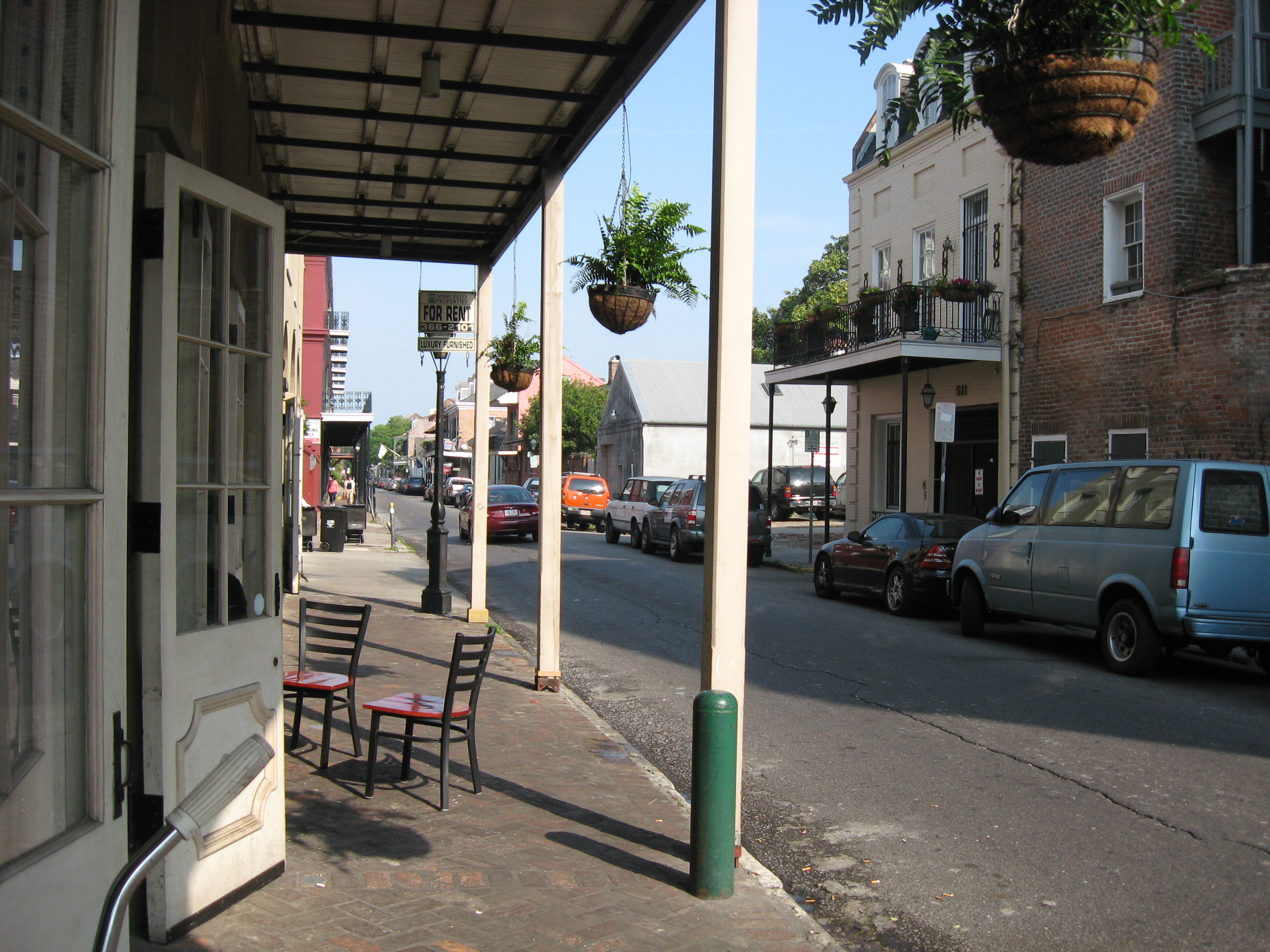
 French Quarter block by block
You must be logged in to post a comment.